|
Family GAVIIDAE, divers
Black-throated diver, Gavia
arctica
This bird is breeding in the arctic and boreal
regions of Eurasia. The breeding population of the European Union, entirely restricted to
Scotland, amounts to 150-160 breeding pairs and seems stable (Tucker & Heath). Elsewhere
this species is decreasing due to habitat changes, increasing disturbance by humans,
predation, decreasing fish populations following over-fishing and acid rains and oil
pollution at sea.
NUTS |
MIN |
MAX |
R |
Scotland |
150 |
160 |
C |
|
----------------------------------------------------------------------------End-------------------------------------------------------------------------
Great Northern Diver, Gavia immer
This bird inhabits the lakes of the boreal regions
of North America, Greenland and Island, moving to coastal waters in winter. The population
of Greenland and Island – altogether about 3500-4000 birds – is wintering along
the British and Norwegian coasts. Small numbers of individuals reach the coasts from
Denmark to Portugal (SOVON Atlas van de Nederlandse Vogels).
NUTS |
MIN |
MAX |
R |
Scotland |
0 |
1 |
C |
|
----------------------------------------------------------------------------End-------------------------------------------------------------------------
Red-throated Diver, Gavia stellata
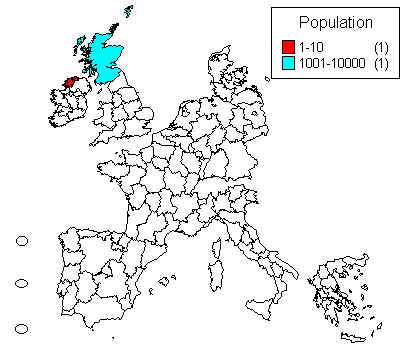 |
This diver has a widespread breeding distribution in northern Eurasia and North America. The breeding population of the European
Union, entirely restricted to the British Isles and Denmark, amounts to 1400 breeding pairs
and seems to be increasing (EBCC Atlas of European Breeding Birds).
|
NUTS |
MIN |
MAX |
R |
Donegal |
5 |
10 |
C |
Scotland |
1200 |
1500 |
C |
|
----------------------------------------------------------------------------End-------------------------------------------------------------------------
Family PODICIPEDIDAE, grebes
Slavonian Grebe, Podiceps auritus
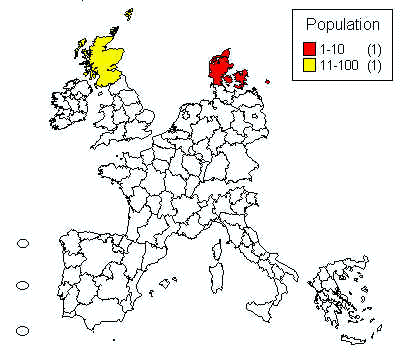 |
This bird has a wide distribution in the boreal
regions of Eurasia and North America. Within the European Union it is known as a breeding
species only from Scotland, where its population amounts 60 breeding pairs. The total
northern European population is estimated at 6000-9000 breeding pairs and winters mainly
along the coasts of the North Sea and on the central European lakes. A few birds reach the
Mediterranean coasts. Despite important local fluctuations, the total population of this
species seems quite stable (EBCC Atlas of European Breeding Birds). |
o
NUTS |
MIN |
MAX |
R |
Scotland |
60 |
|
C |
Danmark |
0 |
1 |
C |
|
----------------------------------------------------------------------------End-------------------------------------------------------------------------
Family PROCELLARIIDAE, petrels,
shearwaters
Gon-gon, Pterodroma feae
This pelagic bird is known from only the Cape
Verde Islands and Madeira. In this last archipelago it is wholly restricted to Bugio, the
southernmost island of the Desertas group. Its European population doesn’t exceed 250
breeding pairs, but seems stable. On world scale, however, this species is considered as
being endangered (Collar et al. 1994).
NUTS |
MIN |
MAX |
R |
Madeira |
50 |
? |
C |
|
----------------------------------------------------------------------------End-------------------------------------------------------------------------
Freira, Pterodroma madeira
This pelagic bird is known from only Madeira. Its population has declined during the
last decade, and is currently totalling only 20-30 breeding pairs. Consequently this
species is seriously endangered (Collar et al. 1994).
NUTS |
MIN |
MAX |
R |
Madeira |
20 |
? |
C |
|
----------------------------------------------------------------------------End-------------------------------------------------------------------------
Bulwer's Petrel, Bulweria bulwerii
This pelagic bird of the North Atlantic and the Pacific Ocean is breeding at Madeira,
on the Azores and on the Canary Islands. Its European population amounts to about 7500
–10500 breeding pairs. Its most important colonies are located on Madeira where the
species seems to be stable. The breeding colonies of the Canary Islands and the Azores
are decreasing however (EBCC Atlas of European Breeding Birds).
NUTS |
MIN |
MAX |
R |
Canarias |
1000 |
|
C |
Acores |
|
500 |
C |
Madeira |
3000 |
|
C |
|
----------------------------------------------------------------------------End-------------------------------------------------------------------------
Cory's Shearwater, Calonectris diomedea
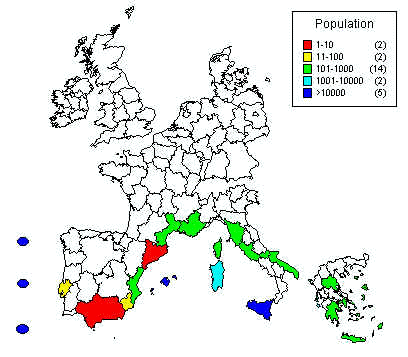 |
The taxon diomedea
is breeding in the Mediterranean Sea, mainly on the Balearic Islands and in
the Adriatic and Aegean seas. The taxon borealis is breeding in the Atlantic
Ocean, mainly at Madeira and on the Canary Islands and the Azores. It winters in the
South Atlantic. The population of the European Union amounts to 135000-198000 breeding
pairs, which represents about 85% of the world population of the species (Tucker &
Heath). Its trends are badly known, since the species is difficult to census. An increase
has been noticed in some protected colonies of Spain and the Azores. A definite decline
has been reported from the Canary Islands and Madeira, however. Its main causes are
predation by humans, cats, dogs, rats and mustelids, while competition with rabbits for
breeding holes and disturbance by more and more invading tourism need also to be
considered (Tucker & Heath). |
o
NUTS |
MIN |
MAX |
R |
Corse |
440 |
670 |
C |
Languedoc-Roussillon |
190 |
240 |
C |
Provence/Alpes-Côte
d'Azur |
195 |
245 |
C |
Lazio |
500 |
1500 |
C |
Molise |
500 |
1500 |
C |
Puglia |
250 |
350 |
C |
Sardegna |
2800 |
3400 |
C |
Sicilia |
15000 |
|
C |
Toscana |
150 |
210 |
C |
Andalucia |
3 |
|
C |
Baleares |
8500 |
13600 |
C |
Canarias |
30000 |
|
C |
Cataluña |
0 |
10 |
C |
Comunidad
Valenciana |
200 |
300 |
C |
Murcia |
20 |
50 |
C |
Acores |
500000 |
|
C |
Lisboa e Vale do Tejo |
60 |
80 |
C |
Madeira |
15000 |
30000 |
C |
Attiki |
400 |
|
C |
Ionia
nisia |
3000 |
|
C |
Kriti |
900 |
|
C |
Notio
Aigaio |
800 |
|
C |
Peloponnisos |
400 |
|
C |
Thessalia |
800 |
|
C |
Voreio
Aigaio |
100 |
|
C |
|
----------------------------------------------------------------------------End-------------------------------------------------------------------------
Little Shearwater, Puffinus assimilis
This pelagic bird inhabits the Atlantic, Pacific
and Indian oceans, being much more numerous in the Southern Hemisphere. The European
population inhabits the Canary Islands, the Azores and Madeira. It amounts about
2700-3900 breeding pairs. This species is adversely affected by the introduction of rats
on its breeding islands, and the population of the Canary Islands has strongly decreased
during the last 20 years.
NUTS |
MIN |
MAX |
R |
Canarias |
400 |
400 |
C |
Acores |
500 |
1000 |
C |
Madeira |
1800 |
2500 |
C |
|
----------------------------------------------------------------------------End-------------------------------------------------------------------------
Balearic Shearwater, Puffinus (puffinus) mauretanicus
This bird has for a long time been considered as a
subspecies of the Manx Shearwater (Puffinus puffinus). Today it is considered
either a full species (Puffinus mauretanicus) or a subspecies of the Mediterranean
Shearwater (Puffinus yelkouan). What be the taxonomy adopted, only the birds
breeding on the Balearic Islands are included in the Annex I. This population amounts to
3300-5000 breeding pairs (EBCC Atlas of European Breeding Birds).
NUTS |
MIN |
MAX |
R |
Baleares |
2200 |
4400 |
C |
|
----------------------------------------------------------------------------End-------------------------------------------------------------------------
White-faced Petrel, Pelagodroma marina
This pelagic bird is breeding on the Salvagens, Madeira and the Canary Islands. Its
European population amounts to 16000-20000 breeding pairs and seems quite stable. It is
vulnerable, however, since it is located on two islands only (Tucker & Heath).
NUTS |
MIN |
MAX |
R |
Canarias |
10 |
10 |
C |
Madeira |
16000 |
20000 |
C |
|
----------------------------------------------------------------------------End-------------------------------------------------------------------------
Storm Petrel, Hydrobates pelagicus
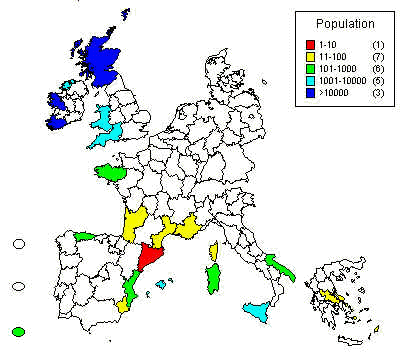 |
This pelagic bird is breeding on
the Atlantic and Mediterranean coasts of Europe and North Africa. It is very hard to
estimate its populations, since its colonies are virtually inaccessible, since it moves
mainly at night and since there is a large non-breeding population. Nevertheless, the
population of the European Union is estimated at 150000 breeding pairs and the total
European population at 346000-640000 pairs (EBCC Atlas of European Breeding Birds). |
o
NUTS |
MIN |
MAX |
R |
Donegal |
6300 |
11350 |
C |
South
West |
30000 |
60000 |
C |
West |
20000 |
30000 |
C |
Scotland |
20000 |
30000 |
C |
South West (GB) |
2500 |
|
C |
Wales |
5500 |
7000 |
C |
Aquitaine |
42 |
|
C |
Bretagne |
400 |
450 |
C |
Corse |
70 |
90 |
C |
Languedoc-Roussillon |
10 |
20 |
C |
Provence/Alpes-Côte
d'Azur |
10 |
30 |
C |
Puglia |
100 |
150 |
C |
Sardegna |
300 |
|
C |
Sicilia |
1000 |
|
C |
Asturias |
150 |
250 |
C |
Baleares |
1500 |
2000 |
C |
Canarias |
200 |
1000 |
C |
Cataluña |
5 |
15 |
C |
Comunidad
Valenciana |
220 |
275 |
C |
Murcia |
47 |
|
C |
Notio Aigaio |
10 |
50 |
C |
Sterea Ellada |
10 |
50 |
C |
|
----------------------------------------------------------------------------End-------------------------------------------------------------------------
Madeiran Storm-petrel, Oceanodroma castro
This pelagic bird inhabits the temperate and tropical regions of the Atlantic and
Pacific oceans. The population of the European Union, breeding on Madeira Islands
(Madeira, Desertas and Salvagens), the Azores, Tenerife and the Farilhões off Portugal,
amounts to 3700 breeding pairs. Its trends are badly known, but the species is adversely
affected by the introduction of rats on its breeding islands and the recent increase in
Yellow-legged Gulls (Larus michahelli).
NUTS |
MIN |
MAX |
R |
Canarias |
300 |
|
C |
Acores |
1000 |
2000 |
C |
Lisboa e Vale do Tejo |
50 |
|
C |
Madeira |
2000 |
2500 |
C |
|
----------------------------------------------------------------------------End-------------------------------------------------------------------------
Leach's Storm-petrel, Oceanodroma leucorhoa
This pelagic bird inhabits the northern Atlantic and Pacific oceans where it breeds on
isolated islets. The European population is centred on the British Isles and amounts to
about 30000 breeding pairs (EBCC Atlas of European Breeding Birds). It winters in the
South Atlantic off the South African coast. Being difficult to study, its trends are
not known.
NUTS |
MIN |
MAX |
R |
West
(IRE) |
200 |
200 |
C |
Scotland |
5000 |
10000 |
C |
|
--------------------------------------------------------------------------
END
------------------------------------------------------------------------
Last update : 06/10/06
| 