|
Home
Site map
Intro/Staff
Databases
Projets
Documents
| |
Family ARDEIDAE, bitterns, herons and egrets
Bittern, Botaurus stellaris
 |
This solitary bird inhabits the permanent marshes of
Eurasia, between 30°N and 60°N, and from the Iberian Peninsula to China. It is also
known from northern and southern Africa. European birds are partly sedentary, partly
migratory, and some of them reach equatorial regions. The populations of the European
Union are strongly fragmented, and declining everywhere (except in Denmark). They are
totalling not more than 970-1400 breeding pairs, while the total European population is
estimated at 19000-43000 pairs. The main reason for this decline is the reclamation of
wetlands, especially the disappearance of large Phragmites beds, the mechanical
harvesting of reeds, the pollution and disturbance of the breeding areas by human
recreation activities (Tucker & Heath). However, breeding populations also fluctuate
very strongly according to the severity of climatic conditions in winter (EBCC Atlas of
European Breeding Birds). |
o
NUTS |
MIN |
MAX |
R |
East
Anglia |
14 |
15 |
S |
East
Midlands (GB) |
2 |
|
S |
North
(GB) |
1 |
|
S |
North
West (GB) |
1 |
3 |
S |
South
East (GB) |
1 |
|
S |
South
West (GB) |
0 |
1 |
C |
Danmark |
55 |
75 |
C |
Nederland |
150 |
275 |
C |
Région Wallonne |
1 |
5 |
C |
Vlaams Gewest |
1 |
8 |
C |
Baden-Württemberg |
0 |
3 |
C |
Bayern |
5 |
|
S |
Brandenburg |
300 |
|
C |
Hamburg |
4 |
|
S |
Mecklenburg-Vorpommern |
300 |
|
C |
Niedersachsen |
10 |
|
C |
Nordrhein-Westfalen |
4 |
|
S |
Sachsen |
0 |
5 |
C |
Sachsen-Anhalt |
0 |
5 |
C |
Schleswig-Holstein |
70 |
|
S |
Alsace |
5 |
10 |
|
Aquitaine |
0 |
5 |
C |
Auvergne |
5 |
10 |
C |
Basse-Normandie |
1 |
|
C |
Bourgogne |
1 |
5 |
C |
Bretagne |
5 |
10 |
C |
Centre |
30 |
50 |
C |
Champagne-Ardennes |
10 |
15 |
C |
Haute-Normandie |
3 |
4 |
C |
Ile de France |
5 |
10 |
C |
Languedoc-Roussillon |
60 |
90 |
C |
Limousin |
5 |
10 |
C |
Lorraine |
10 |
20 |
C |
Nord-Pas-de-Calais |
5 |
10 |
C |
Pays de la Loire |
20 |
50 |
C |
Picardie |
10 |
25 |
C |
Poitou-Charente |
10 |
20 |
C |
Provence/Alpes-Côte d'Azur |
75 |
100 |
C |
Rhône-Alpes |
1 |
10 |
C |
Emilia
Romagna |
1 |
10 |
C |
Friuli-Venezia
Giulia |
3 |
6 |
C |
Lazio |
1 |
5 |
C |
Lombardia |
1 |
2 |
C |
Puglia |
1 |
5 |
C |
Sicilia |
10 |
|
C |
Toscana |
3 |
6 |
C |
Veneto |
3 |
6 |
C |
Andalucia |
1 |
10 |
C |
Baleares |
0 |
5 |
C |
Cataluña |
6 |
10 |
C |
Comunidad Valenciana |
1 |
5 |
C |
Navarra |
1 |
5 |
C |
Centro |
0 |
1 |
N |
|
----------------------------------------------------------------------------End-------------------------------------------------------------------------
Little Bittern, Ixobrychus minutus
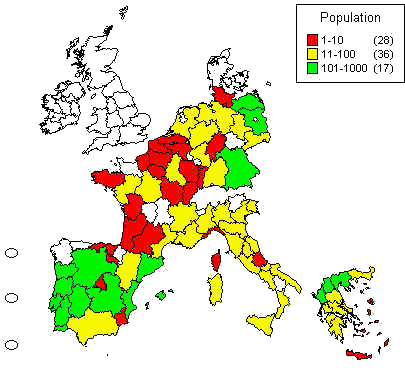 |
This small heron inhabits a large part of Africa, Eurasia
from the Iberian Peninsula and the Baltic coast to western China and Pakistan. It also
occurs in Australia. The European populations are mainly wintering in tropical and
southern Africa. Since 20-25 years they are strongly declining, and in several regions
this decline reaches about 50-80%. The population of the European Union is estimated at
4300-6500 breeding pairs (Tucker & Heath). This decline cannot be explained solely by
problems encountered in the breeding areas, like wetland reclamation, pollution and
disturbance. Its seems also to be linked to problems in the winter quarters, especially
the increasing climatic dryness which is responsible for the disappearance of many
wetlands in the Sahel Region (Marion 1993, EBCC Atlas of European Breeding Birds). |
o
NUTS |
MIN |
MAX |
R |
Nederland |
10 |
20 |
C |
Région Wallonne |
2 |
7 |
C |
Vlaams Gewest |
0 |
3 |
C |
Baden-Württemberg |
40 |
50 |
C |
Bayern |
300 |
|
C |
Brandenburg |
100 |
250 |
C |
Hamburg |
1 |
|
C |
Hessen |
3 |
10 |
C |
Mecklenburg-Vorpommern |
150 |
200 |
C |
Niedersachsen |
15 |
|
C |
Nordrhein-Westfalen |
5 |
20 |
C |
Rheinland-Pfaltz |
|
30 |
C |
Sachsen |
10 |
20 |
C |
Sachsen-Anhalt |
10 |
20 |
C |
Schleswig-Holstein |
0 |
5 |
C |
Alsace |
1 |
6 |
S |
Aquitaine |
5 |
10 |
C |
Bourgogne |
1 |
5 |
C |
Bretagne |
1 |
3 |
|
Centre |
50 |
100 |
C |
Champagne-Ardennes |
30 |
|
C |
Corse |
1 |
3 |
|
Franche-Comté |
5 |
10 |
C |
Haute-Normandie |
1 |
|
C |
Ile de France |
5 |
10 |
C |
Languedoc-Roussillon |
25 |
75 |
C |
Lorraine |
5 |
10 |
|
Midi-Pyrénées |
5 |
10 |
|
Nord-Pas-de-Calais |
2 |
5 |
C |
Pays de la Loire |
10 |
50 |
C |
Picardie |
5 |
10 |
C |
Poitou-Charente |
2 |
5 |
|
Provence/Alpes-Côte d'Azur |
10 |
20 |
C |
Rhône-Alpes |
25 |
50 |
C |
Abruzzi |
1 |
10 |
|
Calabria |
60 |
135 |
C |
Campania |
20 |
20 |
C |
Emilia
Romagna |
60 |
135 |
C |
Friuli-Venezia
Giulia |
5 |
20 |
|
Lazio |
60 |
135 |
C |
Liguria |
1 |
5 |
C |
Lombardia |
200 |
300 |
C |
Marche |
60 |
135 |
C |
Molise |
60 |
135 |
C |
Piemonte |
60 |
135 |
C |
Puglia |
60 |
135 |
C |
Sardegna |
60 |
135 |
C |
Sicilia |
10 |
50 |
C |
Toscana |
60 |
135 |
C |
Umbria |
60 |
135 |
C |
Veneto |
60 |
135 |
C |
Andalucia |
50 |
100 |
N |
Aragon |
50 |
100 |
N |
Baleares |
300 |
500 |
C |
Cantabria |
1 |
5 |
N |
Castilla la Mancha |
75 |
150 |
N |
Castilla y Leon |
75 |
150 |
N |
Cataluña |
100 |
150 |
C |
Comunidad Valenciana |
300 |
|
C |
Extremadura |
50 |
150 |
N |
Madrid |
5 |
10 |
N |
Murcia |
5 |
10 |
N |
Pais Vasco |
1 |
5 |
N |
Rioja |
5 |
10 |
N |
Alentejo |
100 |
200 |
C |
Algarve |
100 |
200 |
C |
Centro |
100 |
200 |
C |
Lisboa
e Vale do Tejo |
100 |
200 |
C |
Norte |
100 |
200 |
C |
Anatoliki Makedonia, Thraki |
70 |
|
C |
Dytiki Ellada |
30 |
80 |
C |
Dytiki Makedonia |
175 |
|
C |
Ionia nisia |
5 |
15 |
C |
Ipeiros |
100 |
|
C |
Kentriki Makedonia |
200 |
|
C |
Kriti |
0 |
2 |
C |
Notio Aigaio |
0 |
3 |
C |
Peloponnisos |
25 |
|
C |
Sterea Ellada |
30 |
80 |
C |
Thessalia |
10 |
|
C |
Voreio Aigaio |
0 |
5 |
C |
|
----------------------------------------------------------------------------End-------------------------------------------------------------------------
Night Heron, Nycticorax
nycticorax
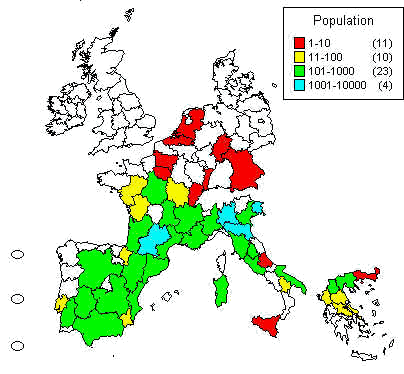 |
A species with a worldwide distribution, known
to breed in isolated areas of south-western, southern and Eastern Europe. Most of these
birds are migratory and winter in Sub-Saharan Africa. The population of the European Union
amounts to 25200-28200 breeding pairs, which represents 40-50% of the total European
population. Notwithstanding the important Italian population is increasing, a decline is
noticed in several regions, including the Netherlands, France and Greece following
destruction of wetlands (Tucker & Heath). |
o
NUTS |
MIN |
MAX |
R |
Nederland |
6 |
12 |
C |
Vlaams Gewest |
2 |
3 |
C |
Bayern |
6 |
6 |
C |
Hessen |
1 |
5 |
C |
Alsace |
0 |
5 |
C |
Aquitaine |
300 |
400 |
C |
Auvergne |
100 |
150 |
C |
Bourgogne |
10 |
20 |
C |
Centre |
100 |
200 |
C |
Franche-Comté |
5 |
6 |
C |
Ile de France |
1 |
1 |
C |
Languedoc-Roussillon |
100 |
|
C |
Midi-Pyrénées |
1200 |
2000 |
C |
Pays de la Loire |
60 |
80 |
C |
Picardie |
3 |
|
C |
Poitou-Charente |
25 |
50 |
C |
Provence/Alpes-Côte d'Azur |
380 |
400 |
C |
Rhône-Alpes |
300 |
400 |
C |
Abruzzi |
1 |
10 |
|
Basilicata |
100 |
250 |
C |
Emilia
Romagna |
2500 |
2500 |
C |
Friuli-Venezia
Giulia |
2500 |
2500 |
C |
Lazio |
100 |
250 |
C |
Lombardia |
8600 |
|
C |
Piemonte |
100 |
250 |
C |
Puglia |
100 |
250 |
C |
Sardegna |
100 |
250 |
C |
Sicilia |
2 |
5 |
C |
Toscana |
100 |
250 |
C |
Umbria |
100 |
250 |
C |
Veneto |
2500 |
2500 |
C |
Andalucia |
200 |
550 |
C |
Aragon |
100 |
|
C |
Castilla la Mancha |
130 |
180 |
C |
Castilla y Leon |
400 |
|
C |
Cataluña |
200 |
|
C |
Comunidad Valenciana |
60 |
220 |
C |
Extremadura |
270 |
320 |
C |
Murcia |
30 |
|
C |
Navarra |
60 |
70 |
C |
Alentejo |
75 |
150 |
C |
Lisboa
e Vale do Tejo |
25 |
50 |
C |
Anatoliki Makedonia, Thraki |
25 |
|
C |
Dytiki Makedonia |
100 |
|
C |
Ipeiros |
75 |
|
C |
Kentriki Makedonia |
700 |
|
C |
Sterea Ellada |
10 |
|
C |
Thessalia |
10 |
|
C |
|
----------------------------------------------------------------------------End-------------------------------------------------------------------------
Purple Heron, Ardea purpurea
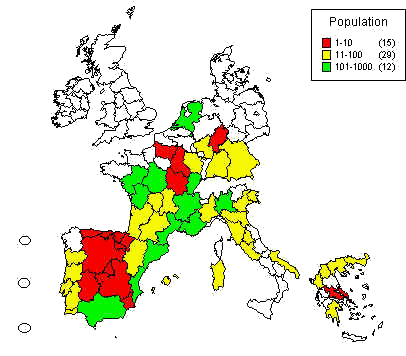 |
This heron inhabits permanent swamps of southern
Eurasia, Eastern and Southern Africa. European birds winter in Sub-Saharan Africa, mainly
in East Africa. In 1995 the population of the European Union amounted to 5200 breeding
pairs (EBCC Atlas of European Breeding Birds), but following a long history of persecution
and habitat destruction its distribution is strongly fragmented and reduced to a small
number of breeding colonies. In several countries, including the Netherlands, the decline
is continuing. Its seems also to be linked to a bad survival rate in the winter quarters
(Cavé 1983). |
o
NUTS |
MIN |
MAX |
R |
Nederland |
210 |
285 |
C |
Baden-Württemberg |
10 |
|
C |
Bayern |
|
20 |
C |
Hessen |
1 |
3 |
C |
Rheinland-Pfaltz |
10 |
|
C |
Aquitaine |
50 |
100 |
C |
Auvergne |
20 |
30 |
C |
Bourgogne |
5 |
10 |
C |
Centre |
100 |
150 |
C |
Champagne-Ardennes |
6 |
|
C |
Franche-Comté |
|
150 |
C |
Languedoc-Roussillon |
750 |
950 |
C |
Limousin |
30 |
50 |
C |
Lorraine |
10 |
20 |
C |
Midi-Pyrénées |
20 |
30 |
C |
Pays
de la Loire |
100 |
150 |
C |
Picardie |
1 |
10 |
C |
Poitou-Charente |
200 |
250 |
C |
Provence/Alpes-Côte
d'Azur |
600 |
|
C |
Rhône-Alpes |
100 |
500 |
|
Emilia Romagna |
60 |
65 |
C |
Friuli-Venezia Giulia |
60 |
65 |
C |
Lazio |
60 |
65 |
C |
Lombardia |
136 |
|
C |
Piemonte |
60 |
65 |
C |
Puglia |
60 |
65 |
C |
Sardegna |
10 |
100 |
|
Toscana |
60 |
65 |
C |
Umbria |
60 |
65 |
C |
Veneto |
60 |
65 |
C |
Andalucia |
500 |
1500 |
C |
Aragon |
10 |
100 |
|
Asturias |
1 |
5 |
C |
Baleares |
50 |
100 |
C |
Cantabria |
1 |
5 |
C |
Castilla
la Mancha |
5 |
10 |
C |
Castilla
y Leon |
5 |
10 |
C |
Cataluña |
100 |
200 |
C |
Comunidad
Valenciana |
92 |
179 |
I |
Extremadura |
1 |
10 |
C |
Madrid |
1 |
5 |
C |
Murcia |
1 |
5 |
C |
Navarra |
1 |
10 |
C |
Pais
Vasco |
1 |
5 |
C |
Rioja |
1 |
5 |
C |
Alentejo |
75 |
120 |
C |
Algarve |
10 |
100 |
|
Centro |
10 |
100 |
|
Lisboa e Vale do Tejo |
25 |
30 |
C |
Norte |
10 |
100 |
|
Anatoliki
Makedonia, Thraki |
10 |
40 |
C |
Dytiki
Makedonia |
15 |
40 |
C |
Ipeiros |
10 |
40 |
C |
Kentriki
Makedonia |
30 |
60 |
C |
Peloponnisos |
10 |
|
C |
Sterea
Ellada |
0 |
5 |
C |
|
----------------------------------------------------------------------------End-------------------------------------------------------------------------
Squacco Heron, Ardeola ralloides
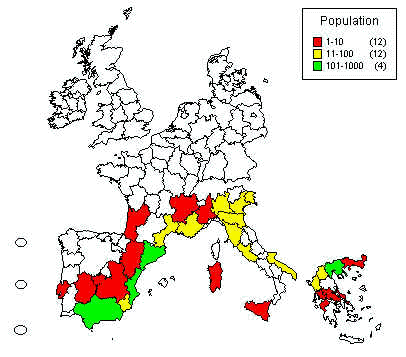 |
This small heron inhabits the swamps of
south-western Eurasia, from the Iberian Peninsula to Kazahkstan, and a large part of
Africa. European populations winter in Sub-Saharan Africa. The total population of the
European Union amounted to about 1600 breeding pairs in 1995, and seemed to decline in
most countries (EBCC Atlas of European Breeding Birds). |
o
NUTS |
MIN |
MAX |
R |
Aquitaine |
1 |
10 |
C |
Languedoc-Roussillon |
15 |
30 |
C |
Provence/Alpes-Côte
d'Azur |
80 |
|
C |
Rhône-Alpes |
1 |
10 |
C |
Emilia Romagna |
50 |
100 |
C |
Friuli-Venezia Giulia |
50 |
100 |
C |
Lazio |
5 |
50 |
C |
Lombardia |
88 |
|
C |
Piemonte |
1 |
5 |
C |
Puglia |
5 |
50 |
C |
Sardegna |
1 |
10 |
C
|
Sicilia |
1 |
10 |
C
|
Toscana |
5 |
50 |
C |
Veneto |
50 |
100 |
C |
Andalucia |
130 |
|
C |
Aragon |
1 |
10 |
C |
Castilla
la Mancha |
1 |
5 |
C |
Cataluña |
191 |
250 |
C |
Comunidad
Valenciana |
80 |
125 |
C |
Extremadura |
1 |
|
C |
Murcia |
13 |
|
C |
Lisboa e Vale do Tejo |
1 |
5 |
C |
Anatoliki
Makedonia, Thraki |
5 |
|
C |
Dytiki
Ellada |
0 |
15 |
C |
Dytiki
Makedonia |
50 |
100 |
C |
Ipeiros |
10 |
50 |
C |
Kentriki
Makedonia |
185 |
|
C |
Sterea
Ellada |
0 |
15 |
C |
|
----------------------------------------------------------------------------End-------------------------------------------------------------------------
Great White Egret, Egretta alba
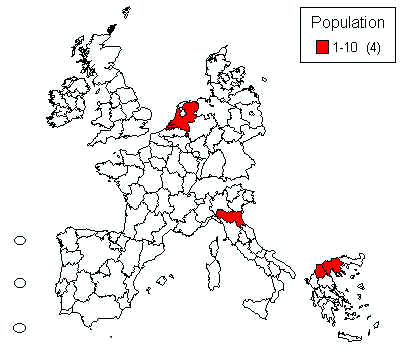 |
This cosmopolitan species inhabits large swamps, swamp
forests, estuaries and coastal marshes in temperate and tropical regions. In Europe it
declined strongly since the middle of last century, and it is currently restricted to the
central and south-eastern parts of the continent. European birds winter mainly in northern
Africa and around the eastern Mediterranean, but an increasing number of individuals
winter in Central Europe and the Netherlands. This bird seems to be very sensitive to the
conditions of its habitats, and its populations fluctuate strongly. Its Central and
Western European populations are increasing since about 1965, and a breeding colony (1-3 pairs) became
established in the Netherlands in 1991. The Greek populations are still decreasing,
however. The total population of the European Union remains marginal thus compared to the
total European population which can be estimated at 12500-16000 breeding pairs |
o
NUTS |
MIN |
MAX |
R |
Nederland |
0 |
1 |
C |
Emilia Romagna |
1 |
1 |
C |
Dytiki
Makedonia |
2 |
10 |
C |
Kentriki
Makedonia |
1 |
10 |
C |
|
----------------------------------------------------------------------------End-------------------------------------------------------------------------
Little Egret, Egretta garzetta
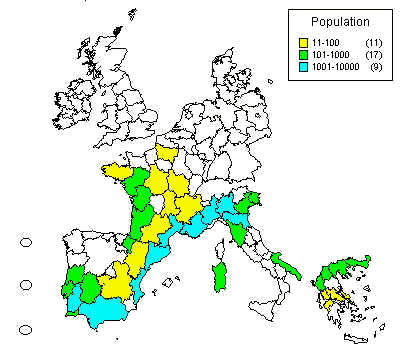 |
This bird has a wide distribution in the southern
parts of Europe and Asia, in northern, eastern and southern Africa, on the Cape Verde
Islands, in Indonesia and Australia. European populations winter mainly in northern
Africa, but since 1950 an increasing number of individuals remain during the winter along
the European coasts of the Mediterranean. The population of the European Union amounts to
about 22700 breeding pairs. It is increasing in Spain, France and Italy, decreasing in
Greece (EBCC Atlas of European Breeding Birds). |
o
NUTS |
MIN |
MAX |
R |
Aquitaine |
370 |
|
C |
Auvergne |
20 |
100 |
C |
Bourgogne |
10 |
20 |
C |
Bretagne |
50 |
100 |
C |
Centre |
5 |
20 |
C |
Languedoc-Roussillon |
1000 |
|
C |
Midi-Pyrénées |
15 |
30 |
C |
Pays de la Loire |
180 |
220 |
C |
Picardie |
10 |
|
C |
Poitou-Charente |
100 |
300 |
C |
Provence/Alpes-Côte d'Azur |
1100 |
|
C |
Rhône-Alpes |
10 |
100 |
C |
Emilia
Romagna |
1000 |
2000 |
C |
Friuli-Venezia
Giulia |
200 |
500 |
C |
Lombardia |
2000 |
4000 |
C |
Piemonte |
2000 |
4000 |
C |
Puglia |
50 |
250 |
C |
Sardegna |
50 |
250 |
C |
Toscana |
100 |
500 |
C |
Veneto |
500 |
1000 |
C |
Andalucia |
2000 |
4000 |
C |
Aragon |
20 |
|
C |
Castilla la Mancha |
90 |
|
C |
Cataluña |
1500 |
|
C |
Comunidad Valenciana |
2000 |
4000 |
C |
Extremadura |
220 |
|
C |
Navarra |
100 |
200 |
C
|
Alentejo |
1500 |
3500 |
C |
Algarve |
500 |
1000 |
C |
Centro |
50 |
200 |
C |
Lisboa
e Vale do Tejo |
250 |
500 |
C |
Anatoliki Makedonia, Thraki |
430 |
|
C |
Dytiki Ellada |
5 |
30 |
C |
Dytiki Makedonia |
100 |
|
C |
Ipeiros |
250 |
|
C |
Kentriki Makedonia |
700 |
|
C |
Sterea Ellada |
0 |
30 |
C |
|
----------------------------------------------------------------------------End-------------------------------------------------------------------------
Family CICONIIDAE, storks
White Stork, Ciconia ciconia
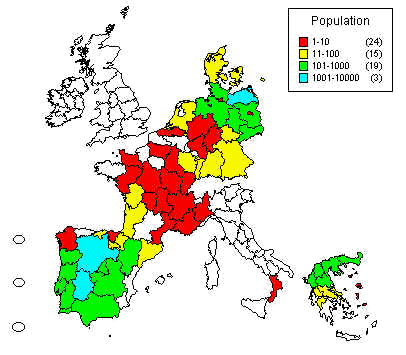 |
This stork has a discontinuous distribution from northern
Africa and the Iberian Peninsula to Central Asia, but its most important populations
inhabit Eastern and Central Europe. It winters mainly in the Sahel Region, East and South
African, but small numbers remain in the Iberian Peninsula. The population of the European
Union amounts to 14000-16000 breeding pairs, which represents only 11% of the total
European population (Tucker & Heath). Until recently, the species declined in particular in north-west Europe.
The reasons for this decline were numerous. They include mainly
habitat changes and use of pesticides in the breeding areas, climatic dryness and use of
pesticides during anti-locust campaigns in the winter quarters. More recently, its numbers increase in Spain
and the species extends its range in the Baltic States and European Russia (EBCC Atlas of European
Breeding Birds). |
o
NUTS |
MIN |
MAX |
R |
Danmark |
12 |
|
C |
Nederland |
8 |
13 |
C |
Vlaams
Gewest |
1 |
|
C |
Baden-Württemberg |
60 |
|
C |
Bayern |
77 |
|
C |
Berlin |
3 |
|
C |
Brandenburg |
960 |
|
C |
Bremen |
5 |
|
C |
Hamburg |
9 |
|
C |
Hessen |
1 |
|
C |
Mecklenburg-Vorpommern |
1053 |
|
C |
Niedersachsen |
259 |
|
C |
Nordrhein-Westfalen |
6 |
|
C |
Rheinland-Pfaltz |
0 |
|
C |
Sachsen |
292 |
|
C |
Sachsen-Anhalt |
357 |
|
C |
Schleswig-Holstein |
210 |
|
C |
Thüringen |
19 |
|
C |
Alsace |
80 |
|
C |
Aquitaine |
12 |
|
C |
Auvergne |
6 |
|
C |
Basse-Normandie |
7 |
|
C |
Bourgogne |
3 |
|
C |
Centre |
1 |
|
C |
Champagne-Ardennes |
1 |
|
C |
Franche-Comté |
1 |
|
C |
Languedoc-Roussillon |
1 |
|
C |
Limousin |
1 |
|
C |
Lorraine |
11 |
|
C |
Pays
de la Loire |
3 |
|
C |
Picardie |
1 |
3 |
C |
Poitou-Charente |
14 |
|
C |
Provence/Alpes-Côte
d'Azur |
2 |
|
C |
Rhône-Alpes |
1 |
3 |
C |
Calabria |
1 |
1 |
C |
Piemonte |
8 |
8 |
C |
Andalucia |
719 |
|
C |
Aragon |
145 |
|
C |
Cantabria |
26 |
|
C |
Castilla
la Mancha |
525 |
|
C |
Castilla
y Leon |
2043 |
|
C |
Cataluña |
19 |
|
C |
Extremadura |
3140 |
|
C |
Galicia |
4 |
|
C |
Madrid |
335 |
|
N |
Navarra |
41 |
|
C |
Pais
Vasco |
1 |
|
C |
Rioja |
46 |
|
C |
Alentejo |
700 |
900 |
C |
Algarve |
120 |
160 |
C |
Centro |
330 |
440 |
C |
Lisboa e Vale do Tejo |
210 |
280 |
C |
Norte |
225 |
300 |
C |
Anatoliki
Makedonia, Thraki |
250 |
350 |
C |
Dytiki
Ellada |
50 |
|
C |
Dytiki
Makedonia |
100 |
|
C |
Ipeiros |
150 |
|
C |
Kentriki
Makedonia |
290 |
|
C |
Sterea
Ellada |
25 |
40 |
C |
Thessalia |
200 |
|
C |
Voreio
Aigaio |
3 |
6 |
C |
|
----------------------------------------------------------------------------End-------------------------------------------------------------------------
Black Stork, Ciconia nigra
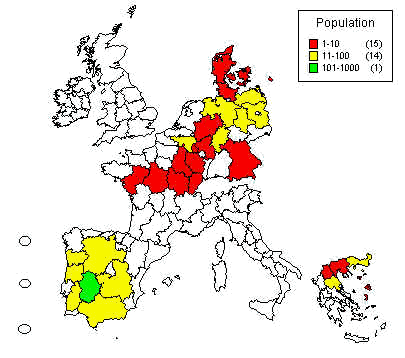 |
This stork inhabits a large part of Eurasia
and also South Africa. Some birds of Southern Europe are sedentary, but most European
populations winter in Sub-Saharan Africa. The total population of the European Union
amounts to 400-470 breeding pairs. It has undergone a dramatic decrease between 1850 and
1950, and the species has disappeared from many regions. Since 1970 an increase has been
noticed in several countries, and some regions of Germany, France, Belgium and Luxembourg
have been colonised again. The population of the European Union represents only 4% of the
total European population, however, and the global trends are unknown. |
o
NUTS |
MIN |
MAX |
R |
Danmark |
1 |
2 |
C |
Région Wallonne |
7 |
14 |
C |
Luxembourg |
1 |
|
C |
Bayern |
6 |
8 |
C |
Brandenburg |
17 |
|
C |
Hessen |
6 |
8 |
C |
Mecklenburg-Vorpommern |
12 |
14 |
C |
Niedersachsen |
20 |
|
C |
Nordrhein-Westfalen |
1 |
3 |
C |
Rheinland-Pfaltz |
1 |
|
C |
Sachsen-Anhalt |
20 |
|
C |
Schleswig-Holstein |
8 |
|
C |
Bourgogne |
2 |
5 |
C |
Centre |
3 |
5 |
C |
Champagne-Ardennes |
2 |
5 |
C |
Franche-Comté |
2 |
5 |
C |
Lorraine |
2 |
5 |
C |
Pays
de la Loire |
2 |
5 |
C |
Poitou-Charentes |
0 |
1 |
C |
Andalucia |
16 |
|
C |
Castilla la Mancha |
18 |
|
C |
Castilla y Leon |
40 |
|
C |
Extremadura |
105 |
|
C |
Alentejo |
20 |
30 |
C |
Centro |
12 |
18 |
C |
Norte |
10 |
15 |
C |
Anatoliki Makedonia, Thraki |
15 |
|
C |
Dytiki Makedonia |
1 |
5 |
C |
Kentriki Makedonia |
5 |
|
C |
Thessalia |
10 |
|
C |
Voreio Aigaio |
2 |
4 |
C |
|
----------------------------------------------------------------------------End-------------------------------------------------------------------------
Family THRESKIORNITHIDAE, ibises and spoonbills
Spoonbill, Platalea leucorodia
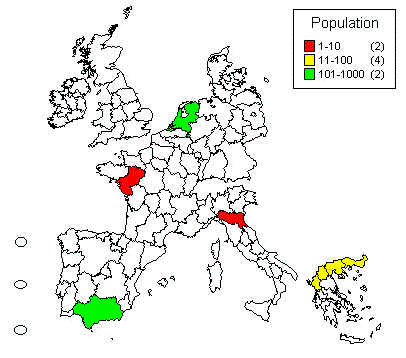 |
This bird has a wide distribution throughout
the southern parts of Eurasia, from the Iberian Peninsula to India and China. It winters
in the Mediterranean regions and in Sub-Saharan Africa. The population of the European
Union is totalling 1200-1400 breeding pairs, which represents 14-25% of the total European
population. The western populations have increased during the last decades, but the
eastern populations, including the Greek population, have undergone a steady decline.
Consequently, the total European population has probably declined by 30%. Wetland
reclamation and pollution are the main reasons (Tucker & Heath). |
o
NUTS |
MIN |
MAX |
R |
Nederland |
400 |
530 |
C |
Pays de la Loire |
8 |
10 |
C |
Emilia
Romagna |
7 |
7 |
C |
Andalucia |
400 |
700 |
C |
Anatoliki
Makedonia, Thraki |
10 |
20 |
C |
Dytiki
Makedonia |
5 |
20 |
C |
Ipeiros |
75 |
100 |
C |
Kentriki
Makedonia |
30 |
40 |
C |
|
----------------------------------------------------------------------------End-------------------------------------------------------------------------
Glossy Ibis, Plegadis falcinellus
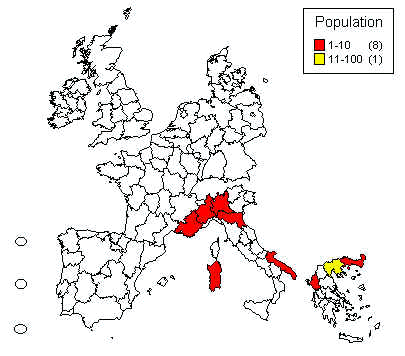 |
This bird has a nearly cosmopolitan but very
fragmented distribution. In Europe it breeds in the Mediterranean regions, the Balkan
Peninsula and the eastern parts of the continent. The population of the European Union
comprises 52-89 breeding pairs, which represents only 0.5% of the total European
population. Being fairly unpredictable in the occupation of its breeding sites, its trends
are often difficult to assess, but globally it has undergone a strong decline since the
latter part of last century, and its breeding area have definitely contracted. This trend
seems even to have been accelerated during the last few decades. The main reasons for this
are wetland reclamation, hunting and disturbance of breeding colonies (Tucker &
Heath). |
o
NUTS |
MIN |
MAX |
R |
Provence/Alpes-Côte
d'Azur |
0 |
3 |
C |
Emilia Romagna |
5 |
5 |
C |
Lombardia |
0 |
1 |
C |
Piemonte |
0 |
5 |
C |
Puglia |
5 |
5 |
C |
Sardegna |
1 |
5 |
C
|
Anatoliki
Makedonia, Thraki |
0 |
6 |
C |
Ipeiros |
0 |
10 |
C |
Kentriki
Makedonia |
70 |
|
C |
|
----------------------------------------------------------------------------End-------------------------------------------------------------------------
Family PHOENICOPTERIDAE, flamingoes
Greater Flamingo, Phoenicopterus
roseus (ruber)
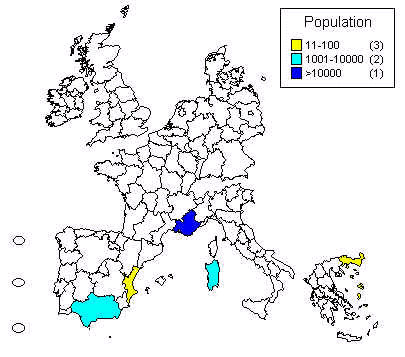 |
This bird has a very fragmented
distribution in Africa, south-western Asia, Central America, the Galapagos Islands and the
Mediterranean regions of Europe. The population of the European Union amounts to about
14000-29000 breeding pairs, and seems quite stable. Some new breeding colonies have
appeared during the last few years : in Greece in 1992 and in Italy in 1993. The
populations of this species fluctuate widely according to climatic conditions. Being
strictly dependent on coastal brackish waters, they are adversely affected by reclamation
of lagoons and tourism development (EBCC Atlas of European Breeding Birds). |
NUTS |
MIN |
MAX |
R |
Provence/Alpes-Côte
d'Azur |
8200 |
20000 |
C |
Sardegna |
1600 |
1600 |
C |
Andalucia |
400 |
10500 |
C |
Comunidad
Valenciana |
0 |
30 |
N |
Anatoliki Makedonia, Thraki |
0 |
50 |
C |
Voreio Aigaio |
0 |
50 |
C |
|
-------------------------------------------------------------------------
End ----------------------------------------------------------------------
Last update : 06/10/06
|
