|
Home
Site map
Intro/Staff
Databases
Projets
Documents
| |
Family ACCIPITRIDAE, honey buzzards, kites, harriers, vultures and
hawks
Honey Buzzard , Pernis apivorus
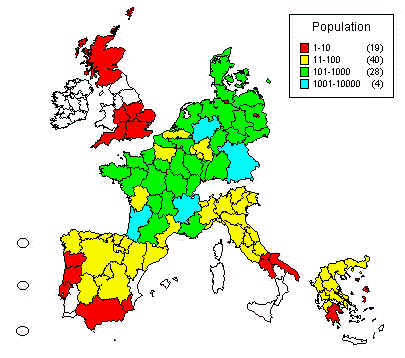 |
This bird inhabits forests of a large part of
Europe and western temperate Asia. It winters in Sub-Saharan Africa. The population of the
European Union amounts to about 20000 breeding pairs and the total European population
130000 pairs. In some regions this species has declined, but elsewhere it has extended its
distribution following the expansion of forest plantations. Globally its populations seem
fairly stable (EBCC Atlas of European Breeding Birds). |
o
NUTS |
MIN |
MAX |
R |
East
Anglia |
2 |
|
I |
East
Midlands (GB) |
1 |
2 |
C |
Scotland |
1 |
2 |
|
South
East (GB) |
1 |
16 |
C |
South
West (GB) |
1 |
2 |
|
West
Midlands (GB) |
1 |
2 |
|
Danmark |
50 |
200 |
|
Nederland |
400 |
500 |
C |
Région Wallonne |
200 |
350 |
C |
Vlaams Gewest |
70 |
100 |
C |
Luxembourg |
17 |
|
C |
| Baden-Württemberg |
300 |
400 |
C |
Bayern |
500 |
2500 |
C |
Berlin |
1 |
3 |
C |
Brandenburg |
200 |
250 |
C |
Bremen |
2 |
4 |
C |
Hamburg |
2 |
3 |
C |
Hessen |
100 |
|
C |
Mecklenburg-Vorpommern |
175 |
|
C |
Niedersachsen |
400 |
600 |
C |
Nordrhein-Westfalen |
200 |
2000 |
C |
Rheinland-Pfaltz |
50 |
|
C |
Saarland |
20 |
|
C |
Sachsen |
100 |
500 |
C |
Sachsen-Anhalt |
100 |
500 |
C |
Schleswig-Holstein |
80 |
200 |
C |
Thüringen |
100 |
500 |
C |
Alsace |
80 |
170 |
C |
Aquitaine |
1150 |
1400 |
C |
Auvergne |
400 |
600 |
C |
Basse-Normandie |
200 |
475 |
C |
Bourgogne |
450 |
500 |
C |
Bretagne |
200 |
|
C |
Centre |
800 |
1000 |
C |
Champagne-Ardennes |
750 |
900 |
C |
Franche-Comté |
450 |
750 |
C |
Haute-Normandie |
100 |
140 |
C |
Ile
de France |
127 |
187 |
C |
Languedoc-Roussillon |
5 |
50 |
C |
Limousin |
470 |
980 |
C |
Lorraine |
335 |
370 |
C |
Midi-Pyrénées |
101 |
500 |
C |
Nord-Pas-de-Calais |
148 |
192 |
C |
Pays
de la Loire |
320 |
440 |
C |
Picardie |
39 |
55 |
C |
Poitou-Charente |
70 |
110 |
C |
Provence/Alpes-Côte
d'Azur |
240 |
335 |
C |
Rhône-Alpes |
1383 |
1683 |
C |
Abruzzi |
30 |
60 |
C |
Campania |
1 |
5 |
C |
Emilia Romagna |
30 |
60 |
C |
Friuli-Venezia Giulia |
30 |
60 |
C |
Lazio |
30 |
60 |
C |
Liguria |
15 |
60 |
C |
Lombardia |
80 |
100 |
C |
Marche |
30 |
60 |
C |
Molise |
1 |
5 |
C |
Piemonte |
15 |
60 |
C |
Puglia |
1 |
5 |
|
Toscana |
30 |
60 |
C |
Trentino-Alto Adige |
30 |
60 |
C |
Umbria |
30 |
60 |
C |
Valle d'Aosta |
30 |
60 |
C |
Veneto |
30 |
60 |
C |
Andalucia |
1 |
10 |
C |
Aragon |
50 |
150 |
C |
Asturias |
50 |
100 |
C |
Cantabria |
50 |
75 |
C |
Castilla
la Mancha |
50 |
75 |
C |
Castilla
y Leon |
50 |
100 |
C |
Cataluña |
30 |
60 |
C |
Extremadura |
50 |
150 |
C |
Galicia |
10 |
50 |
C |
Madrid |
11 |
50 |
C |
Murcia |
1 |
10 |
C |
Navarra |
50 |
150 |
C |
Pais
Vasco |
50 |
75 |
C |
Rioja |
10 |
50 |
C |
Centro |
1 |
2 |
C |
Lisboa e Vale do Tejo |
1 |
2 |
C |
Norte |
3 |
5 |
C |
Anatoliki
Makedonia, Thraki |
50 |
|
C |
Attiki |
5 |
20 |
C |
Dytiki
Ellada |
10 |
|
C |
Dytiki
Makedonia |
25 |
|
C |
Ipeiros |
20 |
|
C |
Kentriki
Makedonia |
20 |
|
C |
Peloponnisos |
5 |
|
C |
Sterea
Ellada |
40 |
100 |
C |
Thessalia |
20 |
|
C |
Voreio
Aigaio |
5 |
|
C |
|
----------------------------------------------------------------------------End-------------------------------------------------------------------------
Black-shouldered Kite, Elanus caeruleus
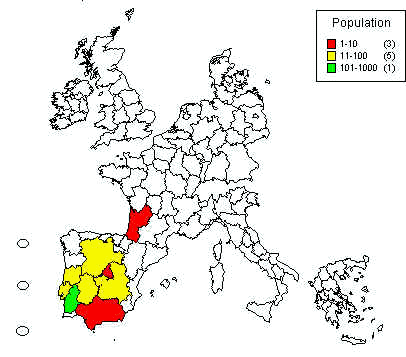 |
This species has a fragmented distribution
covering most of Africa except the Sahara, south-eastern Asia, parts of Indonesia and
Australia. In south-western Europe it inhabits open habitats with scattered trees. For a
long time it was restricted to the Iberian Peninsula, but during the last two decades it
has extended its distribution to south-western France. About 1300 breeding pairs occur
currently in the European Union (EBCC Atlas of European Breeding Birds). |
o
NUTS |
MIN |
MAX |
R |
Aquitaine |
0 |
1 |
C |
Andalucia |
1 |
|
C |
Castilla la Mancha |
20 |
|
C |
Castilla y Leon |
15 |
|
C |
Extremadura |
65 |
|
C |
Madrid |
1 |
10 |
C |
Alentejo |
85 |
140 |
C |
Centro |
25 |
30 |
C |
Lisboa e Vale do Tejo |
35 |
50 |
C |
|
----------------------------------------------------------------------------End-------------------------------------------------------------------------
Black Kite, Milvus
migrans
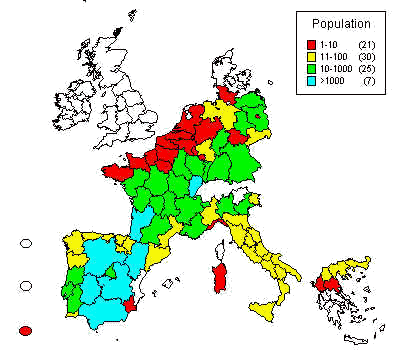 |
This kite inhabits most of Africa and
Eurasia, from the Iberian Peninsula to Japan. Northwards it occurs up to 65°N. European
populations are wintering in sub-Saharan Africa. About 21000-28000 breeding pairs occur in
the European Union, which represents roughly 25% of the total European population. This
species is subject to important fluctuations, but globally it undergoes a slow decrease
since the beginning of the century. Being largely a scavenger, it is very susceptible to
poisoning and pollution by pesticides. The disappearance of extensive pastoralism is
another negative factor (Tucker & Heath). |
o
NUTS |
MIN |
MAX |
R |
Nederland |
0 |
1 |
C |
Région Wallonne |
3 |
8 |
C |
Vlaams Gewest |
1 |
|
C |
Luxembourg |
5 |
6 |
C |
Baden-Württemberg |
300 |
|
C |
Bayern |
150 |
400 |
C |
Berlin |
1 |
|
C |
Brandenburg |
200 |
220 |
C |
Hessen |
130 |
150 |
C |
Mecklenburg-Vorpommern |
240 |
|
C |
Niedersachsen |
25 |
30 |
C |
Nordrhein-Westfalen |
|
9 |
C |
Rheinland-Pfaltz |
|
100 |
C |
Saarland |
5 |
|
C |
Sachsen |
75 |
125 |
C |
Sachsen-Anhalt |
100 |
250 |
C |
Schleswig-Holstein |
2 |
5 |
C |
Thüringen |
2 |
5 |
C |
Alsace |
100 |
140 |
C |
Aquitaine |
1600 |
2550 |
C |
Auvergne |
700 |
950 |
C |
Basse-Normandie |
0 |
2 |
C |
Bourgogne |
290 |
320 |
C |
Bretagne |
1 |
10 |
|
Centre |
120 |
200 |
C |
Champagne-Ardennes |
450 |
510 |
C |
Franche-Comté |
850 |
1250 |
C |
Haute-Normandie |
0 |
2 |
C |
Ile de France |
1 |
|
C |
Languedoc-Roussillon |
50 |
100 |
C |
Limousin |
138 |
267 |
C |
Lorraine |
470 |
510 |
C |
Midi-Pyrénées |
350 |
600 |
C |
Nord-Pas-de-Calais |
0 |
1 |
C |
Pays de la Loire |
195 |
265 |
C |
Picardie |
1 |
|
C |
Poitou-Charente |
290 |
410 |
C |
Provence/Alpes-Côte d'Azur |
175 |
315 |
C |
Rhône-Alpes |
850 |
990 |
C |
Abruzzi |
10 |
15 |
C |
Basilicata |
10 |
15 |
C |
Calabria |
10 |
15 |
C |
Campania |
10 |
|
C |
Emilia Romagna |
20 |
25 |
C |
Friuli-Venezia Giulia |
20 |
25 |
C |
Lazio |
10 |
|
C |
Liguria |
1 |
10 |
C |
Lombardia |
200 |
300 |
C |
Marche |
10 |
|
C |
Molise |
10 |
15 |
C |
Piemonte |
50 |
100 |
C |
Puglia |
10 |
15 |
C |
Sardegna |
1 |
5 |
C |
Sicilia |
15 |
|
C |
Toscana |
20 |
25 |
C |
Umbria |
20 |
25 |
C |
Valle d'Aosta |
100 |
150 |
C |
Veneto |
100 |
150 |
C |
Andalucia |
4000 |
5000 |
C |
Aragon |
1000 |
2000 |
C |
Asturias |
10 |
150 |
C |
Canarias |
1 |
10 |
C |
Cantabria |
10 |
150 |
C |
Castilla la Mancha |
4000 |
2000 |
C |
Castilla y Leon |
4000 |
2000 |
C |
Cataluña |
26 |
32 |
C |
Extremadura |
6000 |
7000 |
C |
Galicia |
10 |
150 |
C |
Madrid |
100 |
|
C |
Murcia |
7 |
10 |
C |
Navarra |
10 |
150 |
C |
Pais Vasco |
10 |
150 |
C |
Rioja |
10 |
150 |
C |
Alentejo |
430 |
570 |
C |
Algarve |
20 |
25 |
C |
Centro |
180 |
240 |
C |
Lisboa e Vale do Tejo |
200 |
260 |
C |
Norte |
60 |
80 |
C |
Anatoliki Makedonia, Thraki |
15 |
|
C |
Dytiki Makedonia |
5 |
15 |
C |
Ipeiros |
0 |
3 |
C |
Kentriki Makedonia |
15 |
|
C |
Thessalia |
3 |
10 |
C |
|
----------------------------------------------------------------------------End-------------------------------------------------------------------------
Red Kite, Milvus milvus
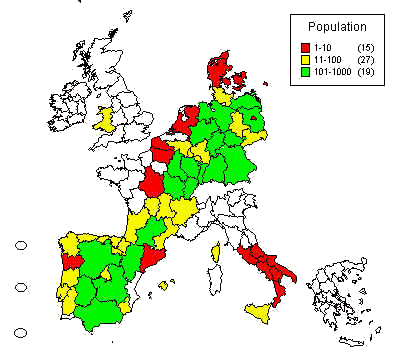 |
This kite is
essentially a European species, breeding from the Iberian Peninsula to the South of the
Baltic Sea and from Wales to the Caucasus. It is also known from north-western Africa and
the Cape Verde islands. It disappeared recently from the Canary islands. The birds of
Wales and south-western Europe are largely sedentary or make only very small movements in
winter. Those of the north-east move to the south-west. The population of the European
Union amounts to 21000 breeding pairs for a global population of maximum 32000 pairs.
Despite some fluctuations, it seems to be fairly stable (EBCC Atlas of European Breeding
Birds). |
o
NUTS |
MIN |
MAX |
R |
Wales |
77 |
92 |
C |
Danmark |
8 |
|
C |
Nederland |
2 |
5 |
C |
Région Wallonne |
30 |
45 |
C |
Luxembourg |
10 |
12 |
C |
Baden-Württemberg |
180 |
200 |
C |
Bayern |
150 |
400 |
C |
Berlin |
1 |
5 |
C |
Brandenburg |
100 |
120 |
C |
Hessen |
|
250 |
C |
Mecklenburg-Vorpommern |
100 |
120 |
C |
Niedersachsen |
600 |
800 |
C |
Nordrhein-Westfalen |
210 |
300 |
C |
Rheinland-Pfaltz |
|
100 |
C |
Saarland |
20 |
30 |
C |
Sachsen |
5 |
50 |
C |
Sachsen-Anhalt |
5 |
50 |
C |
Schleswig-Holstein |
25 |
50 |
C |
Thüringen |
200 |
400 |
C |
Alsace |
100 |
|
C |
Aquitaine |
20 |
50 |
C |
Auvergne |
49 |
62 |
C |
Bourgogne |
165 |
180 |
C |
Centre |
1 |
2 |
C |
Champagne-Ardennes |
480 |
550 |
C |
Corse |
50 |
100 |
C |
Franche-Comté |
700 |
1000 |
C |
Languedoc-Roussillon |
20 |
50 |
C |
Limousin |
40 |
70 |
C |
Lorraine |
740 |
790 |
C |
Midi-Pyrénées |
100 |
|
C |
Nord-Pas-de-Calais |
1 |
2 |
C |
Picardie |
6 |
8 |
C |
Rhône-Alpes |
50 |
60 |
C |
Abruzzi |
0 |
2 |
C |
Basilicata |
5 |
10 |
C |
Calabria |
4 |
|
C |
Campania |
6 |
6 |
C |
Lazio |
5 |
10 |
C |
Molise |
0 |
2 |
C |
Puglia |
5 |
10 |
C |
Sicilia |
|
40 |
C |
Andalucia |
200 |
300 |
C |
Aragon |
400 |
500 |
C |
Asturias |
10 |
50 |
C |
Baleares |
20 |
40 |
C |
Cantabria |
10 |
50 |
C |
Castilla la Mancha |
200 |
300 |
C |
Castilla y Leon |
400 |
500 |
C |
Cataluña |
3 |
|
C |
Extremadura |
800 |
900 |
C |
Galicia |
10 |
50 |
C |
Madrid |
11 |
50 |
C |
Murcia |
10 |
50 |
C |
Navarra |
50 |
150 |
C |
Pais Vasco |
10 |
50 |
C |
Rioja |
10 |
50 |
C |
Alentejo |
30 |
40 |
C |
Centro |
50 |
60 |
C |
Lisboa e Vale do Tejo |
10 |
12 |
C |
Norte |
4 |
5 |
C |
|
----------------------------------------------------------------------------End-------------------------------------------------------------------------
White-tailed Eagle, Haliaeetus
albicilla
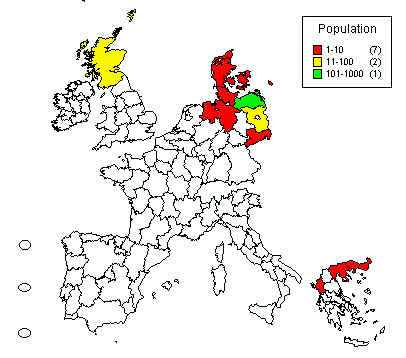 |
This bird is breeding in south-western Greenland, Iceland and
in a large part of Eurasia, from the Balkan Peninsula, Germany and Norway to northern
China and eastern Siberia. During last century and the first half of this century the
species has declined dramatically and has disappeared from many regions. Since 1970 its
western populations have increased, and have been able to become established again in
several regions. In Central Europe and Greece the decrease is still going on, however. The
population of the European Union (12 Member States) was of 149-161 breeding pairs, while the total
European population can be estimated at 3500 pairs. This species has been suffering and is
still suffering in some regions from persecution, acute poisoning, nest destruction and
wetland reclamation. Between 1950 and 1980 it has also been subject to reduced fertility
following chronic poisoning with pesticides (Tucker & Heath). |
o
NUTS |
MIN |
MAX |
R |
Scotland |
11 |
11 |
C |
Danmark |
0 |
1 |
C |
Brandenburg |
22 |
25 |
C |
Mecklenburg-Vorpommern |
100 |
120 |
C |
Niedersachsen |
1 |
|
C |
Sachsen |
6 |
6 |
C |
Schleswig-Holstein |
4 |
|
C |
Anatoliki Makedonia, Thraki |
2 |
3 |
C |
Ipeiros |
1 |
2 |
C |
Kentriki Makedonia |
1 |
2 |
C |
|
----------------------------------------------------------------------------End-------------------------------------------------------------------------
Lammergeier,
Gypaetus barbatus
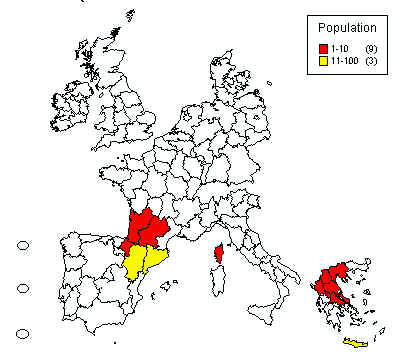 |
This vulture has a widespread
distribution in the mountains of Eurasia and Africa. Its population in the European Union
amounts to 88 breeding pairs, while the total European population can be estimated at
200-640 pairs. Since the middle of last century this species has undergone a strong
decrease, and it has disappeared from Germany and Italy. Currently its population seems to
be stable in France, increasing in Spain. The decline is still progressing in Greece. Its
main reasons are direct persecution and poisoning. Recently habitat loss, lack of food
resources due to abandonment of extensive livestock economy and disturbance by tourism and
recreational activities have also had adverse effects (EBCC Atlas of European Breeding
Birds). |
o
NUTS |
MIN |
MAX |
R |
Aquitaine |
10 |
|
C |
Corse |
10 |
|
C |
Midi-Pyrénées |
7 |
|
C |
Aragon |
30 |
35 |
|
Cataluña |
20 |
25 |
|
Navarra |
2 |
5 |
C |
Dytiki Makedonia |
1 |
|
C |
Ipeiros |
1 |
2 |
C |
Kentriki Makedonia |
1 |
|
C |
Kriti |
10 |
12 |
C |
Sterea Ellada |
2 |
3 |
C |
Thessalia |
1 |
|
C |
|
----------------------------------------------------------------------------End-------------------------------------------------------------------------
Egyptian Vulture, Neophron
percnopterus
 |
This vulture is widely distributed in southern
Europe, from south-western Asia to India and Mongolia, and in the northern half of Africa.
The birds of Spain, the Balearic islands and the Canary islands are partly sedentary, but
all other populations winter in Africa, mainly in the Sahel region. About 1600-1770
breeding pairs inhabit the European Union. This population is declining since the
beginning of the century, and is still declining in many regions. Direct persecution and
poisoning are the most important threats to this species (Tucker & Heath, EBCC Atlas
of European Breeding Birds). |
o
NUTS |
MIN |
MAX |
R |
Aquitaine |
28 |
|
C |
Languedoc-Roussillon |
2 |
|
C |
Midi-Pyrénées |
2 |
4 |
C |
Provence/Alpes-Côte
d'Azur |
20 |
|
C |
Basilicata |
0 |
1 |
C |
Calabria |
8 |
|
C |
Puglia |
2 |
5 |
|
Sicilia |
20 |
|
C |
Andalucia |
100 |
150 |
C |
Aragon |
100 |
150 |
C |
Asturias |
1 |
10 |
C |
Baleares |
10 |
15 |
C |
Canarias |
22 |
23 |
C |
Cantabria |
1 |
10 |
C |
Castilla
la Mancha |
50 |
100 |
C |
Castilla
y Leon |
400 |
500 |
C |
Cataluña |
35 |
40 |
C |
Comunidad
Valenciana |
1 |
2 |
C |
Extremadura |
100 |
150 |
C |
Galicia |
1 |
10 |
C |
Madrid |
1 |
2 |
C |
Murcia |
1 |
10 |
C |
Navarra |
141 |
|
C |
Pais
Vasco |
1 |
5 |
|
Rioja |
50 |
100 |
C |
Alentejo |
5 |
10 |
|
Centro |
10 |
20 |
C |
Lisboa e Vale do Tejo |
5 |
10 |
C |
Norte |
20 |
30 |
C |
Anatoliki
Makedonia, Thraki |
40 |
|
C |
Dytiki
Makedonia |
10 |
|
C |
Ionia
nisia |
2 |
|
C |
Ipeiros |
25 |
|
C |
Kentriki
Makedonia |
5 |
10 |
C |
Notio
Aigaio |
2 |
|
C |
Peloponnisos |
5 |
10 |
C |
Sterea
Ellada |
10 |
|
C |
Thessalia |
70 |
|
C |
|
----------------------------------------------------------------------------End-------------------------------------------------------------------------
Griffon Vulture, Gyps fulvus
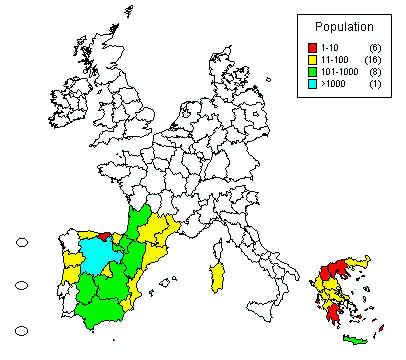 |
This vulture inhabits southern Europe, North
Africa and from south-western Asia to southern China. Most European birds are sedentary.
The population of the European Union amounts to 8800-9000 breeding pairs. Because of heavy
persecution and poisoning it has strongly declined since the middle of last century. More
recently changes in the methods of raising domestic livestock have reduced the availability of the Griffon Vulture's food. Since 1970
however Spanish and French populations have increased, mainly thanks to effective
protection measures and withdrawal of long-lasting pesticides. In France its breeding
distribution has even been extended through a reintroduction programme. In Italy, Portugal
and Greece the decline is still in progress (Tucker & Heath). |
o
NUTS |
MIN |
MAX |
R |
Aquitaine |
250 |
265 |
|
Languedoc-Roussillon |
20 |
|
|
Midi-Pyrénées |
30 |
|
|
Sardegna |
20 |
|
C |
Andalucia |
600 |
800 |
C |
Aragon |
600 |
700 |
C |
Asturias |
10 |
50 |
C |
Cantabria |
1 |
10 |
C |
Castilla
la Mancha |
150 |
250 |
C |
Castilla
y Leon |
1000 |
1200 |
C |
Cataluña |
78 |
83 |
C |
Comunidad
Valenciana |
46 |
70 |
C |
Extremadura |
400 |
500 |
C |
Madrid |
11 |
50 |
C |
Murcia |
10 |
20 |
C |
Navarra |
792 |
|
C |
Pais
Vasco |
50 |
75 |
C |
Rioja |
100 |
200 |
C |
Centro |
40 |
60 |
C |
Norte |
60 |
90 |
C |
Anatoliki
Makedonia, Thraki |
20 |
|
C |
Dytiki
Ellada |
15 |
40 |
C |
Dytiki
Makedonia |
0 |
5 |
C |
Ionia
nisia |
5 |
8 |
C |
Ipeiros |
50 |
|
C |
Kentriki
Makedonia |
0 |
5 |
C |
Kriti |
80 |
150 |
C |
Notio
Aigaio |
3 |
10 |
C |
Peloponnisos |
5 |
6 |
C |
Sterea
Ellada |
20 |
30 |
C |
Thessalia |
30 |
50 |
C |
|
---------------------------------------------------------------------------End-------------------------------------------------------------------------
Black Vulture, Aegypius monachus
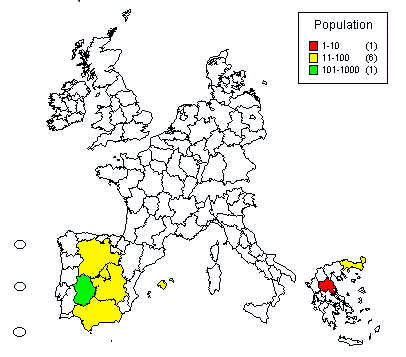 |
This large vulture is breeding in Eurasia between
30°N and 50°N and from the Iberian Peninsula to Mongolia and China. Because of the
degradation and destruction of its breeding habitats, direct persecution and poisoning,
abandoning of extensive livestock economy and rarefaction of wild ungulate populations,
this species has considerably declined all over its breeding area. In the European Union
it is not longer breeding in Portugal, France and Italy. It has become very uncommon
in Greece, but now increase locally as in Spain following conservation measures. In Spain it has definitely increased, however. Its global European population
amounts to 900-1000 breeding pairs (Tucker & Heath, 1994). |
o
NUTS |
MIN |
MAX |
R |
Andalucia |
35 |
|
C |
Baleares |
40 |
48 |
I |
Castilla
la Mancha |
30 |
|
C |
Castilla
y Leon |
67 |
|
C |
Extremadura |
230 |
|
C |
Madrid |
11 |
|
C |
Anatoliki Makedonia, Thraki |
10 |
20 |
C |
Thessalia |
1 |
2 |
I |
|
----------------------------------------------------------------------------End-------------------------------------------------------------------------
Short-toed Eagle, Circaetus gallicus
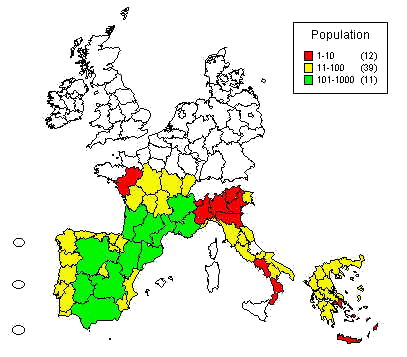 |
This species is breeding in a large part of
southern and Eastern Europe, northern Africa, the Middle East and Central Asia. It is
wintering mainly in Sub-Saharan Africa. The population of the European Union amounts to
3000-4500 breeding pairs, and seems to be fairly stable. It has undergone a strong
decrease and contraction during last century, and the species has disappeared from
Germany and Denmark (Tucker & Heath). The main reasons for
this decline are intensification of agriculture and disappearance of extensive livestock
economy (EBCC Atlas of European Breeding Birds). |
o
NUTS |
MIN |
MAX |
R |
Aquitaine |
145 |
200 |
C |
Auvergne |
40 |
60 |
C |
Bourgogne |
10 |
|
C |
Centre |
20 |
30 |
C |
Franche-Comté |
16 |
|
C |
Languedoc-Roussillon |
130 |
190 |
C |
Limousin |
15 |
20 |
C |
Midi-Pyrénées |
22 |
200 |
C |
Pays
de la Loire |
6 |
12 |
C |
Poitou-Charente |
23 |
40 |
C |
Provence/Alpes-Côte
d'Azur |
120 |
195 |
C |
Rhône-Alpes |
170 |
195 |
C |
Basilicata |
20 |
40 |
C |
Calabria |
6 |
|
C |
Campania |
1 |
2 |
C |
Emilia Romagna |
1 |
2 |
C |
Friuli-Venezia Giulia |
10 |
20 |
C |
Lazio |
20 |
40 |
C |
Liguria |
20 |
|
C |
Lombardia |
3 |
4 |
C |
Marche |
20 |
40 |
C |
Molise |
20 |
40 |
C |
Piemonte |
1 |
5 |
C |
Puglia |
20 |
40 |
C |
Toscana |
20 |
40 |
C |
Trentino-Alto Adige |
1 |
2 |
C |
Umbria |
20 |
40 |
C |
Valle d'Aosta |
1 |
5 |
C |
Veneto |
1 |
2 |
C |
Andalucia |
300 |
|
C |
Aragon |
200 |
|
C |
Asturias |
50 |
|
C |
Cantabria |
30 |
|
C |
Castilla
la Mancha |
400 |
|
C |
Castilla
y Leon |
400 |
|
C |
Cataluña |
100 |
150 |
C |
Comunidad
Valenciana |
77 |
86 |
C |
Extremadura |
500 |
|
C |
Galicia |
20 |
|
C |
Madrid |
11 |
50 |
C |
Murcia |
40 |
50 |
C |
Navarra |
50 |
|
C |
Pais
Vasco |
30 |
|
C |
Rioja |
50 |
|
C |
Alentejo |
40 |
50 |
C |
Algarve |
10 |
15 |
C |
Centro |
15 |
18 |
C |
Lisboa e Vale do Tejo |
10 |
15 |
C |
Norte |
30 |
35 |
C |
Anatoliki
Makedonia, Thraki |
75 |
100 |
C |
Attiki |
3 |
6 |
C |
Dytiki
Ellada |
20 |
30 |
C |
Dytiki
Makedonia |
30 |
60 |
C |
Ionia
nisia |
10 |
20 |
C |
Ipeiros |
30 |
50 |
C |
Kentriki
Makedonia |
50 |
75 |
C |
Kriti |
0 |
10 |
C |
Notio
Aigaio |
3 |
10 |
C |
Peloponnisos |
30 |
60 |
C |
Sterea
Ellada |
30 |
70 |
C |
Thessalia |
25 |
30 |
C |
Voreio
Aigaio |
10 |
30 |
C |
|
----------------------------------------------------------------------------End-------------------------------------------------------------------------
Marsh Harrier, Circus
aeruginosus
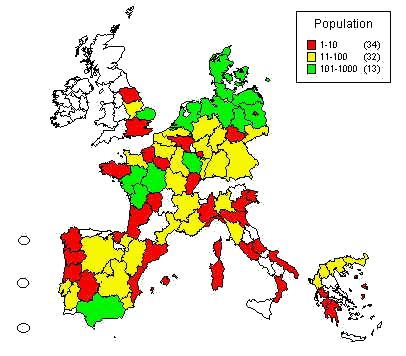 |
This harrier inhabits open swamps in northern
Africa and Eurasia, between 30°N and 62°N. The birds of the south and south-west are
largely sedentary, but those from the north and the north-east are mainly wintering in
sub-Saharan Africa. About 10000 breeding pairs inhabit the European Union. Some
populations have definitely increased in western Europe, but those of the southern part of
the continent are steadily decreasing, e.g. in the Iberian Peninsula (EBCC Atlas of
European Breeding Birds). |
o
NUTS |
MIN |
MAX |
R |
East Anglia |
100 |
|
C |
East Midlands (GB) |
10 |
|
C |
South East (GB) |
4 |
|
C |
Yorkshire and Humberside |
1 |
|
C |
Danmark |
507 |
|
C |
Nederland |
700 |
900 |
C |
Région Wallonne |
3 |
7 |
C |
Vlaams Gewest |
54 |
70 |
C |
Baden-Württemberg |
15 |
27 |
C |
Bayern |
20 |
60 |
C |
Berlin |
5 |
7 |
C |
Brandenburg |
600 |
700 |
C |
Hamburg |
13 |
|
C |
Hessen |
27 |
35 |
C |
Mecklenburg-Vorpommern |
647 |
702 |
C |
Niedersachsen |
550 |
|
C |
Nordrhein-Westfalen |
25 |
|
C |
Rheinland-Pfaltz |
27 |
|
C |
Saarland |
1 |
2 |
C |
Sachsen |
60 |
80 |
C |
Sachsen-Anhalt |
325 |
385 |
C |
Schleswig-Holstein |
250 |
|
C |
Thüringen |
5 |
10 |
C |
Alsace |
12 |
18 |
C |
Aquitaine |
5 |
10 |
C |
Basse-Normandie |
10 |
11 |
C |
Bourgogne |
10 |
|
C |
Bretagne |
5 |
10 |
|
Centre |
137 |
193 |
C |
Champagne-Ardennes |
75 |
95 |
C |
Corse |
5 |
6 |
C |
Franche-Comté |
5 |
10 |
C |
Haute-Normandie |
1 |
2 |
C |
Ile de France |
3 |
5 |
C |
Languedoc-Roussillon |
35 |
41 |
C |
Limousin |
1 |
3 |
C |
Lorraine |
129 |
|
C |
Nord-Pas-de-Calais |
13 |
16 |
C |
Pays de la Loire |
115 |
160 |
C |
Picardie |
23 |
28 |
C |
Poitou-Charente |
95 |
115 |
C |
Provence/Alpes-Côte d'Azur |
86 |
90 |
C |
Rhône-Alpes |
43 |
48 |
C |
Abruzzi |
1 |
2 |
C |
Calabria |
2 |
|
C |
Emilia Romagna |
5 |
7 |
C |
Friuli-Venezia Giulia |
5 |
7 |
C |
Lazio |
2 |
5 |
C |
Liguria |
0 |
1 |
C |
Lombardia |
12 |
15 |
C |
Piemonte |
5 |
7 |
C |
Puglia |
0 |
2 |
C |
Sardegna |
5 |
10 |
C |
Toscana |
16 |
18 |
C |
Veneto |
5 |
7 |
C |
Andalucia |
145 |
200 |
C |
Aragon |
45 |
50 |
C |
Baleares |
2 |
3 |
C |
Castilla la Mancha |
68 |
75 |
C |
Castilla y Leon |
60 |
70 |
C |
Cataluña |
5 |
8 |
C |
Comunidad Valenciana |
3 |
10 |
C |
Extremadura |
4 |
6 |
C |
Galicia |
1 |
|
C |
Madrid |
21 |
25 |
C |
Murcia |
20 |
30 |
C |
Navarra |
27 |
|
C |
Pais Vasco |
1 |
|
C |
Alentejo |
12 |
16 |
C |
Centro |
6 |
8 |
C |
Lisboa e Vale do Tejo |
9 |
12 |
C |
Norte |
3 |
4 |
C |
Anatoliki Makedonia, Thraki |
25 |
40 |
M |
Dytiki Ellada |
3 |
10 |
M |
Dytiki Makedonia |
20 |
40 |
M |
Ipeiros |
10 |
20 |
M |
Kentriki Makedonia |
15 |
30 |
M |
Peloponnisos |
0 |
3 |
M |
Voreio Aigaio |
0 |
3 |
M |
|
----------------------------------------------------------------------------End-------------------------------------------------------------------------
Hen Harrier, Circus
cyanus
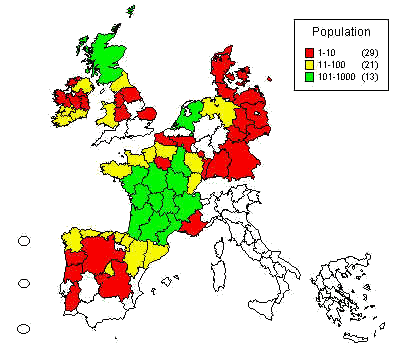 |
This harrier inhabits a great diversity of
open habitats in North America, South America and a large part of Eurasia, from the
British Isles to Kamchatka. Its southern populations are sedentary. Those of the
north-east of the continent are wintering in the south-west. The total population of the
European Union amounts to about 4400 breeding pairs (EBCC Atlas of European Breeding
Birds). In some areas it is slightly increasing, but overall it is decreasing. |
o
NUTS |
MIN |
MAX |
R |
Donegal |
5 |
6 |
C |
East
(IRE) |
5 |
10 |
C |
Mid
West |
5 |
20 |
C |
Midlands |
1 |
10 |
C |
North
East |
1 |
2 |
C |
South
East |
10 |
30 |
C |
South
West |
5 |
20 |
C |
West |
7 |
10 |
C |
East Anglia |
2 |
3 |
C |
North (GB) |
12 |
15 |
C |
North West (GB) |
2 |
3 |
C |
Northern Ireland |
10 |
20 |
C |
Scotland |
570 |
570 |
C |
Wales |
14 |
18 |
C |
West Midlands (GB) |
4 |
5 |
C |
Yorkshire and Humberside |
4 |
5 |
C |
Danmark |
1 |
|
C |
Nederland |
110 |
120 |
C |
Région
Wallonne |
0 |
5 |
C |
Baden-Württemberg |
3 |
|
C |
Bayern |
1 |
5 |
|
Brandenburg |
0 |
10 |
C |
Mecklenburg-Vorpommern |
0 |
10 |
C |
Niedersachsen |
10 |
20 |
C |
Saarland |
0 |
1 |
C |
Sachsen |
0 |
2 |
C |
Sachsen-Anhalt |
0 |
2 |
C |
Schleswig-Holstein |
0 |
5 |
C |
Thüringen |
0 |
3 |
|
Alsace |
2 |
5 |
C |
Aquitaine |
250 |
300 |
C |
Auvergne |
450 |
550 |
C |
Basse-Normandie |
30 |
40 |
C |
Bourgogne |
300 |
|
C |
Bretagne |
10 |
|
C |
Centre |
200 |
300 |
C |
Champagne-Ardennes |
250 |
310 |
C |
Franche-Comté |
10 |
20 |
|
Haute-Normandie |
10 |
12 |
C |
Ile
de France |
6 |
10 |
C |
Languedoc-Roussillon |
100 |
200 |
C |
Limousin |
180 |
500 |
C |
Lorraine |
38 |
45 |
C |
Midi-Pyrénées |
101 |
500 |
C |
Nord-Pas-de-Calais |
3 |
5 |
C |
Pays
de la Loire |
195 |
270 |
C |
Picardie |
15 |
16 |
C |
Poitou-Charente |
440 |
700 |
C |
Provence/Alpes-Côte
d'Azur |
5 |
10 |
|
Rhône-Alpes |
116 |
130 |
C |
Aragon |
20 |
50 |
C |
Asturias |
10 |
20 |
C |
Cantabria |
20 |
50 |
C |
Castilla la Mancha |
5 |
10 |
|
Castilla y Leon |
1 |
10 |
C |
Cataluña |
10 |
|
C |
Galicia |
10 |
20 |
C |
Madrid |
17 |
18 |
C |
Navarra |
40 |
|
C |
Pais Vasco |
20 |
50 |
C |
Alentejo |
0 |
1 |
C |
Centro |
0 |
1 |
C |
Norte |
4 |
5 |
C |
|
----------------------------------------------------------------------------End-------------------------------------------------------------------------
Pallid Harrier, Circus macrourus
This harrier is breeding in steppes and semi-deserts, from
Eastern Europe to Mongolia. It is wintering in sub-Saharan Africa and in southern Asia.
Its populations are strongly declining, and it is breeding only sporadically in the
European Union. It's a regular passage migrant in Greece, especially in spring
(Handrinos & Akriotis).
----------------------------------------------------------------------------End-------------------------------------------------------------------------
Montagu's Harrier, Circus pygargus
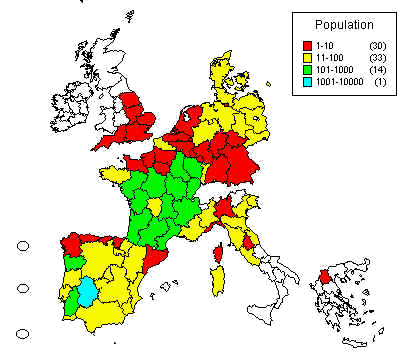 |
This harrier inhabits steppes and
open marshes of a large part of Eurasia, from the Iberian Peninsula and England to
Mongolia. It breeds also in Morocco. Its winter quarters are in sub-Saharan Africa. The
population of the European Union amounts to about 6100 breeding pairs, which represent
about 20% of the total European population. This species is shows wide
fluctuations, but since several decades seems to decrease (EBCC Atlas of European
Breeding Birds). |
o
NUTS |
MIN |
MAX |
R |
East
Anglia |
3 |
6 |
C |
East
Midlands (GB) |
1 |
2 |
C |
South
East (GB) |
1 |
3 |
C |
South
West (GB) |
2 |
5 |
C |
Yorkshire
and Humberside |
0 |
1 |
C |
Danmark |
18 |
|
C |
Nederland |
5 |
10 |
C |
Région Wallonne |
0 |
3 |
|
Vlaams Gewest |
0 |
3 |
|
Luxembourg |
1 |
5 |
C |
Baden-Württemberg |
1 |
6 |
C |
Bayern |
3 |
10 |
C |
Brandenburg |
35 |
50 |
C |
Hamburg |
0 |
10 |
C |
Hessen |
1 |
|
C |
Mecklenburg-Vorpommern |
20 |
30 |
C |
Niedersachsen |
30 |
40 |
C |
Nordrhein-Westfalen |
17 |
|
C |
Rheinland-Pfaltz |
0 |
2 |
C |
Saarland |
1 |
5 |
C |
Sachsen |
5 |
20 |
|
Sachsen-Anhalt |
5 |
20 |
|
Schleswig-Holstein |
10 |
30 |
|
Thüringen |
5 |
10 |
|
Alsace |
15 |
20 |
C |
Aquitaine |
150 |
200 |
C |
Auvergne |
560 |
600 |
C |
Basse-Normandie |
2 |
3 |
C |
Bourgogne |
400 |
|
C |
Bretagne |
75 |
|
C |
Centre |
100 |
200 |
C |
Champagne-Ardennes |
130 |
190 |
C |
Corse |
0 |
2 |
|
Franche-Comté |
90 |
170 |
C |
Haute-Normandie |
2 |
5 |
|
Ile
de France |
5 |
7 |
C |
Languedoc-Roussillon |
100 |
200 |
C |
Limousin |
31 |
63 |
C |
Lorraine |
150 |
155 |
C |
Midi-Pyrénées |
22 |
200 |
C |
Nord-Pas-de-Calais |
7 |
13 |
C |
Pays
de la Loire |
417 |
473 |
C |
Picardie |
2 |
3 |
C |
Poitou-Charente |
880 |
1110 |
C |
Provence/Alpes-Côte
d'Azur |
65 |
95 |
C |
Rhône-Alpes |
346 |
381 |
C |
Emilia Romagna |
20 |
40 |
C |
Friuli-Venezia Giulia |
20 |
40 |
C |
Lazio |
20 |
40 |
C |
Liguria |
0 |
1 |
C |
Lombardia |
5 |
8 |
C |
Marche |
26 |
32 |
C |
Piemonte |
20 |
40 |
C |
Sardegna |
20 |
40 |
C |
Toscana |
20 |
40 |
C |
Umbria |
0 |
2 |
C |
Veneto |
20 |
40 |
C |
Andalucia |
40 |
60 |
C |
Aragon |
30 |
100 |
C |
Asturias |
1 |
5 |
C |
Cantabria |
1 |
5 |
C |
Castilla
la Mancha |
50 |
100 |
C |
Castilla
y Leon |
60 |
100 |
C |
Cataluña |
4 |
|
C |
Comunidad
Valenciana |
6 |
43 |
C |
Extremadura |
1500 |
2250 |
C |
Galicia |
1 |
5 |
C |
Madrid |
54 |
60 |
C |
Murcia |
40 |
60 |
C |
Navarra |
40 |
50 |
C |
Pais
Vasco |
1 |
5 |
C |
Rioja |
20 |
60 |
C |
Alentejo |
600 |
780 |
C |
Algarve |
15 |
20 |
C |
Centro |
70 |
90 |
C |
Lisboa e Vale do Tejo |
15 |
20 |
C |
Norte |
300 |
400 |
C |
Dytiki
Makedonia |
3 |
10 |
M |
|
----------------------------------------------------------------------------End-------------------------------------------------------------------------
Levant Sparrowhawk, Accipiter
brevipes
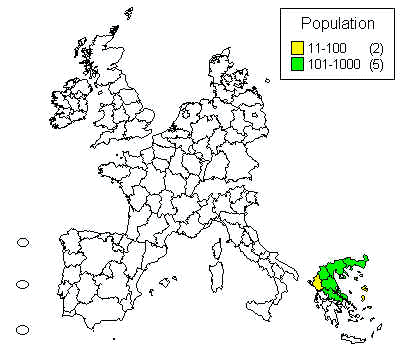 |
This bird inhabits south-eastern Europe, from
the Balkan Peninsula to the Ural mountains. Outside Europe it is breeding as far east as
western Kazakhstan and Iran. In the European Union its distribution is limited to Greece,
where its population is estimated at 1000-1200 breeding pairs, its total European
population being around 12000 pairs (EBCC Atlas of European Breeding Birds). Being totally
migratory, this species is wintering in north-eastern Africa, but its exact wintering
quarters are not well known. |
o
NUTS |
MIN |
MAX |
R |
Anatoliki
Makedonia, Thraki |
150 |
300 |
C |
Dytiki Makedonia |
100 |
|
C |
Ipeiros |
50 |
100 |
C |
Kentriki Makedonia |
150 |
300 |
C |
Sterea Ellada |
100 |
|
C |
Thessalia |
150 |
|
C |
Voreio Aigaio |
10 |
|
C |
|
----------------------------------------------------------------------------End-------------------------------------------------------------------------
Goshawk, Accipiter
gentilis arrigonii
This bird has a widespread distribution in Europe, Asia and North
America. Its race arrigonii is endemic to Corsica and Sardinia where it is
sedentary.
NUT |
MIN |
MAX |
R |
Corse |
10 |
50 |
C |
Sardegna |
25 |
30 |
C |
|
----------------------------------------------------------------------------End-------------------------------------------------------------------------
Sparrowhawk, Accipiter
nisus granti
This bird has a widespread distribution in Eurasia and northern
Africa. Its race granti is endemic to Madeira and the Canary islands, where it is
sedentary.
| NUT |
MIN |
MAX |
R |
Canarias |
200 |
200 |
C |
Madeira |
10 |
100 |
C |
|
----------------------------------------------------------------------------End-------------------------------------------------------------------------
Long-legged Buzzard, Buteo
rufinus
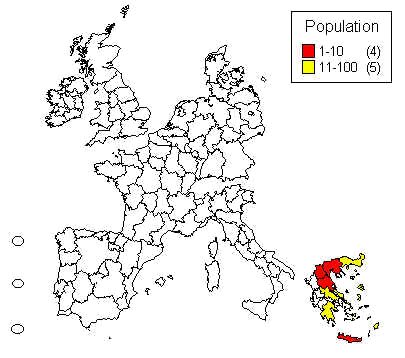 |
This bird has a widespread distribution in
northern Africa and Asia, from Morocco to western China. It is known in south-western
Europe also, and its total European population can be estimated at 1000-2000 breeding
pairs. Its Greek breeding population is totalling not more than 40-60 pairs (Handrinos
& Akriotis, Tucker & Heath). It is decreasing, mainly because of the increasing
agricultural encroachment on its steppe habitat. |
o
NUTS |
MIN |
MAX |
R |
Anatoliki
Makedonia, Thraki |
30 |
40 |
C |
Dytiki
Makedonia |
2 |
5 |
C |
Kentriki
Makedonia |
10 |
20 |
C |
Kriti |
2 |
10 |
C |
Notio
Aigaio |
20 |
40 |
C |
Peloponnisos |
20 |
40 |
C |
Sterea
Ellada |
30 |
50 |
C |
Thessalia |
10 |
20 |
C |
Voreio
Aigaio |
30 |
40 |
C |
|
---------------------------------------------------------------------------
End -----------------------------------------------------------------------
Last update : 06/10/06
|
