|
Home
Site map
Intro/Staff
Databases
Projets
Documents
| |
Family GRUIDAE, cranes
Crane, Grus grus
 |
This species is breeding from central Europe and
Scandinavia to central Siberia. Since several centuries it undergoes a decline of its
numbers and a contraction of its breeding area. It became extinct in many regions, and
this regression was accelerated during the twentieth century. The major part of the birds
breeding in Scandinavia, Finland, Germany and the Baltic States is wintering in Spain and
small numbers winter also in France, Portugal and Morocco. Since the end of the
1960’s this populations has nearly doubled, and it has been able to re-establish
itself in some regions of France and the British Isles. Currently it can be estimated at
70000 individuals, which 1300-1600 pairs are nesting in the European Union (Germany). Some
birds from Scandinavia and Eastern Europe move to the south-east. This population is
estimated at 30000-70000 individuals. Its trends are badly known : in some regions it
seems to decrease, but in some transit areas it seems to increase. In Greece it
doesn’t breed since 1965 (Handrinos & Akriotis). Naturally this birds inhabits
swampy clearings, fens and large swamps inside coniferous or deciduous forests. Since
about 1969 it became adapted to cultivated areas (Tucker & Heath). |
o
NUTS |
MIN |
MAX |
R |
East
Anglia |
1 |
1 |
C |
Danmark |
1 |
4 |
C |
Brandenburg |
90 |
100 |
C |
Hamburg |
1 |
|
C |
Mecklenburg-Vorpommern |
740 |
|
C |
Niedersachsen |
55 |
56 |
C |
Sachsen |
26 |
|
C |
Sachsen-Anhalt |
26 |
|
C |
Schleswig-Holstein |
2 |
3 |
C |
Basse-Normandie |
1 |
|
C |
|
----------------------------------------------------------------------------End-------------------------------------------------------------------------
Family OTIDIDAE, bustards
Little Bustard, Tetrax
tetrax
 |
This bustard is breeding from north-western
Africa and the Iberian Peninsula to central Asia, but its distribution is strongly
fragmented. The birds from the south-west (southern France, Spain and Portugal) are fairly
sedentary, but those from northern France are wholly migratory. The population of the
European Union is estimated at 220000-240000 breeding pairs, more than 90% of which are in
Spain. Notwithstanding these large numbers, the species is decreasing everywhere because
of intensification of agriculture (EBCC Atlas of European Breeding Birds, Tucker &
Heath). |
o
NUTS |
MIN |
MAX |
R |
Alsace |
3 |
|
I |
Aquitaine |
10 |
30 |
C |
Auvergne |
500 |
600 |
C |
Bourgogne |
50 |
60 |
M |
Centre |
1300 |
1600 |
M |
Champagne-Ardennes |
1 |
|
M |
Ile
de France |
100 |
150 |
M |
Languedoc-Roussillon |
350 |
440 |
C |
Lorraine |
100 |
120 |
M |
Pays
de la Loire |
1400 |
1700 |
M |
Picardie |
25 |
50 |
M |
Poitou-Charente |
600 |
700 |
C |
Provence/Alpes-Côte
d'Azur |
525 |
|
M |
Puglia |
100 |
200 |
I |
Sardegna |
400 |
800 |
I |
Andalucia |
10000 |
|
I |
Aragon |
5000 |
|
I |
Castilla
la Mancha |
10000 |
|
I |
Castilla
y Leon |
10000 |
|
I |
Cataluña |
4000 |
|
I |
Comunidad
Valenciana |
2500 |
|
I |
Extremadura |
5000 |
|
I |
Galicia |
10 |
50 |
I |
Madrid |
1500 |
|
I |
Murcia |
1000 |
|
I |
Navarra |
40 |
50 |
C |
Rioja |
500 |
|
I |
Alentejo |
800 |
8000 |
M |
Algarve |
10 |
100 |
M |
Centro |
20 |
200 |
M |
Lisboa e Vale do Tejo |
20 |
200 |
M |
|
----------------------------------------------------------------------------End-------------------------------------------------------------------------
Houbara, Chlamydotis undulata
This bustard has a wide distribution from the Canary islands through northern Africa to
central Asia. The sedentary population from the Canary islands belongs to the race fuertaventurae,
which fluctuated widely in the past. Currently it amounts to 200-400 breeding pairs, but
it is strongly threatened by habitat loss, over-grazing, climatic dryness and increasing
disturbance from tourism (Tucker & Heath).
NUTS |
MIN |
MAX |
R |
Canarias |
200 |
400 |
C |
|
----------------------------------------------------------------------------End-------------------------------------------------------------------------
Great Bustard, Otis tarda
 |
This globally threatened bustard has a wide but
very fragmented distribution in Eurasia, from north-western Morocco and the Iberian
Peninsula to central Siberia and Mongolia. From the natural steppe it has become adapted
to cultivated areas, but since the middle of last century its populations are declining
and its breeding area is contracting. The population of the European Union amounts
13500-14000 breeding pairs, but nearly all these birds inhabit the Iberian Peninsula.
Notwithstanding increasing protection measures, it doesn’t withstand intensification
of agriculture (EBCC Atlas of European Breeding Birds). |
o
NUTS |
MIN |
MAX |
R |
Brandenburg |
100 |
|
I |
Mecklenburg-Vorpommern |
70 |
|
I |
Sachsen |
50 |
|
C |
Sachsen-Anhalt |
50 |
|
C |
Andalucia |
194 |
|
I |
Aragon |
80 |
|
I |
Castilla la Mancha |
1385 |
|
I |
Castilla y Leon |
4643 |
|
I |
Extremadura |
1800 |
|
I |
Madrid |
95 |
|
M |
Navarra |
10 |
15 |
I |
Alentejo |
900 |
|
I |
Centro |
100 |
|
I |
|
----------------------------------------------------------------------------End-------------------------------------------------------------------------
Family RECURVIROSTRIDAE, stilts and
avocets
Black-winged Stilt, Himantopus himantopus
 |
This wader inhabits most of Africa and southern
Eurasia, from the Iberian Peninsula to Mongolia. European populations winter mainly in
sub-Saharan Africa, but an increasing number of birds winter in the south-western parts of
the Iberian Peninsula. The population of the European Union is estimated at 16000 breeding
pairs, 75% of which inhabit Spain. In south-western Europe this bird is subjected to wide
fluctuations, blurring the long-term trends. In Eastern Europe, including Greece, it is
constantly declining due to wetland reclamation (EBCC Atlas of European Breeding Birds). |
o
NUTS |
MIN |
MAX |
R |
East
Anglia |
1 |
|
C |
Nederland |
12 |
|
C |
Région
Wallonne |
0 |
1 |
C |
Vlaams
Gewest |
0 |
1 |
|
Sachsen-Anhalt |
1 |
3 |
C |
Aquitaine |
1 |
2 |
|
Basse-Normandie |
0 |
1 |
|
Bourgogne |
0 |
1 |
C |
Bretagne |
62 |
72 |
C |
Centre |
1 |
2 |
|
Haute-Normandie |
0 |
4 |
C |
Languedoc-Roussillon |
100 |
320 |
C |
Nord-Pas-de-Calais |
0 |
1 |
C |
Pays
de la Loire |
170 |
173 |
C |
Picardie |
0 |
1 |
|
Poitou-Charente |
155 |
188 |
C |
Provence/Alpes-Côte
d'Azur |
330 |
530 |
C |
Rhône-Alpes |
5 |
8 |
C |
Abruzzi |
0 |
5 |
C |
Basilicata |
1 |
5 |
|
Calabria |
1 |
5 |
|
Campania |
1 |
5 |
|
Emilia Romagna |
125 |
150 |
C |
Friuli-Venezia Giulia |
0 |
5 |
C |
Lazio |
125 |
150 |
C |
Lombardia |
10 |
|
C |
Marche |
125 |
150 |
C |
Molise |
0 |
5 |
C |
Piemonte |
1 |
5 |
C |
Puglia |
125 |
150 |
C |
Sardegna |
125 |
150 |
C |
Sicilia |
20 |
50 |
C |
Toscana |
125 |
150 |
C |
Veneto |
125 |
150 |
C |
Andalucia |
1600 |
2000 |
C |
Aragon |
50 |
150 |
C |
Asturias |
10 |
50 |
C |
Baleares |
150 |
200 |
C |
Castilla
la Mancha |
150 |
500 |
C |
Castilla
y Leon |
50 |
200 |
C |
Cataluña |
500 |
700 |
C |
Comunidad
Valenciana |
514 |
1054 |
C |
Extremadura |
50 |
200 |
C |
Galicia |
10 |
50 |
C |
Madrid |
1 |
10 |
C |
Navarra |
1 |
10 |
C |
Rioja |
10 |
50 |
C |
Alentejo |
250 |
500 |
C |
Algarve |
80 |
160 |
C |
Centro |
50 |
100 |
C |
Lisboa e Vale do Tejo |
130 |
260 |
C |
Anatoliki
Makedonia, Thraki |
160 |
300 |
C |
Dytiki
Ellada |
100 |
500 |
C |
Dytiki
Makedonia |
10 |
50 |
|
Ionia
nisia |
0 |
5 |
|
Ipeiros |
75 |
200 |
C |
Kentriki
Makedonia |
100 |
500 |
C |
Peloponnisos |
5 |
20 |
C |
Sterea
Ellada |
20 |
50 |
C |
Thessalia |
10 |
30 |
C |
Voreio
Aigaio |
10 |
30 |
C |
|
----------------------------------------------------------------------------End-------------------------------------------------------------------------
Avocet, Recurvirostra avosetta
 |
This wader inhabits sandy or muddy beaches bordering
stretches of shallow water, either brackish or salt. It has a fragmented distribution in
Eurasia, from the Iberian Peninsula, England and the southern parts of the Baltic Sea to
Pakistan and China. It breeds also in northern, eastern and southern Africa. The birds of
Western Europe are wintering along the Atlantic coast, from the British Isles to Ghana.
Eastern populations winter in eastern Africa, from Egypt to South Africa. The population
of the European Union is estimated at 23700 breeding pairs, which represents about 80% of
the total European Population. Notwithstanding this species has considerably increased in
some regions, including the Netherlands, it is adversely affected by habitat loss, tourism
and pollution (EBCC Atlas of European Breeding Birds). |
o
NUTS |
MIN |
MAX |
R |
East
Anglia |
200 |
400 |
C |
East
Midlands (GB) |
10 |
100 |
|
South
East (GB) |
10 |
100 |
|
Danmark |
3438 |
3671 |
C |
Nederland |
8400 |
9400 |
C |
Région Wallonne |
0 |
6 |
C |
Vlaams Gewest |
410 |
420 |
C |
Mecklenburg-Vorpommern |
150 |
|
C |
Niedersachsen |
1200 |
|
C |
Schleswig-Holstein |
1200 |
1400 |
C |
Basse-Normandie |
10 |
100 |
|
Bretagne |
10 |
100 |
|
Haute-Normandie |
65 |
100 |
C |
Languedoc-Roussillon |
325 |
375 |
C |
Nord-Pas-de-Calais |
40 |
|
C |
Pays de la Loire |
57 |
|
C |
Picardie |
94 |
|
C |
Poitou-Charente |
87 |
90 |
C |
Provence/Alpes-Côte d'Azur |
362 |
372 |
C |
Emilia
Romagna |
300 |
325 |
C |
Puglia |
300 |
325 |
C |
Sardegna |
300 |
325 |
C |
Sicilia |
10 |
|
C |
Veneto |
300 |
325 |
C |
Andalucia |
850 |
|
C |
Aragon |
1 |
5 |
C |
Castilla la Mancha |
5 |
10 |
C |
Cataluña |
310 |
320 |
C |
Comunidad Valenciana |
499 |
558 |
C |
Extremadura |
1 |
5 |
C |
Rioja |
1 |
5 |
C |
Alentejo |
10 |
30 |
C |
Algarve |
30 |
70 |
C |
Lisboa
e Vale do Tejo |
5 |
50 |
|
Anatoliki Makedonia, Thraki |
200 |
|
C |
Dytiki Ellada |
30 |
60 |
C |
Ipeiros |
10 |
|
C |
Kentriki Makedonia |
120 |
|
C |
Voreio Aigaio |
15 |
100 |
C |
|
----------------------------------------------------------------------------End-------------------------------------------------------------------------
Family BURHINIDAE, stone curlews
Stone Curlew, Burhinus oedicnemus
 |
This bird with crepuscular and nocturnal
habits is breeding in a major part of northern Africa, Europe – northwards to 55°N
– and south-western Asia. The birds from the Mediterranean regions are sedentary.
Those breeding farther north winter in the south as far as sub-Saharan Africa. Since the
second half of last century, this species of dry heaths, calcareous or acid dry grasslands
and sand-dunes is declining. Its breeding area is contracting, and it has been extirpated
from several regions. The total population of the European Union is currently estimated at
30000-50000 breeding pairs (Tucker & Heath). |
o
NUTS |
MIN |
MAX |
R |
East Anglia |
70 |
75 |
|
East Midlands (GB) |
|
1 |
|
South East (GB) |
5 |
10 |
|
South West (GB) |
70 |
75 |
|
Brandenburg |
0 |
2 |
C |
Sachsen |
0 |
2 |
C |
Sachsen-Anhalt |
0 |
2 |
C |
Alsace |
160 |
|
C |
Aquitaine |
10 |
|
C |
Auvergne |
460 |
580 |
C |
Basse-Normandie |
1 |
5 |
|
Bourgogne |
300 |
380 |
C |
Bretagne |
1 |
5 |
|
Centre |
800 |
1000 |
C |
Champagne-Ardennes |
330 |
400 |
C |
Corse |
1 |
5 |
|
Franche-Comté |
1 |
3 |
C |
Haute-Normandie |
10 |
20 |
C |
Ile de France |
110 |
140 |
C |
Languedoc-Roussillon |
170 |
220 |
C |
Limousin |
20 |
30 |
C |
Midi-Pyrénées |
150 |
200 |
C |
Nord-Pas-de-Calais |
1 |
5 |
|
Pays de la Loire |
260 |
330 |
C |
Picardie |
25 |
50 |
C |
Poitou-Charente |
600 |
800 |
C |
Provence/Alpes-Côte d'Azur |
260 |
380 |
C |
Rhône-Alpes |
100 |
140 |
C |
Basilicata |
1 |
12 |
C |
Calabria |
1 |
12 |
C |
Emilia Romagna |
1 |
12 |
C |
Friuli-Venezia Giulia |
1 |
12 |
C |
Lazio |
0 |
1 |
C |
Lombardia |
0 |
1 |
C |
Marche |
0 |
1 |
C |
Piemonte |
1 |
5 |
|
Puglia |
1 |
12 |
C |
Sardegna |
100 |
200 |
C |
Sicilia |
20 |
200 |
C |
Toscana |
1 |
12 |
C |
Veneto |
1 |
12 |
C |
Andalucia |
1500 |
2250 |
C |
Aragon |
1500 |
2500 |
C |
Asturias |
200 |
300 |
C |
Baleares |
100 |
500 |
|
Canarias |
300 |
500 |
|
Castilla la Mancha |
2000 |
3000 |
C |
Castilla y Leon |
2000 |
3000 |
C |
Cataluña |
800 |
1200 |
C |
Comunidad Valenciana |
500 |
750 |
C |
Extremadura |
1500 |
2000 |
C |
Madrid |
300 |
450 |
C |
Murcia |
200 |
300 |
C |
Navarra |
200 |
|
C |
Rioja |
100 |
150 |
C |
Alentejo |
300 |
1200 |
C |
Algarve |
80 |
320 |
C |
Centro |
15 |
60 |
C |
Lisboa e Vale do Tejo |
40 |
160 |
C |
Norte |
50 |
200 |
C |
Anatoliki Makedonia, Thraki |
50 |
100 |
C |
Dytiki Ellada |
1 |
5 |
C |
Dytiki Makedonia |
50 |
100 |
|
Ionia nisia |
1 |
5 |
|
Ipeiros |
10 |
50 |
C |
Kentriki Makedonia |
50 |
100 |
C |
Kriti |
1 |
2 |
C |
Peloponnisos |
0 |
10 |
C |
Sterea Ellada |
15 |
50 |
C |
Thessalia |
10 |
50 |
C |
Voreio Aigaio |
10 |
50 |
C |
|
----------------------------------------------------------------------------End-------------------------------------------------------------------------
Family GLAREOLIDAE, coursers and
pratincoles
Cream-coloured Courser, Cursorius cursor
This bird inhabits sub-deserts and dunes in northern Africa and
in Western and Central Asia. On the Canary islands it is represented by its nominate race cursor,
which has strongly declined since 1970 following habitat destruction and disturbance by
tourism. Its population is currently estimated at 200-250 breeding pairs (Tucker &
Heath).
| NUTS |
MIN |
MAX |
R |
Canarias |
50 |
100 |
C |
|
----------------------------------------------------------------------------End-------------------------------------------------------------------------
Collared Pratincole, Glareola
pratincola
 |
This pratincole inhabits a major part of
Africa and south-western Eurasia, from the Iberian Peninsula to eastern Kazakhstan.
European birds winter in Africa. The total population of the European Union is estimated
at 5000 breeding pairs, but it is undergoing a dramatic decline since 1970. The reason for
this is habitat loss through intensification of agriculture (EBCC Atlas of European
Breeding Birds). |
o
NUTS |
MIN |
MAX |
R |
Provence/Alpes-Côte d'Azur |
10 |
20 |
C |
Emilia Romagna |
2 |
10 |
C |
Puglia |
2 |
10 |
C |
Sardegna |
20 |
30 |
C |
Sicilia |
0 |
20 |
C |
Toscana |
2 |
10 |
C |
Veneto |
2 |
10 |
C |
Andalucia |
500 |
600 |
C |
Castilla la Mancha |
25 |
75 |
C |
Castilla y Leon |
1 |
10 |
C |
Cataluña |
100 |
|
C |
Comunidad Valenciana |
55 |
85 |
C |
Extremadura |
170 |
250 |
C |
Murcia |
1 |
10 |
C |
Alentejo |
150 |
600 |
C |
Algarve |
50 |
200 |
C |
Lisboa e Vale do Tejo |
30 |
120 |
C |
Anatoliki Makedonia, Thraki |
100 |
300 |
C |
Dytiki Ellada |
25 |
100 |
C |
Ipeiros |
50 |
150 |
C |
Kentriki Makedonia |
320 |
|
C |
Peloponnisos |
1 |
|
C |
Sterea Ellada |
15 |
30 |
C |
Voreio Aigaio |
25 |
100 |
C |
|
----------------------------------------------------------------------------End-------------------------------------------------------------------------
Family CHARADRIIDEAE, plovers
Dotterel, Charadrius (Eudromias) morinellus
 |
This plover inhabits arctic tundra and alpine
meadows. Its Eurasian distribution is strongly fragmented, from the Pyrenees and Scotland
to Mongolia and Eastern Siberia. It winters from Morocco to Iran. The population of the
European Union (12 Member States) counts not more than 1000 breeding pairs, 95% of which inhabit Scotland.
This represents only 1.5-5% of the total European population. This species has undergone a
strong decline since the middle of last century, but the Scottish populations seems
currently to be stable, and some recent colonisation in the Alps and Pyrenees have been
documented (EBCC Atlas of European Breeding Birds). |
o
NUTS |
MIN |
MAX |
R |
North
(GB) |
20 |
50 |
|
Scotland |
600 |
700 |
C |
North West (GB) |
10 |
50 |
|
Nederland |
0 |
10 |
C |
Languedoc-Roussillon |
1 |
|
C |
Abruzzi |
0 |
5 |
C |
Marche |
0 |
1 |
C |
Trentino-Alto Adige |
0 |
5 |
C |
Cataluña |
1 |
10 |
C |
|
----------------------------------------------------------------------------End-------------------------------------------------------------------------
Golden Plover, Pluvialis
apricaria (see also Annex II)
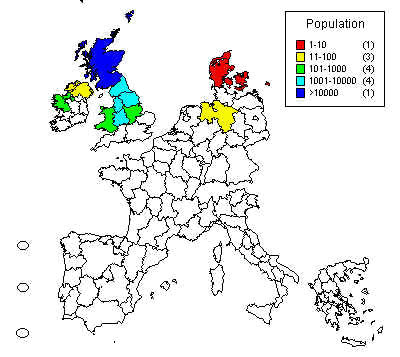 |
This plover inhabits tundra, wet moorland,
fens and alpine meadows of northern Europe and western Asia, from Iceland to central
Siberia. The total European population is estimated at 440000-785000 breeding pairs. The
population of the European Union has undergone a strong decrease, and the species has
disappeared from the Netherlands, Belgium, Denmark and most of Germany following
destruction of its habitats. The British population, currently of about 25000 pairs, has
also decreased by about 20% following afforestation of the open meadows, less intensive
management of its habitats for Red Grouse (Lagopus lagopus scoticus) and
intensification of the sheep breeding (EBCC Atlas of European Breeding Birds). |
o
NUTS |
Min |
Max |
R |
Donegal |
20 |
50 |
C |
North
West |
100 |
200 |
C |
West |
200 |
300 |
C |
East Midlands (GB) |
600 |
|
C |
North (GB) |
3400 |
|
C |
North West (GB) |
1550 |
|
C |
Northern Ireland |
|
50 |
C |
Scotland |
|
20000 |
C |
Wales |
600 |
|
C |
West Midlands (GB) |
2100 |
|
C |
Yorkshire and Humberside |
1800 |
|
C |
Danmark |
5 |
10 |
C |
Niedersachsen |
31 |
|
C |
|
----------------------------------------------------------------------------End-------------------------------------------------------------------------
Spur-winged Plover, Hoplopterus
spinosus
This plover has a wide distribution in Africa, the Near East and the Middle East. It
reaches north-eastern Greece, where its already marginal population is declining since the
mid-1970’s. The main reasons for this are wetland reclamation and predation by feral
dogs, jackals (Canis aureus) and Yellow-legged Gulls ( Larus michahellis)
(EBCC Atlas of European Breeding Birds, Handrinos & Akriotis).
NUTS |
MIN |
MAX |
R |
Anatoliki
Makedonia, Thraki |
30 |
50 |
C |
Kentriki
Makedonia |
1 |
5 |
C |
|
----------------------------------------------------------------------------End-------------------------------------------------------------------------
Family SCOLOPACIDAE, sandpipers, snipes,
curlews, and phalaropes
Ruff, Philomachus pugnax (see also Annex II)
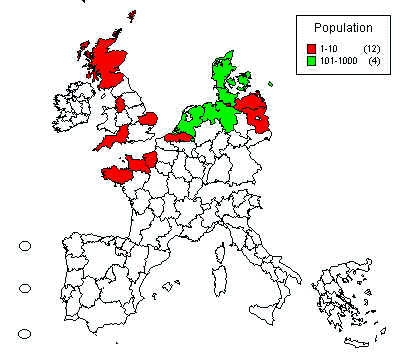 |
This wader is breeding nearly throughout Eurasia, from the
British Isles to Kamchatka, reaching 60°N. Northern birds inhabit tundra and swampy
clearings of forested regions. Birds of the south-west, e.g. the Netherlands, inhabit wet
grasslands. Most of the populations winter in sub-Saharan Africa. This species
doesn’t live in pairs, and during the breeding period the males gather in arenas. A
census of these males doesn’t necessarily indicate the number of breeding females.
Males and females also migrate separately, at different times and following different
routes as well. Populations of this species are consequently difficult to estimate. The
term "breeding pairs" is used only for convenience and uniformity. The
population of the European Union (12 Member States) is estimated at 2000-3000 pairs, which represents only a
very small fraction of the global European population estimated at 3.28 millions of pairs.
However large, this population is declining following wetland reclamation and
intensification of agriculture (EBCC Atlas of European Breeding Birds). |
o
NUTS |
Min |
Max |
R |
East
Anglia |
6 |
|
M |
North
West (GB) |
2 |
|
M |
Scotland |
0 |
1 |
M |
South
West (GB) |
1 |
10 |
M |
Danmark |
750 |
|
M |
Nederland |
400 |
800 |
M |
Vlaams Gewest |
1 |
5 |
M |
Brandenburg |
0 |
10 |
M |
Bremen |
3 |
|
M |
Hamburg |
1 |
3 |
M |
Mecklenburg-Vorpommern |
0 |
10 |
M |
Niedersachsen |
|
200 |
M |
Schleswig-Holstein |
150 |
300 |
M |
Basse-Normandie |
2 |
5 |
M |
Bretagne |
0 |
1 |
M |
Haute-Normandie |
2 |
4 |
M |
|
----------------------------------------------------------------------------End-------------------------------------------------------------------------
Great Snipe, Gallinago media
This wader is breeding in northern and north-eastern Europe and north-western Asia,
between 50°N and 68°N. It winters in sub-Saharan Africa. It is not longer breeding in
the European Union (12 Member States), where it occurs only as a passage migrant. Its European populations,
estimated at about 230000 breeding pairs, are strongly declining since the second half of
last century, especially the most western ones. The main reasons for this decline are
wetland reclamation and degradation of grasslands liable to be flooded (EBCC Atlas of
European Breeding Birds, Tucker & Heath).
----------------------------------------------------------------------------End-------------------------------------------------------------------------
Slender-billed Curlew, Numenius
tenuirostris
This globally threatened curlew inhabits wet plains
in western Siberia, but its exact breeding area remains unknown. As a passage migrant it
is known in the Mediterranean regions of Europe, and its main wintering quarters are
probably in north-western Africa. During the last decades of last century it has undergone
a dramatic population crash, which apparently never stabilised. Its world population
counts probably not more than 50-270 individuals, but these figures are based on very few
reliable observations (Tucker & Heath).
----------------------------------------------------------------------------End-------------------------------------------------------------------------
Wood Sandpiper, Tringa glareola
 |
This wader inhabits peat bogs and wet
grasslands in boreal and temperate regions of Eurasia, mainly between 50°N and 73°N. Its
European populations are wintering in sub-Saharan Africa. The only populations of the
European Union (12 Member States) are those of Scotland, Germany and Denmark, which are all definitely
declining because of wetland reclamation. They are estimated at 50-100 breeding pairs,
while the global European population can still be estimated at 350000 pairs, excluding
the huge Russian population (EBCC Atlas of European Breeding Birds). |
o
NUTS |
MIN |
MAX |
R |
Scotland |
2 |
6 |
C |
Danmark |
47 |
64 |
C |
Nederland |
5 |
10 |
C |
Niedersachsen |
0 |
1 |
C |
Schleswig-Holstein |
0 |
1 |
|
|
----------------------------------------------------------------------------End-------------------------------------------------------------------------
Red-necked Phalarope, Phalaropus
lobatus
 |
This wader inhabits the arctic and sub-arctic
tundra in Eurasia and North America. The only populations of the European Union (12 Member States) are those
of Scotland and Ireland. They amount currently to about 20 breeding pairs, and are
constantly declining since the beginning of the twentieth century (EBCC Atlas of European
Breeding Birds). |
o
NUTS |
MIN |
MAX |
R |
West |
0 |
1 |
C |
Scotland |
|
20 |
C |
|
--------------------------------------------------------------------------
End
------------------------------------------------------------------------
Last update : 06/10/06
|
