|
Home
Site map
Intro/Staff
Databases
Projets
Documents
| |
Family LARIDAE, gulls
Audouin's Gull, Larus audouinii
 |
This gull inhabits the Mediterranean Sea where
it is breeding on uninhabited rocky islets. It is wintering along the Atlantic coast from
morocco to Senegal. Its worlds population has increased from 800-1000 breeding pairs in
1965 to 9000-9500 breeding pairs in 1989, and in 1995 the European population alone was
estimated at 15000 pairs, 95% of which inhabit Spain. The reasons for this spectacular
increase are the protection of the breeding colonies and the ability of the species to
benefit from increased fishery activities (EBCC Atlas of European Breeding Birds). |
o
NUTS |
MIN |
MAX |
R |
Corse |
86 |
90 |
C |
Sardegna |
1015 |
1035 |
C |
Toscana |
94 |
|
C |
Baleares |
500 |
600 |
C |
Cataluņa |
7000 |
7000 |
C |
Comunidad
Valenciana |
|
376 |
C |
Kriti |
5 |
|
C |
Notio Aigaio |
40 |
|
C |
Thessalia |
30 |
|
C |
|
----------------------------------------------------------------------------End-------------------------------------------------------------------------
Slender-billed Gull, Larus
genei
 |
This gull has a wide but very fragmented
distribution in southern Europe, south-western Asia and northern Africa. In Europe it is
breeding on the coasts of the Mediterranean and Black seas. It is wintering in the
Mediterranean, the southern Black Sea and the Persian Gulf, but some birds reach the
Canary islands and East Africa. The population of the European Union is estimated at
1000-1200 breeding pairs, but the total European population is estimated at 40000-80000
pairs. Like many other gulls, this species has considerably increased since the
1960’s (EBCC Atlas of European Breeding Birds). |
o
NUTS |
MIN |
MAX |
R |
Provence/Alpes-Côte
d'Azur |
20 |
25 |
C |
Emilia Romagna |
13 |
|
C |
Sardegna |
1050 |
|
N |
Andalucia |
20 |
40 |
C |
Cataluņa |
429 |
|
C |
Comunidad
Valenciana |
|
1 |
C |
Kentriki Makedonia |
0 |
40 |
C |
|
----------------------------------------------------------------------------End-------------------------------------------------------------------------
Mediterranean Gull, Larus
melanocephalus
 |
Until the 1940’s this species inhabited
the Black Sea, southern Russia, Turkey and Greece. Since the late 1950’s it is
increasing its numbers and extending its distribution westwards. It has colonised
subsequently Hungary, Italy, Germany, the Netherlands, Belgium, France and Great Britain.
The western populations of the European Union amount to not more than 2000 breeding pairs,
however, and they remain marginal compared to the total European population, centred on
Ukraine and estimated at 250000 breeding pairs. The Greek population is fluctuating
between a few hundreds and over 7000 breeding pairs (Handrinos & Akriotis, EBCC Atlas
of European Breeding Birds). |
o
NUTS |
MIN |
MAX |
R |
East
Anglia |
2 |
5 |
C |
North
West (GB) |
2 |
5 |
C |
South
East (GB) |
2 |
5 |
C |
Danmark |
0 |
1 |
C |
Nederland |
89 |
94 |
C |
Vlaams Gewest |
26 |
|
C |
Bayern |
1 |
5 |
C |
Mecklenburg-Vorpommern |
2 |
5 |
C |
Niedersachsen |
2 |
4 |
C |
Sachsen |
0 |
2 |
C |
Schleswig-Holstein |
0 |
2 |
C |
Alsace |
0 |
5 |
C |
Auvergne |
0 |
2 |
C |
Languedoc-Roussillon |
5 |
10 |
C |
Lorraine |
0 |
5 |
C |
Pays de la Loire |
2 |
10 |
C |
Provence/Alpes-Côte d'Azur |
200 |
500 |
C |
Emilia
Romagna |
170 |
|
C |
Veneto |
500 |
1000 |
C |
Cataluņa |
1 |
2 |
C |
Anatoliki
Makedonia, Thraki |
0 |
1000 |
C |
Kentriki
Makedonia |
0 |
7000 |
C |
|
----------------------------------------------------------------------------End-------------------------------------------------------------------------
Family STERNIDAE, terns
Gull-billed Tern, Gelochelidon
nilotica
 |
This tern has a nearly world-wide but
extremely fragmented distribution. In Europe it is breeding mainly in the Mediterranean
and Black Sea regions, but a small population survives in northern Germany and Denmark.
These European populations are wintering in sub-Saharan Africa. The total population of
the European Union is definitely declining since the 1970’s, and currently estimated
at 2700 breeding pairs (EBCC Atlas of European Breeding Birds). |
o
NUTS |
MIN |
MAX |
R |
Danmark |
12 |
|
C |
Niedersachsen |
0 |
2 |
C |
Schleswig-Holstein |
50 |
|
C |
Languedoc-Roussillon |
150 |
400 |
C |
Provence/Alpes-Côte
d'Azur |
150 |
250 |
C |
Emilia Romagna |
107 |
|
C |
Puglia |
40 |
60 |
C |
Sardegna |
111 |
|
C |
Andalucia |
500 |
550 |
C |
Castilla
la Mancha |
525 |
|
C |
Castilla
y Leon |
1 |
5 |
C |
Cataluņa |
54 |
|
C |
Comunidad
Valenciana |
10 |
13 |
C |
Extremadura |
1 |
5 |
C |
Anatoliki Makedonia, Thraki |
50 |
100 |
C |
Dytiki Ellada |
110 |
150 |
C |
Ipeiros |
0 |
20 |
C |
Kentriki Makedonia |
30 |
35 |
C |
|
----------------------------------------------------------------------------End-------------------------------------------------------------------------
Little Tern, Sterna
albifrons
 |
This small tern has a wide but very fragmented
distribution in Europe and southern Asia. It inhabits marine coasts and sand or gravel
banks of large inland rivers. European birds winter along the coasts of West Africa. The
population of the European Union is estimated at 13000 breeding pairs, which represents
about half the total European population. After it declines during several decades, this
species is increasing again since the 1970’s. However, its breeding sites are often
very temporary, and this species is undergoing important fluctuations affecting its
numbers and distribution as well. Its main threats are canalisation of rivers, pollution
and tourism development (EBCC Atlas of European Breeding Birds). |
o
NUTS |
MIN |
MAX |
R |
Donegal |
19 |
|
C |
East
(IRE) |
113 |
|
C |
South
East |
69 |
|
C |
South
West |
24 |
|
C |
West |
100 |
150 |
C |
East Anglia |
814 |
|
C |
East Midlands (GB) |
206 |
|
C |
North (GB) |
148 |
|
C |
Northern Ireland |
2 |
|
C |
Scotland |
370 |
|
C |
South East (GB) |
733 |
|
C |
South West (GB) |
22 |
|
C |
Wales |
60 |
|
C |
Yorkshire and Humberside |
1 |
10 |
|
Danmark |
231 |
|
C |
Nederland |
247 |
247 |
C |
Vlaams
Gewest |
100 |
110 |
C |
Hamburg |
20 |
40 |
C |
Mecklenburg-Vorpommern |
50 |
150 |
C |
Niedersachsen |
|
200 |
C |
Schleswig-Holstein |
300 |
|
C |
Auvergne |
5 |
20 |
|
Basse-Normandie |
1 |
10 |
|
Bourgogne |
1 |
10 |
|
Bretagne |
1 |
10 |
|
Centre |
140 |
|
C |
Haute-Normandie |
2 |
|
C |
Languedoc-Roussillon |
327 |
|
C |
Pays
de la Loire |
260 |
|
C |
Picardie |
1 |
10 |
|
Provence/Alpes-Côte
d'Azur |
391 |
|
C |
Emilia Romagna |
1000 |
2000 |
C |
Friuli-Venezia Giulia |
237 |
|
C |
Lombardia |
200 |
|
C |
Piemonte |
50 |
|
C |
Puglia |
350 |
|
C |
Sardegna |
363 |
|
C |
Sicilia |
20 |
40 |
C |
Veneto |
3422 |
|
C |
Andalucia |
1500 |
|
N |
Aragon |
20 |
50 |
N |
Cataluņa |
652 |
|
C |
Comunidad
Valenciana |
300 |
390 |
C |
Extremadura |
20 |
50 |
N |
Alentejo |
10 |
|
C |
Algarve |
50 |
|
C |
Centro |
20 |
|
C |
Lisboa e Vale do Tejo |
10 |
|
C |
Anatoliki
Makedonia, Thraki |
200 |
500 |
C |
Dytiki
Ellada |
200 |
300 |
C |
Dytiki
Makedonia |
5 |
|
C |
Ionia
nisia |
25 |
|
C |
Ipeiros |
500 |
|
C |
Kentriki
Makedonia |
500 |
|
C |
Peloponnisos |
25 |
|
C |
Sterea
Ellada |
50 |
|
C |
Thessalia |
25 |
|
C |
Voreio
Aigaio |
25 |
|
C |
|
----------------------------------------------------------------------------End-------------------------------------------------------------------------
Caspian Tern, Sterna
caspia
Being absent from only Antarctica and South America, this large
tern has a nearly world-wide but very fragmented distribution. In Europe it is breeding in
the Baltic Sea and along the northern coasts of the Black and Caspian seas. In 1988 there
was a breeding case in Spain. Baltic birds winter mainly in Mali. The total European
population is estimated at 4700-7800 breeding pairs, but has strongly fluctuated in the
past. Since several decades it is undergoing a decline, the causes of which are
not well understood but could be linked to increasing dryness in the Sahel region (EBCC
Atlas of European Breeding Birds).
NUTS |
MIN |
MAX |
R |
Cataluņa |
0 |
1 |
C |
|
----------------------------------------------------------------------------End-------------------------------------------------------------------------
Roseate Tern, Sterna dougallii
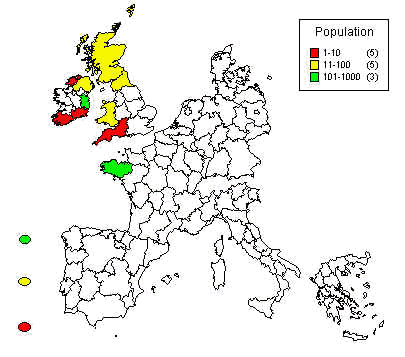 |
This tern has a nearly cosmopolitan but very
fragmented distribution. In Europe it is breeding on the Atlantic coasts of France and the
British Isles, in the Irish Sea, along the Mediterranean coats of France, on the Azores
and Madeira. This European population is wintering along the Atlantic coast of West
Africa. Currently about 1650 breeding pairs inhabit the European Union, but this
population has considerably declined during the last decades. This decline, currently
perhaps halted, is related to a loss of breeding sites and taking in the winter
quarters (EBCC Atlas of European Breeding Birds). |
o
NUTS |
MIN |
MAX |
R |
Donegal |
3 |
|
C |
East
(IRE) |
332 |
|
C |
South
East |
8 |
|
C |
South
West |
1 |
|
C |
North (GB) |
35 |
|
C |
Northern Ireland |
69 |
|
C |
Scotland |
23 |
|
C |
South West (GB) |
6 |
|
C |
Wales |
45 |
|
C |
Bretagne |
100 |
|
C |
Canarias |
1 |
|
C |
Acores |
600 |
|
C |
Madeira |
13 |
|
C |
|
----------------------------------------------------------------------------End-------------------------------------------------------------------------
Common Tern, Sterna
hirundo
 |
This tern has a wide distribution in North
America and Eurasia, where it is breeding from the Mediterranean coasts to northern Norway
and from the British Isles to southern China and eastern Siberia. It inhabits
indifferently coastal habitats and inland wetlands, but all European birds are wintering
along the African coasts. The population of the European Union (12 Member States) is estimated at 40000
breeding pairs, which represents about 20% of the total European population. Following
persecution, it has widely fluctuated in the past, but currently the populations have
recovered and seem fairly stable. However, new threats are exhaustion of fish stocks by
over-fishing, pollution by PCB’s and mercury and disturbance by tourism (EBCC Atlas
of European Breeding Birds). |
o
NUTS |
MIN |
MAX |
R |
Donegal |
226 |
|
C |
Mid
West |
10 |
20 |
C |
Midlands |
1 |
10 |
C |
North
East |
37 |
|
C |
South
West |
122 |
|
C |
West |
800 |
1000 |
C |
East Anglia |
943 |
|
C |
East Midlands (GB) |
83 |
|
C |
North (GB) |
1170 |
|
C |
North West (GB) |
715 |
|
C |
Northern Ireland |
1255 |
|
C |
Scotland |
5800 |
|
C |
South East (GB) |
1851 |
|
C |
South West (GB) |
517 |
|
C |
Wales |
555 |
|
C |
Danmark |
975 |
1100 |
C |
Nederland |
11000 |
14000 |
C |
Vlaams
Gewest |
480 |
680 |
C |
Baden-Württemberg |
100 |
220 |
C |
Bayern |
100 |
1000 |
C |
Brandenburg |
100 |
1000 |
C |
Hamburg |
2000 |
|
C |
Mecklenburg-Vorpommern |
200 |
400 |
C |
Niedersachsen |
5000 |
6000 |
C |
Nordrhein-Westfalen |
7 |
8 |
C |
Rheinland-Pfaltz |
0 |
1 |
C |
Sachsen |
5 |
20 |
C |
Sachsen-Anhalt |
5 |
20 |
C |
Schleswig-Holstein |
2500 |
|
C |
Alsace |
150 |
|
C |
Auvergne |
5 |
10 |
C |
Basse-Normandie |
20 |
25 |
C |
Bourgogne |
18 |
20 |
C |
Bretagne |
600 |
|
C |
Centre |
160 |
|
C |
Champagne-Ardennes |
6 |
8 |
C |
Franche-Comté |
0 |
1 |
C |
Ile
de France |
96 |
|
C |
Languedoc-Roussillon |
251 |
|
C |
Lorraine |
3 |
|
C |
Midi-Pyrénées |
5 |
|
C |
Pays
de la Loire |
368 |
|
C |
Picardie |
10 |
50 |
C |
Poitou-Charente |
19 |
20 |
C |
Provence/Alpes-Côte
d'Azur |
2049 |
|
C |
Emilia Romagna |
2300 |
2500 |
C |
Friuli-Venezia Giulia |
87 |
|
C |
Lombardia |
150 |
|
C |
Piemonte |
100 |
|
C |
Sardegna |
220 |
|
C |
Veneto |
1800 |
|
C |
Andalucia |
100 |
500 |
C |
Canarias |
38 |
51 |
C |
Cataluņa |
5495 |
|
C |
Comunidad
Valenciana |
65 |
185 |
C |
Acores |
2200 |
|
C |
Anatoliki
Makedonia, Thraki |
800 |
|
C |
Dytiki
Ellada |
100 |
200 |
C |
Dytiki
Makedonia |
25 |
|
C |
Ionia
nisia |
25 |
|
C |
Ipeiros |
500 |
|
C |
Kentriki
Makedonia |
400 |
|
C |
Madeira |
200 |
|
C |
Notio
Aigaio |
10 |
|
C |
Sterea
Ellada |
25 |
|
C |
Thessalia |
25 |
|
C |
Voreio
Aigaio |
25 |
|
C |
|
----------------------------------------------------------------------------End-------------------------------------------------------------------------
Arctic Tern, Sterna
paradisea
 |
This tern has a wide distribution in boreal
and arctic regions of the Northern Hemisphere. In Europe it is breeding from the British
Isles and the Netherlands to the Urals. It inhabits mainly marine coasts, but locally also
inland lakes. It is wintering offshore Antarctica. The population of the European Union (12 Member States) is
estimated at 65000 breeding pairs, which accounts for 12.5% of the total European
population. Notwithstanding some local fluctuations, the species seems currently to be
stable (EBCC Atlas of European Breeding Birds). |
o
NUTS |
MIN |
MAX |
R |
Donegal |
445 |
|
C |
Mid
West |
1 |
10 |
C |
North
West |
5 |
10 |
C |
South
East |
34 |
|
C |
South
West |
485 |
|
C |
West |
1000 |
1200 |
C |
East Anglia |
3 |
|
C |
North (GB) |
4600 |
|
C |
North West (GB) |
20 |
|
C |
Northern Ireland |
363 |
|
C |
Scotland |
30000 |
|
C |
Wales |
680 |
|
C |
Danmark |
6000 |
8000 |
C |
Nederland |
850 |
1200 |
C |
Vlaams
Gewest |
0 |
1 |
|
Hamburg |
50 |
200 |
C |
Mecklenburg-Vorpommern |
100 |
250 |
C |
Niedersachsen |
450 |
570 |
C |
Schleswig-Holstein |
2500 |
|
C |
|
----------------------------------------------------------------------------End-------------------------------------------------------------------------
Sandwich Tern, Sterna
sandvicensis
 |
This tern is breeding along the coasts of
western Europe, from Aquitaine to Scotland and Estonia, in the western Mediterranean, in
the Black and Caspian seas and along the eastern coasts of the Americas. Birds of Europe
winter along the Atlantic coasts of Africa, from Senegal to South Africa. The population
of the European Union is estimated at 60000 breeding pairs. After a strong decline during
last century, this species has recovered but it is still subject to important
fluctuations (EBCC Atlas of European Breeding Birds). |
o
NUTS |
MIN |
MAX |
R |
Donegal |
305 |
|
C |
Mid
West |
7 |
|
C |
South
East |
704 |
|
C |
South
West |
7 |
|
C |
West |
828 |
828 |
C |
East Anglia |
4290 |
|
C |
North (GB) |
5823 |
|
C |
Northern Ireland |
2627 |
|
C |
Scotland |
2000 |
|
C |
South East (GB) |
1185 |
|
C |
South West (GB) |
47 |
|
C |
Wales |
450 |
|
C |
Danmark |
3000 |
4000 |
C |
Nederland |
10000 |
12500 |
C |
Vlaams
Gewest |
900 |
1000 |
C |
Hamburg |
1200 |
|
C |
Mecklenburg-Vorpommern |
710 |
|
C |
Niedersachsen |
2400 |
2880 |
C |
Schleswig-Holstein |
2000 |
3000 |
C |
Aquitaine |
3000 |
4500 |
C |
Bretagne |
1000 |
1500 |
C |
Languedoc-Roussillon |
100 |
200 |
C |
Pays
de la Loire |
100 |
200 |
C |
Provence/Alpes-Côte
d'Azur |
500 |
800 |
C |
Emilia Romagna |
350 |
500 |
C |
Veneto |
0 |
1 |
C |
Cataluņa |
755 |
|
C |
Comunidad
Valenciana |
4 |
|
I |
Anatoliki Makedonia, Thraki |
50 |
|
C |
Ipeiros |
30 |
|
C |
|
----------------------------------------------------------------------------End-------------------------------------------------------------------------
Whiskered Tern, Chlidonias
hybridus
 |
This species has a very fragmented
distribution in southern Eurasia, south-eastern Africa and Australia. European birds
winter in the Mediterranean regions and in sub-Saharan Africa. The total population of the
European Union is estimated at 7000-11000 breeding pairs, 70-75% of which are breeding in
Spain (Tucker & Heath). This species has widely fluctuated and its global trends are
not well known, but the Spanish population is definitely decreasing. The main reasons for
this are wetland reclamation and canalisation of rivers. |
o
NUTS |
MIN |
MAX |
R |
Centre |
300 |
700 |
C |
Languedoc-Roussillon |
0 |
50 |
C |
Limousin |
0 |
50 |
C |
Pays
de la Loire |
0 |
100 |
C |
Poitou-Charente |
0 |
100 |
C |
Provence/Alpes-Côte
d'Azur |
0 |
200 |
C |
Rhône-Alpes |
500 |
1000 |
C |
Emilia Romagna |
400 |
|
C |
Veneto |
100 |
|
C |
Andalucia |
500 |
1500 |
C |
Aragon |
100 |
500 |
C |
Castilla
la Mancha |
500 |
1500 |
C |
Cataluņa |
100 |
|
C |
Comunidad
Valenciana |
320 |
440 |
C |
Extremadura |
500 |
1500 |
C |
Alentejo |
25 |
|
C |
Centro |
25 |
|
C |
Lisboa e Vale do Tejo |
50 |
|
C |
Anatoliki
Makedonia, Thraki |
100 |
200 |
C |
Dytiki
Makedonia |
50 |
100 |
C |
Kentriki
Makedonia |
100 |
200 |
C |
|
----------------------------------------------------------------------------End-------------------------------------------------------------------------
Black Tern, Chlidonias
niger
 |
This tern is breeding in North America and
Eurasia, from the Iberian Peninsula to Central Asia. Birds of Europe winter mainly along
the Atlantic coasts of Africa, from Senegal to South Africa. The population of the
European Union is estimated at 3000-4000 breeding pairs, which represents only 5% of the
total European population (Tucker & Heath). Wetland reclamation, canalisation of
rivers, extension of pisciculture, water pollution and disturbance of the breeding
colonies are the major reasons for the constant decline which this species is undergoing
since the end of last century (Tucker & Heath, EBCC Atlas of European Breeding Birds). |
o
NUTS |
MIN |
MAX |
R |
Danmark |
100 |
150 |
C |
Nederland |
900 |
1300 |
C |
Brandenburg |
20 |
200 |
C |
Mecklenburg-Vorpommern |
110 |
630 |
C |
Niedersachsen |
87 |
190 |
C |
Sachsen |
10 |
100 |
C |
Schleswig-Holstein |
100 |
500 |
C |
Auvergne |
5 |
10 |
C |
Centre |
20 |
30 |
C |
Languedoc-Roussillon |
0 |
10 |
C |
Pays de la Loire |
25 |
50 |
C |
Picardie |
0 |
5 |
C |
Poitou-Charente |
25 |
50 |
C |
Provence/Alpes-Côte d'Azur |
0 |
10 |
C |
Rhône-Alpes |
0 |
10 |
C |
Emilia
Romagna |
0 |
10 |
C |
Lombardia |
0 |
4 |
C |
Piemonte |
120 |
160 |
C |
Veneto |
125 |
140 |
C |
Andalucia |
30 |
100 |
C |
Aragon |
10 |
30 |
C |
Cataluņa |
10 |
30 |
C |
Comunidad Valenciana |
30 |
100 |
C |
Anatoliki
Makedonia, Thraki |
10 |
30 |
|
Dytiki
Makedonia |
10 |
|
C |
Ipeiros |
10 |
|
C |
Kentriki
Makedonia |
40 |
|
C |
|
----------------------------------------------------------------------------End-------------------------------------------------------------------------
Family ALCIDAE, auks and guillemots
Guillemot, Uria aalge
ibericus
 |
This species inhabits the coasts of the North
Atlantic and North Pacific oceans. Its world population is estimated at 9 millions of
breeding pairs. The race ibericus is strictly restricted to Spain and Portugal, and
has declined from 1500-2000 breeding pairs around 1960 to 3-11 pairs in 1995. The reasons
for this dramatic decline are mainly oil pollution and depletion of fish stocks by over-fishing (Atlas de las Aves de Espaņa). |
o
NUTS |
MIN |
MAX |
R |
Galicia |
74 |
|
I |
Lisboa e Vale do Tejo |
75 |
|
C |
|
--------------------------------------------------------------------------
End -----------------------------------------------------------------------
Last update : 06/10/06
|
