|
Home
Site map
Intro/Staff
Databases
Projets
Documents
| |
Family APODIDAE, swifts
White-rumped Swift, Apus caffer
This swift is mostly an African species, discovered in Europe in 1965.
Since that time its small Iberian population is slowly increasing, and can currently be
estimated at 50-100 breeding pairs (EBCC Atlas of European Breeding Birds).
| NUTS |
MIN |
MAX |
R |
Andalucia |
100 |
|
C |
|
----------------------------------------------------------------------------End-------------------------------------------------------------------------
Family ALCEDINIDAE,
kingfishers
Kingfisher, Alcedo atthis
 |
This bird inhabits rivers, small streams,
ponds, lakes and reservoirs in a major part of Europe, northern Africa and Asia. All
populations are strongly subjected to fluctuations according to climatic condition
prevailing during the breeding season and the winter period as well. Nevertheless this
species is threatened on the long-term by transformation and pollution of its habitats.
The population can be estimated at 20000-50000 breeding pairs (EBCC Atlas of European
Breeding Birds). |
o
NUTS |
MIN |
MAX |
R |
Donegal |
20 |
100 |
C |
East
(IRE) |
300 |
500 |
C |
Mid
West |
200 |
300 |
C |
Midlands |
10 |
50 |
C |
North
East |
20 |
100 |
C |
North
West |
300 |
500 |
C |
South
East |
300 |
500 |
C |
South
West |
200 |
300 |
C |
West |
300 |
500 |
C |
East Anglia |
200 |
1000 |
C |
East Midlands (GB) |
200 |
1000 |
C |
North (GB) |
200 |
1000 |
C |
North West (GB) |
200 |
1000 |
C |
Northern Ireland |
200 |
500 |
C |
Scotland |
200 |
1000 |
C |
South East (GB) |
400 |
1000 |
C |
South West (GB) |
400 |
1000 |
C |
Wales |
200 |
1000 |
C |
West Midlands (GB) |
200 |
1000 |
C |
Yorkshire and Humberside |
200 |
1000 |
C |
Danmark |
100 |
200 |
C |
Nederland |
125 |
250 |
C |
Bruxelles-Brussel |
5 |
7 |
C |
Région
Wallonne |
100 |
180 |
C |
Vlaams
Gewest |
100 |
180 |
C |
Luxembourg |
60 |
100 |
C |
Baden-Württemberg |
190 |
300 |
C |
Bayern |
150 |
500 |
C |
Berlin |
10 |
|
C |
Brandenburg |
350 |
400 |
C |
Bremen |
1 |
5 |
C |
Hamburg |
8 |
10 |
C |
Hessen |
|
50 |
C |
Mecklenburg-Vorpommern |
350 |
400 |
C |
Niedersachsen |
500 |
|
C |
Nordrhein-Westfalen |
400 |
|
C |
Rheinland-Pfaltz |
100 |
200 |
C |
Saarland |
50 |
|
C |
Sachsen |
200 |
300 |
C |
Sachsen-Anhalt |
50 |
|
C |
Schleswig-Holstein |
|
100 |
C |
Thüringen |
50 |
|
C |
Alsace |
50 |
100 |
C |
Aquitaine |
500 |
|
C |
Auvergne |
250 |
500 |
C |
Basse-Normandie |
350 |
|
C |
Bourgogne |
350 |
700 |
C |
Bretagne |
430 |
860 |
C |
Centre |
320 |
640 |
C |
Champagne-Ardennes |
250 |
500 |
C |
Corse |
1 |
10 |
|
Franche-Comté |
210 |
420 |
C |
Haute-Normandie |
150 |
|
C |
Ile de France |
80 |
160 |
C |
Languedoc-Roussillon |
210 |
420 |
C |
Limousin |
180 |
360 |
C |
Lorraine |
230 |
460 |
C |
Midi-Pyrénées |
280 |
560 |
C |
Nord-Pas-de-Calais |
110 |
220 |
C |
Pays de la Loire |
260 |
520 |
C |
Picardie |
240 |
480 |
C |
Poitou-Charente |
340 |
680 |
C |
Provence/Alpes-Côte d'Azur |
120 |
240 |
C |
Rhône-Alpes |
270 |
540 |
C |
Abruzzi |
300 |
600 |
C |
Basilicata |
300 |
600 |
C |
Calabria |
300 |
600 |
C |
Campania |
300 |
600 |
C |
Emilia
Romagna |
300 |
600 |
C |
Friuli-Venezia
Giulia |
300 |
600 |
C |
Lazio |
300 |
600 |
C |
Liguria |
300 |
600 |
C |
Lombardia |
300 |
600 |
C |
Marche |
300 |
600 |
C |
Molise |
300 |
600 |
C |
Piemonte |
300 |
600 |
C |
Puglia |
300 |
600 |
C |
Sardegna |
0 |
5 |
C |
Sicilia |
2 |
3 |
C |
Toscana |
300 |
600 |
C |
Trentino-Alto
Adige |
300 |
600 |
C |
Umbria |
300 |
600 |
C |
Veneto |
300 |
600 |
C |
Andalucia |
1000 |
1500 |
C |
Aragon |
800 |
1000 |
C |
Asturias |
150 |
250 |
C |
Cantabria |
100 |
150 |
C |
Castilla la Mancha |
1000 |
1500 |
C |
Castilla y Leon |
1000 |
1200 |
C |
Cataluña |
200 |
500 |
C |
Comunidad Valenciana |
300 |
500 |
C |
Extremadura |
500 |
1000 |
C |
Galicia |
400 |
600 |
C |
Madrid |
250 |
350 |
C |
Murcia |
200 |
300 |
C |
Navarra |
200 |
500 |
C |
Pais Vasco |
100 |
200 |
C |
Rioja |
50 |
100 |
C |
Alentejo |
350 |
3500 |
C |
Algarve |
150 |
1500 |
C |
Centro |
250 |
2500 |
C |
Lisboa
e Vale do Tejo |
200 |
2000 |
C |
Norte |
200 |
2000 |
C |
Anatoliki Makedonia, Thraki |
50 |
100 |
C |
Dytiki Ellada |
10 |
50 |
C |
Dytiki Makedonia |
25 |
100 |
C |
Ionia nisia |
0 |
20 |
C |
Ipeiros |
25 |
100 |
C |
Kentriki Makedonia |
50 |
100 |
C |
Peloponnisos |
10 |
50 |
C |
Sterea Ellada |
10 |
25 |
C |
Thessalia |
10 |
50 |
C |
Voreio Aigaio |
50 |
100 |
C |
|
----------------------------------------------------------------------------End-------------------------------------------------------------------------
Family CORACIIDAE, rollers
Roller, Coracias garrulus
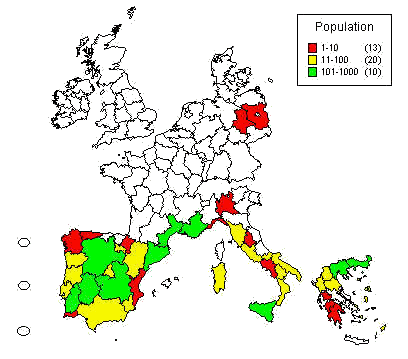 |
This bird is breeding in north-western Africa,
south and eastern Europe and western Asia, reaching Pakistan and Mongolia in the east. It
winters in sub-Saharan Africa. The population of the European Union has undergone a strong
decrease in numbers and a contraction of its distribution since the end of last century.
Currently it is estimated at 5000-12000 breeding pairs. Since 1991 it has become extinct
in Germany. The principal reasons of this decline are habitat degradation, agricultural
intensification and increasing use of pesticides. In some countries the species is also persecuted
(Tucker & Heath). |
o
NUTS |
MIN |
MAX |
R |
Brandenburg |
0 |
5 |
C |
Sachsen-Anhalt |
0 |
1 |
C |
Languedoc-Roussillon |
200 |
300 |
C |
Provence/Alpes-Côte d'Azur |
200 |
300 |
C |
Basilicata |
10 |
30 |
C |
Calabria |
10 |
30 |
C |
Campania |
0 |
1 |
C |
Lazio |
10 |
30 |
C |
Liguria |
0 |
1 |
C |
Lombardia |
0 |
1 |
C |
Molise |
10 |
30 |
C |
Puglia |
10 |
30 |
C |
Sardegna |
10 |
30 |
C |
Sicilia |
200 |
|
C |
Toscana |
10 |
30 |
C |
Umbria |
0 |
1 |
C |
Andalucia |
300 |
1000 |
C |
Aragon |
100 |
500 |
C |
Asturias |
1 |
10 |
C |
Castilla la Mancha |
200 |
800 |
C |
Castilla y Leon |
150 |
750 |
C |
Cataluña |
80 |
400 |
C |
Comunidad Valenciana |
2 |
3 |
C |
Extremadura |
300 |
1000 |
C |
Galicia |
1 |
10 |
C |
Madrid |
30 |
150 |
C |
Murcia |
20 |
100 |
C |
Navarra |
1 |
|
C |
Rioja |
10 |
20 |
C |
Alentejo |
70 |
350 |
C |
Algarve |
0 |
10 |
C |
Centro |
5 |
25 |
C |
Lisboa
e Vale do Tejo |
10 |
100 |
C |
Norte |
10 |
30 |
|
Anatoliki Makedonia, Thraki |
100 |
|
C |
Dytiki Ellada |
0 |
20 |
C |
Dytiki Makedonia |
50 |
|
C |
Ipeiros |
25 |
|
C |
Kentriki Makedonia |
100 |
200 |
C |
Notio Aigaio |
20 |
50 |
C |
Peloponnisos |
0 |
20 |
C |
Thessalia |
50 |
|
C |
Voreio Aigaio |
20 |
50 |
C |
|
----------------------------------------------------------------------------End-------------------------------------------------------------------------
Family PICIDAE, woodpeckers
Three-toed Woodpecker, Picoides
tridactylus
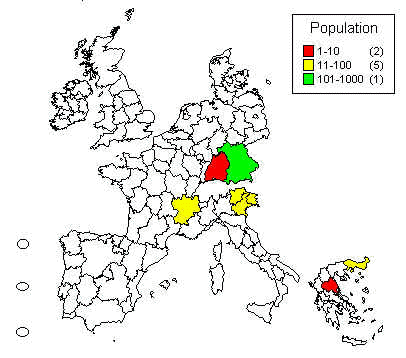 |
This woodpecker is mainly a taiga bird with a
wide distribution in the boreal regions of northern Eurasia and North America. It has also
isolated populations in the mountain forests of central and south-eastern Europe. It
inhabits mainly coniferous forests but also mixed forests and birch forest (Betula).
Following in-depth changes of forestry practices, this species has undergone a strong
decrease. Currently its populations seem stable, however. The population of the European
Union (12 Member States) amounts to only a few dozen breeding pairs and remains marginal, compared to the
total European population which is estimated at 56000 pairs, the Russian populations not
included (EBCC Atlas of European Breeding Birds). |
o
NUTS |
MIN |
MAX |
R |
Baden-Württemberg |
2 |
5 |
C |
Bayern |
450 |
700 |
C |
Rhône-Alpes |
50 |
100 |
C |
Friuli-Venezia Giulia |
15 |
35 |
C |
Trentino-Alto Adige |
15 |
35 |
C |
Veneto |
15 |
35 |
C |
Anatoliki Makedonia, Thraki |
10 |
|
C |
Thessalia |
0 |
10 |
C |
|
----------------------------------------------------------------------------End-------------------------------------------------------------------------
Grey-headed Woodpecker, Picus
canus
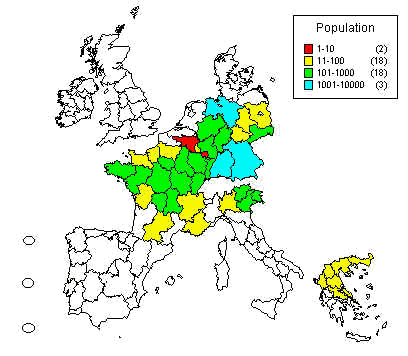 |
This woodpecker has a wide distribution in
boreal and temperate regions of Eurasia, from France to Japan. It inhabits mainly
deciduous forests, quite open mixed forests and mountain forests, but also city parks,
orchards and gardens. The population of the European Union is estimated at 20000-25000
breeding pairs. In many regions it has declined following intensification of forestry
(EBCC Atlas of European Breeding Birds). |
o
NUTS |
MIN |
MAX |
R |
Région
Wallonne |
8 |
10 |
C |
Luxembourg |
25 |
50 |
C |
Baden-Württemberg |
1000 |
2000 |
C |
Bayern |
1000 |
5000 |
C |
Brandenburg |
10 |
100 |
|
Hessen |
500 |
1000 |
C |
Niedersachsen |
2000 |
|
C |
Nordrhein-Westfalen |
100 |
500 |
C |
Rheinland-Pfaltz |
50 |
200 |
C |
Saarland |
1 |
5 |
C |
Sachsen |
50 |
200 |
C |
Sachsen-Anhalt |
20 |
100 |
C |
Thüringen |
50 |
150 |
C |
Alsace |
380 |
760 |
C |
Auvergne |
440 |
880 |
C |
Basse-Normandie |
60 |
120 |
C |
Bourgogne |
100 |
500 |
|
Bretagne |
460 |
920 |
C |
Centre |
580 |
1160 |
C |
Champagne-Ardennes |
260 |
520 |
C |
Franche-Comté |
300 |
600 |
C |
Haute-Normandie |
10 |
100 |
|
Ile de France |
140 |
280 |
C |
Limousin |
200 |
400 |
C |
Lorraine |
500 |
1000 |
C |
Midi-Pyrénées |
20 |
40 |
C |
Pays de la Loire |
300 |
600 |
C |
Picardie |
20 |
40 |
C |
Poitou-Charente |
10 |
50 |
|
Provence/Alpes-Côte d'Azur |
20 |
40 |
C |
Rhône-Alpes |
10 |
100 |
|
Friuli-Venezia
Giulia |
125 |
290 |
C |
Lombardia |
25 |
|
C |
Trentino-Alto
Adige |
125 |
290 |
C |
Veneto |
125 |
290 |
C |
Anatoliki Makedonia, Thraki |
25 |
50 |
C |
Dytiki Makedonia |
50 |
|
C |
Ipeiros |
25 |
|
C |
Kentriki Makedonia |
25 |
50 |
C |
Sterea Ellada |
10 |
|
C |
Thessalia |
10 |
|
C |
|
----------------------------------------------------------------------------End-------------------------------------------------------------------------
White-backed Woodpecker, Dendrocopos
leucotos
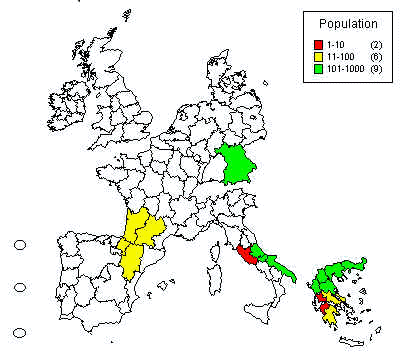 |
This woodpecker has a wide distribution in
deciduous forests of the temperate and southern boreal regions of Eurasia, from the
Pyrenees to China and Japan. Being strongly dependent on dead or dying trees, its
distribution has considerably contracted in Europe following introduction of modern
forestry methods. The strongly fragmented population of the European Union is estimated at
1100-2300 breeding pairs, and is still decreasing (EBCC Atlas of European Breeding Birds).
|
o
NUTS |
MIN |
MAX |
R |
Bayern |
100 |
300 |
C |
Aquitaine |
20 |
80 |
C |
Midi-Pyrénées |
10 |
20 |
C |
Abruzzi |
35 |
350 |
C |
Lazio |
1 |
10 |
|
Molise |
35 |
350 |
C |
Puglia |
35 |
350 |
C |
Aragon |
10 |
20 |
C |
Navarra |
20 |
40 |
C |
Anatoliki Makedonia, Thraki |
100 |
|
C |
Dytiki Ellada |
5 |
|
C |
Dytiki Makedonia |
150 |
|
C |
Ipeiros |
150 |
|
C |
Kentriki Makedonia |
100 |
|
C |
Peloponnisos |
25 |
|
C |
Sterea Ellada |
50 |
|
C |
Thessalia |
200 |
|
C |
|
----------------------------------------------------------------------------End-------------------------------------------------------------------------
Great Spotted Woodpecker, Dendrocopos
major
Two races inhabiting the Canary islands of this widespread woodpecker are included in
Annex I. The race canariensis, endemic to Tenerife, is estimated at about 100
breeding pairs; the race thanneri, endemic to Gran Canaria, at maximum 250 breeding
pairs. Both are strictly dependent on native pine (Pinus canariensis) forests and
are vulnerable (Atlas de las Aves de España).
D. major canariensis
NUTS |
MIN |
MAX |
R |
Canarias |
100 |
|
C |
|
o
D. major thanneri
NUTS |
MIN |
MAX |
R |
Canarias |
200 |
250 |
C |
|
----------------------------------------------------------------------------End-------------------------------------------------------------------------
Middle Spotted Woodpecker, Dendrocopos
medius
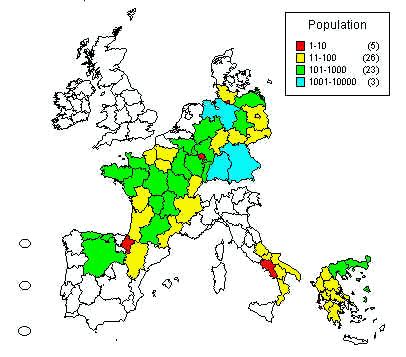 |
This woodpecker inhabits deciduous forest in
temperate, boreal and Mediterranean regions of Europe and the Near East, from northern
Spain and Sweden to Iran. Being dependent on old grown oak (Quercus) forests, its
numbers has been drastically reduced throughout Europe, and the species has become extinct
in many regions. The population of the European Union is currently estimated at 22000
breeding pairs (EBCC Atlas of European Breeding Birds). |
o
NUTS |
MIN |
MAX |
R |
Région Wallonne |
400 |
800 |
C |
Luxembourg |
80 |
120 |
C |
Baden-Württemberg |
1500 |
|
C |
Bayern |
400 |
4000 |
C |
Berlin |
10 |
30 |
C |
Brandenburg |
20 |
50 |
C |
Hamburg |
2 |
3 |
C |
Hessen |
10 |
50 |
C |
Mecklenburg-Vorpommern |
100 |
400 |
C |
Niedersachsen |
500 |
2000 |
C |
Nordrhein-Westfalen |
50 |
500 |
C |
Rheinland-Pfaltz |
130 |
|
C |
Saarland |
4 |
10 |
C |
Sachsen |
10 |
40 |
C |
Sachsen-Anhalt |
35 |
170 |
C |
Schleswig-Holstein |
50 |
|
C |
Thüringen |
10 |
60 |
C |
Alsace |
60 |
300 |
C |
Aquitaine |
10 |
100 |
|
Auvergne |
80 |
400 |
C |
Basse-Normandie |
60 |
300 |
C |
Bourgogne |
60 |
300 |
C |
Bretagne |
90 |
450 |
C |
Centre |
60 |
300 |
C |
Champagne-Ardennes |
70 |
350 |
C |
Franche-Comté |
25 |
125 |
C |
Haute-Normandie |
20 |
100 |
C |
Ile de France |
25 |
125 |
C |
Languedoc-Roussillon |
10 |
50 |
C |
Limousin |
90 |
450 |
C |
Lorraine |
100 |
500 |
C |
Midi-Pyrénées |
90 |
450 |
C |
Pays de la Loire |
40 |
200 |
C |
Picardie |
20 |
100 |
C |
Poitou-Charente |
10 |
50 |
C |
Rhône-Alpes |
10 |
50 |
C |
Abruzzi |
40 |
80 |
C |
Basilicata |
40 |
80 |
C |
Calabria |
40 |
80 |
C |
Campania |
5 |
10 |
C |
Molise |
40 |
80 |
C |
Puglia |
40 |
80 |
C |
Aragon |
20 |
40 |
C |
Asturias |
60 |
150 |
C |
Cantabria |
60 |
150 |
C |
Castilla y Leon |
60 |
150 |
C |
Navarra |
0 |
5 |
C |
Anatoliki Makedonia, Thraki |
200 |
|
C |
Dytiki Ellada |
30 |
100 |
C |
Dytiki Makedonia |
25 |
|
C |
Ionia nisia |
5 |
|
C |
Ipeiros |
50 |
|
C |
Kentriki Makedonia |
200 |
|
C |
Peloponnisos |
50 |
100 |
C |
Sterea Ellada |
25 |
|
C |
Thessalia |
50 |
|
C |
Voreio Aigaio |
50 |
200 |
C |
|
----------------------------------------------------------------------------End-------------------------------------------------------------------------
Syrian Woodpecker, Dendrocopos
syriacus
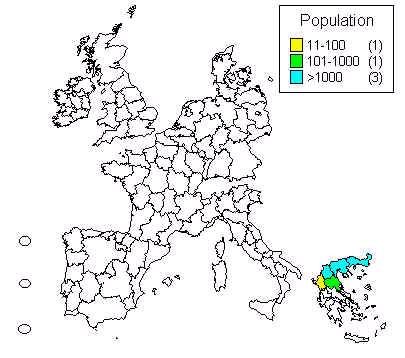 |
This woodpecker inhabits oak (Quercus)
forests and a variety of open habitats in the Near East, from Turkey to the Caucasus and
Iran. Since the end of last century, it is colonising the Balkan Peninsula and Central
Europe. Since the 1970’s isolated observations have been made in southern and eastern
Germany, but its progression seems currently to be slower or even halted. The population
of the European Union (12 Member States) is limited to Greece, and can be estimated at 10000-25000 breeding
pairs (Handrinos & Akriotis). |
----------------------------------------------------------------------------End-------------------------------------------------------------------------
Black Woodpecker, Dryocopus
martius
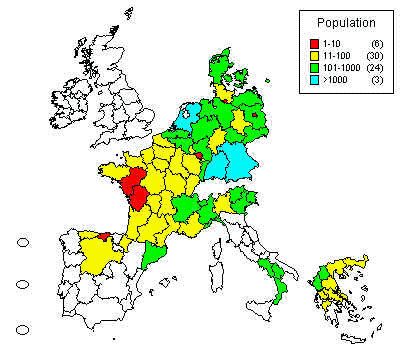 |
This large woodpecker has a wide distribution in
deciduous, mixed and coniferous forests of Eurasia, from Spain and Scandinavia to China
and Kamchatka. During the twentieth century it has extended its breeding area to western
France, Belgium, the Netherlands and Denmark. This expansion is probably linked to the
fact that the extensive conifer plantations in these areas have become mature. Elsewhere
populations seem to be quite stable, and the total population of the European Union (12 Member States) is
currently estimated at 90000-100000 breeding pairs (EBCC Atlas of European Breeding
Birds). |
o
NUTS |
MIN |
MAX |
R |
Danmark |
133 |
163 |
C |
Nederland |
2300 |
2900 |
C |
Bruxelles-Brussel |
3 |
5 |
C |
Région Wallonne |
300 |
500 |
C |
Vlaams Gewest |
490 |
590 |
C |
Luxembourg |
60 |
|
C |
Baden-Württemberg |
1000 |
|
C |
Bayern |
2000 |
2500 |
C |
Berlin |
3 |
10 |
C |
Brandenburg |
100 |
300 |
C |
Hamburg |
0 |
2 |
C |
Hessen |
50 |
150 |
C |
Mecklenburg-Vorpommern |
100 |
500 |
C |
Niedersachsen |
200 |
600 |
C |
Nordrhein-Westfalen |
200 |
600 |
|
Rheinland-Pfaltz |
10 |
200 |
C |
Saarland |
2 |
5 |
C |
Sachsen |
50 |
200 |
C |
Sachsen-Anhalt |
30 |
100 |
C |
Schleswig-Holstein |
10 |
|
C |
Thüringen |
50 |
200 |
C |
Alsace |
50 |
100 |
C |
Aquitaine |
10 |
20 |
C |
Auvergne |
50 |
100 |
C |
Basse-Normandie |
15 |
|
C |
Bourgogne |
30 |
60 |
C |
Bretagne |
10 |
50 |
|
Centre |
30 |
60 |
C |
Champagne-Ardennes |
50 |
|
C |
Franche-Comté |
25 |
50 |
C |
Haute-Normandie |
15 |
|
C |
Ile de France |
10 |
20 |
C |
Languedoc-Roussillon |
20 |
40 |
C |
Limousin |
10 |
20 |
C |
Lorraine |
50 |
100 |
C |
Midi-Pyrénées |
15 |
30 |
C |
Nord-Pas-de-Calais |
10 |
20 |
C |
Pays de la Loire |
5 |
10 |
C |
Picardie |
7 |
15 |
C |
Poitou-Charente |
5 |
10 |
C |
Provence/Alpes-Côte d'Azur |
25 |
50 |
C |
Rhône-Alpes |
100 |
200 |
C |
Basilicata |
100 |
120 |
C |
Calabria |
100 |
120 |
C |
Campania |
100 |
120 |
C |
Friuli-Venezia Giulia |
200 |
350 |
C |
Liguria |
200 |
350 |
C |
Lombardia |
30 |
60 |
C |
Piemonte |
200 |
350 |
C |
Trentino-Alto Adige |
200 |
350 |
C |
Valle d'Aosta |
200 |
350 |
C |
Veneto |
200 |
350 |
C |
Asturias |
30 |
|
C |
Cantabria |
1 |
10 |
C |
Castilla y Leon |
50 |
|
C |
Cataluña |
150 |
|
C |
Navarra |
|
70 |
C |
Anatoliki Makedonia, Thraki |
75 |
|
C |
Dytiki Ellada |
25 |
|
C |
Dytiki Makedonia |
100 |
|
C |
Ipeiros |
100 |
|
C |
Kentriki Makedonia |
75 |
|
C |
Sterea Ellada |
75 |
|
C |
Thessalia |
50 |
|
C |
|
----------------------------------------------------------------------------End-------------------------------------------------------------------------
Family ALAUDIDAE, larks
Dupont's Lark, Chersophilus duponti
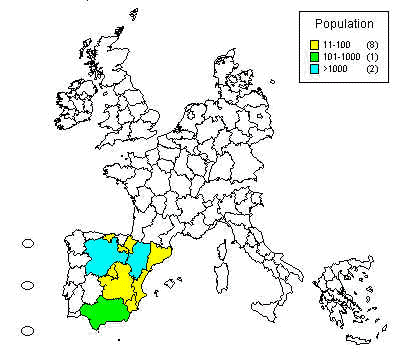 |
This lark inhabits northern Africa, from Morocco
to Egypt. It breeds also in Spain, where its population is estimated at 13000-15000 pairs,
about half the world population of this species. Following transformation of its habitat
through reclamation, irrigation, afforestation and disappearance of extensive livestock
economy it is undergoing a certain decline (Tucker & Heath). |
o
NUTS |
MIN |
MAX |
R |
Andalucia |
320 |
|
I |
Aragon |
7500 |
|
I |
Cantabria |
20 |
|
I |
Castilla la Mancha |
80 |
|
I |
Castilla y Leon |
4000 |
|
I |
Cataluña |
50 |
|
I |
Comunidad Valenciana |
20 |
|
I |
Madrid |
50 |
|
I |
Murcia |
20 |
|
I |
Navarra |
20 |
|
I |
Rioja |
50 |
|
I |
|
----------------------------------------------------------------------------End-------------------------------------------------------------------------
Calandra Lark, Melanocorypha
calandra
 |
This lark inhabits steppes and cereal
cultivation in North Africa, southern Europe, the Near and Middle East. Birds of southern
and south-western Europe are largely sedentary, but those of Eastern Europe winter in the
Mediterranean regions. The population of the European Union is estimated at 1-3.5 millions
of breeding pairs, 95% of which inhabit Spain. This species has been included in Annex I
in particular to protect the small peripheric populations, which are undergoing a constant decline
due to intensification of agriculture and disappearance of extensive livestock
economy (EBCC Atlas of European Breeding Birds, Nouvel Atlas des Oiseaux nicheurs de
France). |
----------------------------------------------------------------------------End-------------------------------------------------------------------------
Short-toed Lark, Calandrella
brachydactyla
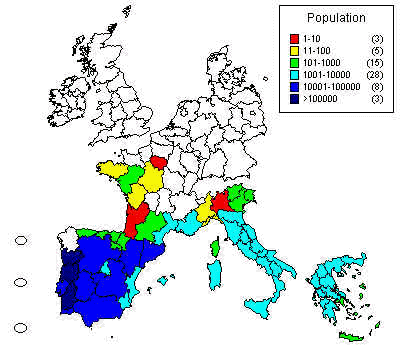 |
This lark has a wide distribution from the
Mediterranean regions of Europe and North Africa to central Asia. Apart from its Greek
populations, which are partly sedentary, it is a migratory bird wintering in the Sahel
region of Africa. The total European population is estimated at 2.3-3.6 millions of
breeding pairs, 97% of which inhabit the Iberian Peninsula. Everywhere this species is
undergoing a decline following habitat loss by agricultural intensification (Tucker &
Heath). |
o
NUTS |
MIN |
MAX |
R |
Aquitaine |
5 |
10 |
C |
Bretagne |
10 |
20 |
C |
Centre |
10 |
50 |
C |
Corse |
100 |
500 |
C |
Ile
de France |
1 |
10 |
C |
Languedoc-Roussillon |
2500 |
5000 |
C |
Midi-Pyrénées |
100 |
|
C |
Pays
de la Loire |
100 |
|
C |
Poitou-Charente |
50 |
100 |
C |
Provence/Alpes-Côte
d'Azur |
2500 |
5000 |
C |
Abruzzi |
1200 |
1500 |
C |
Basilicata |
1200 |
1500 |
C |
Calabria |
1200 |
1500 |
C |
Campania |
1200 |
1500 |
C |
Emilia Romagna |
1200 |
1500 |
C |
Friuli-Venezia Giulia |
100 |
200 |
C |
Lazio |
1200 |
1500 |
C |
Liguria |
55 |
110 |
C |
Lombardia |
6 |
|
C |
Marche |
1200 |
1500 |
C |
Molise |
1200 |
1500 |
C |
Piemonte |
60 |
80 |
C |
Puglia |
1200 |
1500 |
C |
Sardegna |
1200 |
1500 |
C |
Sicilia |
1200 |
1500 |
C |
Toscana |
1200 |
1500 |
C |
Trentino-Alto Adige |
100 |
200 |
C |
Umbria |
1200 |
1500 |
C |
Veneto |
100 |
200 |
C |
Andalucia |
20000 |
60000 |
C |
Aragon |
10000 |
30000 |
C |
Asturias |
100 |
1000 |
C |
Baleares |
1000 |
2000 |
|
Cantabria |
100 |
1000 |
C |
Castilla
la Mancha |
20000 |
60000 |
C |
Castilla
y Leon |
20000 |
60000 |
C |
Cataluña |
8000 |
24000 |
C |
Comunidad
Valenciana |
5000 |
15000 |
C |
Extremadura |
10000 |
30000 |
C |
Madrid |
2000 |
6000 |
C |
Murcia |
2000 |
6000 |
C |
Navarra |
450 |
|
C |
Pais
Vasco |
100 |
1000 |
C |
Rioja |
100 |
1000 |
C |
Alentejo |
45000 |
450000 |
C |
Algarve |
10000 |
100000 |
C |
Centro |
18000 |
180000 |
C |
Lisboa e Vale do Tejo |
10000 |
100000 |
C |
Norte |
20000 |
200000 |
C |
Anatoliki
Makedonia, Thraki |
2000 |
5000 |
C |
Attiki |
100 |
500 |
C |
Dytiki
Ellada |
1000 |
2500 |
C |
Dytiki
Makedonia |
2000 |
5000 |
C |
Ionia
nisia |
1000 |
2500 |
C |
Ipeiros |
1000 |
2500 |
C |
Kentriki
Makedonia |
2000 |
5000 |
C |
Kriti |
250 |
1000 |
C |
Notio
Aigaio |
200 |
500 |
C |
Peloponnisos |
1000 |
2500 |
C |
Sterea
Ellada |
2000 |
5000 |
C |
Thessalia |
2000 |
5000 |
C |
Voreio
Aigaio |
300 |
1000 |
C |
|
----------------------------------------------------------------------------End-------------------------------------------------------------------------
Thekla Lark, Galerida theklae
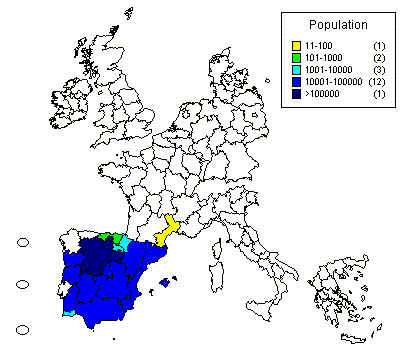 |
This sedentary lark has a breeding population
in Somalia, Ethiopia and Eritrea, and another one in north-western Africa, the Iberian
Peninsula and the Balearic islands. The northernmost birds reach Languedoc in southern
France. The total European population is estimated at 1.5 millions of breeding pairs, but
in some parts of its range it is declining (EBCC Atlas of European Breeding Birds). |
o
NUTS |
MIN |
MAX |
R |
Languedoc-Roussillon |
11 |
100 |
C |
Andalucia |
15000 |
150000 |
C |
Aragon |
10000 |
100000 |
C |
Baleares |
5000 |
20000 |
|
Cantabria |
100 |
1000 |
C |
Castilla la Mancha |
15000 |
150000 |
C |
Castilla y Leon |
20000 |
200000 |
C |
Cataluña |
8000 |
80000 |
C |
Comunidad Valenciana |
5000 |
50000 |
C |
Extremadura |
10000 |
100000 |
C |
Madrid |
3000 |
30000 |
C |
Murcia |
2000 |
20000 |
C |
Navarra |
1000 |
5000 |
|
Pais Vasco |
100 |
1000 |
C |
Rioja |
1000 |
10000 |
C |
Alentejo |
4000 |
40000 |
C |
Algarve |
1500 |
15000 |
C |
Centro |
2000 |
20000 |
C |
Norte |
2000 |
20000 |
C |
|
----------------------------------------------------------------------------End-------------------------------------------------------------------------
Woodlark, Lullula
arborea
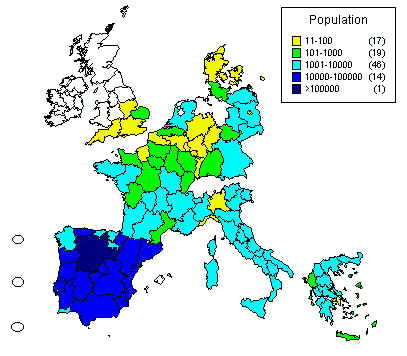 |
This lark inhabits north-western Africa
and the Near East, but it essentially an European species, known from the Iberian
Peninsula to Finland and from England to the Caucasus. It is wintering mainly in
south-western Europe and the Mediterranean regions. It is breeding in open habitats with
scattered trees and areas of short vegetation, in open oak (Quercus) or pine (Pinus)
forest and young conifer plantings. The breeding population of the European Union is
estimated at 1.3 millions of pairs, 90% of which inhabits the Iberian Peninsula. It is
much fluctuating, according to available habitat and strength of winter conditions, but on
the long-term it seems to be declining (EBCC Atlas of European Breeding Birds). |
o
NUTS |
MIN |
MAX |
R |
East
Anglia |
113 |
|
C |
East
Midlands (GB) |
11 |
|
C |
South
East (GB) |
71 |
|
C |
South
West (GB) |
15 |
|
C |
Danmark |
17 |
19 |
C |
Nederland |
2250 |
3020 |
C |
Région Wallonne |
25 |
50 |
C |
Vlaams Gewest |
410 |
500 |
C |
Luxembourg |
25 |
60 |
C |
Baden-Württemberg |
110 |
|
C |
Bayern |
2000 |
5000 |
C |
Berlin |
10 |
23 |
C |
Brandenburg |
5000 |
|
C |
Hessen |
10 |
50 |
C |
Mecklenburg-Vorpommern |
2000 |
|
C |
Nordrhein-Westfalen |
|
100 |
C |
Rheinland-Pfaltz |
0 |
50 |
C |
Saarland |
10 |
|
C |
Sachsen |
800 |
1500 |
C |
Sachsen-Anhalt |
800 |
1500 |
C |
Schleswig-Holstein |
150 |
200 |
C |
Thüringen |
400 |
1000 |
C |
Alsace |
10 |
50 |
C |
Aquitaine |
500 |
2000 |
|
Auvergne |
660 |
1680 |
C |
Basse-Normandie |
100 |
300 |
C |
Bourgogne |
700 |
2100 |
C |
Bretagne |
600 |
1800 |
C |
Centre |
500 |
1500 |
C |
Champagne-Ardennes |
400 |
1200 |
C |
Corse |
500 |
2000 |
|
Franche-Comté |
340 |
1000 |
C |
Haute-Normandie |
40 |
120 |
C |
Ile
de France |
140 |
420 |
C |
Languedoc-Roussillon |
200 |
1000 |
|
Limousin |
520 |
1560 |
C |
Lorraine |
300 |
600 |
C |
Midi-Pyrénées |
860 |
2640 |
C |
Nord-Pas-de-Calais |
10 |
50 |
|
Pays
de la Loire |
750 |
2250 |
C |
Picardie |
100 |
300 |
C |
Poitou-Charente |
500 |
1500 |
C |
Provence/Alpes-Côte
d'Azur |
900 |
2700 |
C |
Rhône-Alpes |
670 |
2600 |
C |
Abruzzi |
1000 |
5000 |
C |
Basilicata |
1000 |
5000 |
C |
Calabria |
1000 |
5000 |
C |
Campania |
1000 |
5000 |
C |
Emilia Romagna |
1000 |
5000 |
C |
Friuli-Venezia Giulia |
1000 |
5000 |
C |
Lazio |
1000 |
5000 |
C |
Liguria |
10 |
100 |
C |
Lombardia |
10 |
100 |
C |
Marche |
1000 |
5000 |
C |
Molise |
1000 |
5000 |
C |
Piemonte |
1000 |
5000 |
C |
Puglia |
1000 |
5000 |
C |
Sardegna |
1000 |
5000 |
C |
Sicilia |
1000 |
5000 |
C |
Toscana |
1000 |
5000 |
C |
Trentino-Alto Adige |
1000 |
5000 |
C |
Umbria |
1000 |
5000 |
C |
Valle d'Aosta |
1000 |
5000 |
C |
Veneto |
1000 |
5000 |
C |
Andalucia |
15000 |
150000 |
C |
Aragon |
10000 |
100000 |
C |
Asturias |
2000 |
20000 |
C |
Cantabria |
1000 |
10000 |
C |
Castilla
la Mancha |
15000 |
150000 |
C |
Castilla
y Leon |
20000 |
200000 |
C |
Cataluña |
8000 |
80000 |
C |
Comunidad
Valenciana |
5000 |
50000 |
C |
Extremadura |
10000 |
100000 |
C |
Galicia |
1000 |
10000 |
C |
Madrid |
3000 |
30000 |
C |
Murcia |
2000 |
20000 |
C |
Navarra |
2000 |
20000 |
C |
Pais
Vasco |
1000 |
10000 |
C |
Rioja |
1000 |
10000 |
C |
Alentejo |
40000 |
80000 |
C |
Algarve |
6500 |
13000 |
C |
Centro |
20000 |
40000 |
C |
Lisboa e Vale do Tejo |
10000 |
20000 |
C |
Norte |
20000 |
40000 |
C |
Anatoliki
Makedonia, Thraki |
1000 |
|
C |
Attiki |
20 |
80 |
C |
Dytiki
Ellada |
1000 |
|
C |
Dytiki
Makedonia |
2000 |
|
C |
Ionia
nisia |
500 |
|
C |
Ipeiros |
50 |
300 |
C |
Kentriki
Makedonia |
1000 |
|
C |
Kriti |
500 |
|
C |
Notio
Aigaio |
25 |
200 |
C |
Peloponnisos |
5000 |
|
C |
Sterea
Ellada |
500 |
2000 |
C |
Thessalia |
1000 |
|
C |
Voreio
Aigaio |
50 |
200 |
C |
|
-------------------------------------------------------------------------
End ----------------------------------------------------------------------
Last update : 06/10/06
|
