|
Home
Site map
Intro/Staff
Databases
Projets
Documents
| |
Family MOTACILLIDAE, pipits and wagtails
Tawny Pipit, Anthus campestris
 |
This pipit is breeding in a large part of Eurasia,
from Spain to Mongolia, and is wintering in sub-Saharan Africa, mainly in the Sahel Region
from Senegal to the Red Sea. The total population of the European Union amounts to
440.000-740.000 breeding pairs (Tucker & Heath), but since the mid-1960 this species
has undergone a strong decrease and a contraction of its breeding area, even in Iberia,
Italy and Greece where its populations remain nevertheless strong (EBCC Atlas of European
Breeding Birds). |
o
NUTS |
MIN |
MAX |
R |
Danmark |
29 |
31 |
C |
Nederland |
60 |
80 |
C |
Luxembourg |
1 |
3 |
C |
Baden-Württemberg |
1 |
10 |
|
Bayern |
50 |
300 |
C |
Brandenburg |
100 |
500 |
C |
Hessen |
10 |
100 |
|
Mecklenburg-Vorpommern |
100 |
200 |
C |
Niedersachsen |
40 |
100 |
C |
Nordrhein-Westfalen |
10 |
100 |
|
Rheinland-Pfaltz |
10 |
100 |
|
Saarland |
1 |
10 |
|
Sachsen |
100 |
150 |
C |
Sachsen-Anhalt |
60 |
120 |
C |
Schleswig-Holstein |
0 |
5 |
C |
Thüringen |
5 |
10 |
C |
Alsace |
2 |
|
M |
Aquitaine |
1000 |
2000 |
C |
Auvergne |
300 |
600 |
C |
Centre |
200 |
400 |
C |
Champagne-Ardennes |
0 |
3 |
C |
Corse |
1000 |
10000 |
|
Languedoc-Roussillon |
3000 |
6000 |
C |
Lorraine |
100 |
200 |
C |
Midi-Pyrénées |
1000 |
2000 |
C |
Pays de la Loire |
400 |
800 |
C |
Poitou-Charente |
300 |
600 |
C |
Provence/Alpes-Côte d'Azur |
2500 |
5000 |
C |
Rhône-Alpes |
300 |
600 |
C |
Abruzzi |
1000 |
2500 |
C |
Basilicata |
1000 |
2500 |
C |
Calabria |
1000 |
2500 |
C |
Campania |
1000 |
2500 |
C |
Emilia Romagna |
1000 |
2500 |
C |
Friuli-Venezia Giulia |
1000 |
2500 |
C |
Lazio |
1000 |
2500 |
C |
Liguria |
10 |
20 |
C |
Lombardia |
50 |
100 |
C |
Marche |
1000 |
2500 |
C |
Molise |
1000 |
2500 |
C |
Puglia |
1000 |
2500 |
C |
Sardegna |
1000 |
2500 |
C |
Sicilia |
1000 |
2500 |
C |
Toscana |
1000 |
2500 |
C |
Umbria |
1000 |
2500 |
C |
Veneto |
1000 |
2500 |
C |
Andalucia |
7500 |
30000 |
C |
Aragon |
5000 |
20000 |
C |
Asturias |
1000 |
4000 |
C |
Baleares |
100 |
1000 |
|
Cantabria |
500 |
2000 |
C |
Castilla la Mancha |
7500 |
30000 |
C |
Castilla y Leon |
10000 |
40000 |
C |
Cataluña |
4000 |
16000 |
C |
Comunidad Valenciana |
2000 |
8000 |
C |
Extremadura |
5000 |
20000 |
C |
Galicia |
1500 |
6000 |
C |
Madrid |
1500 |
6000 |
C |
Murcia |
1000 |
4000 |
C |
Navarra |
1000 |
4000 |
C |
Pais Vasco |
1000 |
4000 |
C |
Rioja |
500 |
1000 |
C |
Alentejo |
120 |
1200 |
C |
Algarve |
280 |
2800 |
C |
Centro |
120 |
1200 |
C |
Lisboa e Vale do Tejo |
40 |
400 |
C |
Norte |
450 |
4500 |
C |
Anatoliki Makedonia, Thraki |
1000 |
|
C |
Attiki |
100 |
|
C |
Dytiki Ellada |
1000 |
|
C |
Dytiki Makedonia |
1000 |
|
C |
Ionia nisia |
100 |
500 |
M |
Ipeiros |
1000 |
|
C |
Kentriki Makedonia |
1000 |
|
C |
Kriti |
100 |
1000 |
M |
Notio Aigaio |
50 |
300 |
M |
Peloponnisos |
500 |
2000 |
M |
Sterea Ellada |
500 |
2000 |
M |
Thessalia |
1000 |
|
C |
Voreio Aigaio |
100 |
500 |
M |
|
----------------------------------------------------------------------------End-------------------------------------------------------------------------
Family TROGLODYTIDAE, wrens
Wren, Troglodytes
troglodytes fridariensis
This bird inhabits most of Eurasia and North America. On the Islands north of Scotland
it is represented by a number of races, one of the most distinctive being the race fridariensis,
endemic to Fair Isle.
NUTS |
MIN |
MAX |
R |
Scotland |
30 |
40 |
C |
|
----------------------------------------------------------------------------End-------------------------------------------------------------------------
Family TURDIDAE, bluethroat, chats
and thrushes
Bluethroat, Luscinia svecica
 |
This bird inhabits a large part of Eurasia, from Western
Europe to the Bering Street and from the Caucasus to the arctic shores of Siberia. It
breeds in wet habitats with lush scattered bushes. Several distinct populations can be
recognized in Europe. The nominate race svecica inhabits boreal and arctic regions,
e.g. in Scandinavia, but has since a few decades also small isolated populations at high
altitude in the Alps and Carpathians. It migrates to the south-east and is wintering in
eastern sub-Saharan Africa. The race cyanecula inhabits temperate regions of
Europe, from northern France to Ukraine. The race namnetum inhabits the coastal
regions of France, from southern Bretagne to Aquitaine. It winters mainly in Portugal. A
small population, included in cyanecula but in fact not yet described, inhabits
the centre and north of Spain. The total population of the European Union (12 Member States) is estimated at
40.000 breeding pairs. It is strongly fluctuating, but on the long term it seems to be
quite stable. However since 1970's cyanecula began to increase in numbers and to expand its range. It represents only 5% of the total European population, not
including the huge Russian population (Atlas de las Aves de España, EBCC Atlas of
European Breeding Birds). |
o
NUTS |
MIN |
MAX |
R |
Nederland |
5500 |
7500 |
C |
Région Wallonne |
124 |
|
C |
Vlaams Gewest |
1700 |
2000 |
C |
Baden-Württemberg |
65 |
75 |
C |
Bayern |
|
500 |
C |
Brandenburg |
70 |
100 |
C |
Hamburg |
5 |
10 |
C |
Hessen |
50 |
|
C |
Mecklenburg-Vorpommern |
100 |
|
C |
Niedersachsen |
|
40 |
C |
Rheinland-Pfaltz |
210 |
260 |
C |
Sachsen-Anhalt |
20 |
30 |
C |
Thüringen |
1 |
5 |
C |
Alsace |
3 |
5 |
C |
Aquitaine |
150 |
200 |
C |
Auvergne |
10 |
25 |
C |
Bretagne |
10 |
50 |
|
Champagne-Ardennes |
1 |
10 |
C |
Franche-Comté |
10 |
20 |
C |
Haute-Normandie |
10 |
15 |
C |
Limousin |
25 |
100 |
C |
Nord-Pas-de-Calais |
10 |
100 |
|
Pays de la Loire |
500 |
1000 |
C |
Picardie |
25 |
50 |
C |
Poitou-Charente |
200 |
500 |
C |
Lombardia |
0 |
3 |
|
Piemonte |
0 |
3 |
|
Castilla y Leon |
50 |
100 |
C |
Extremadura |
50 |
100 |
C |
|
----------------------------------------------------------------------------End-------------------------------------------------------------------------
Canary island Stonechat, Saxicola
dacotiae
This bird is endemic to the island Fuerteventura in the Canary
archipelago. Its population seems stable but is very vulnerable (Atlas de las Aves de
España).
| NUTS |
MIN |
MAX |
R |
Canarias |
650 |
850 |
C |
|
----------------------------------------------------------------------------End-------------------------------------------------------------------------
Black Wheatear, Oenanthe
leucura
 |
This wheatear is breeding in north-western Africa,
the Iberian Peninsula and extreme southern France. It inhabits arid, stony plateau country
in mountainous regions and along coasts, scattered with rocky boulders. It is sedentary.
The total population of the European Union is currently estimated at 8300 breeding pairs,
but it has strongly declined since the beginning of the century. The reasons for this
decline are not known but could be related to a succession of hard winters (EBCC Atlas of
European Breeding Birds). |
o
NUTS |
MIN |
MAX |
R |
Languedoc-Roussillon |
|
10 |
C |
Andalucia |
2000 |
8000 |
C |
Aragon |
1000 |
5000 |
C |
Castilla la Mancha |
1500 |
7500 |
C |
Castilla y Leon |
2000 |
10000 |
C |
Comunidad Valenciana |
500 |
2500 |
C |
Extremadura |
1000 |
5000 |
C |
Madrid |
300 |
1500 |
C |
Murcia |
200 |
1000 |
C |
Navarra |
25 |
|
C |
Rioja |
5 |
20 |
C |
Alentejo |
30 |
300 |
C |
Centro |
50 |
500 |
C |
Lisboa
e Vale do Tejo |
1 |
10 |
|
Norte |
20 |
200 |
C |
|
----------------------------------------------------------------------------End-------------------------------------------------------------------------
Family SYLVIIDAE, warblers
Moustached Warbler , Acrocephalus melanopogon
 |
This warbler inhabits only old inundated reed
beds and has a discontinuous distribution in southern Europe, north-western Africa and
south-western Asia, from the Black Sea to Lake Balkash. It winters in northern Africa,
reaching Chad and Sudan in the south. The population of the European Union is estimated at
25000-45000 breeding pairs, Russia not included. Most of its populations seem stable,
except in Italy where some decline has been noticed (EBCC Atlas of European Breeding
Birds). |
o
NUT |
MIN |
MAX |
R |
Languedoc-Roussillon |
150 |
300 |
C |
Provence/Alpes-Côte
d'Azur |
450 |
700 |
C |
Emilia Romagna |
200 |
300 |
C |
Friuli-Venezia Giulia |
200 |
300 |
C |
Lombardia |
0 |
10 |
C |
Puglia |
200 |
300 |
C |
Sicilia |
0 |
20 |
C |
Toscana |
200 |
300 |
C |
Veneto |
200 |
300 |
C |
Andalucia |
300 |
500 |
C |
Baleares |
500 |
1000 |
C |
Cataluña |
100 |
1000 |
|
Comunidad
Valenciana |
50 |
100 |
C |
Dytiki Makedonia |
100 |
200 |
C |
Anatoliki Makedonia, Thraki |
10 |
100 |
C |
Kriti |
10 |
100 |
C |
Kentriki Makedonia |
10 |
100 |
C |
Ipeiros |
10 |
100 |
C |
|
----------------------------------------------------------------------------End-------------------------------------------------------------------------
Aquatic Warbler, Acrocephalus
paludicola
This warbler inhabits flooded, open swamps and has a quite restricted distribution from
eastern Germany to the Ob River in western Siberia. It winters in West Africa. Since the
second half of last century it has been steadily declining following wetland reclamation.
It has subsequently disappeared from several countries, and the only remnant populations
in the European Union are those breeding along the Polish border in eastern Germany. This
population does not exceed 30-100 pairs, which represents only 1-2% of the total
European population, Russia not included (Tucker & Heath).
NUTS |
MIN |
MAX |
R |
Brandenburg |
40 |
|
M |
Mecklenburg-Vorpommern |
30 |
|
M |
|
----------------------------------------------------------------------------End-------------------------------------------------------------------------
Olive-tree Warbler, Hippolais
olivetorum
 |
The distribution of this warbler is restricted
to south-eastern Europe and the Near East, as far as Syria. It winters in eastern and
south-eastern Africa. It inhabits open habitats with scattered trees, olive-tree
plantations and orchards. Its Greek population seems to be stable (EBCC Atlas of European
Breeding Birds). |
o
NUTS |
MIN |
MAX |
R |
Anatoliki
Makedonia, Thraki |
200 |
400 |
C |
Attiki |
200 |
|
C |
Dytiki
Ellada |
1000 |
|
C |
Ionia
nisia |
100 |
|
C |
Ipeiros |
200 |
|
C |
Kentriki
Makedonia |
200 |
|
C |
Notio
Aigaio |
0 |
200 |
C |
Peloponnisos |
1000 |
|
C |
Sterea
Ellada |
2000 |
|
C |
Thessalia |
500 |
|
C |
Voreio
Aigaio |
50 |
200 |
C |
|
----------------------------------------------------------------------------End-------------------------------------------------------------------------
Barred Warbler, Sylvia nisoria
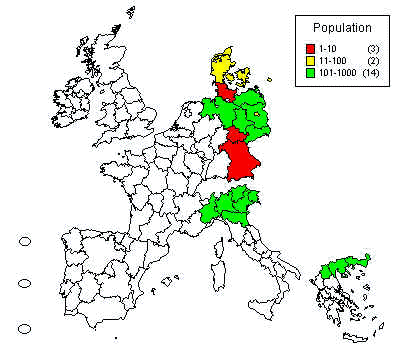 |
This warbler has a wide distribution in southern and
Eastern Europe and western Asia, from Italy and the southern coasts of the Baltic Sea to
the Altai and Tian Chan mountains. It winters in East Africa, from Ethiopia to northern
Tanzania. While its has increased and extended its distribution since the 1920’s, it
has decreased recently in some regions, e.g. southern Germany. Overall its populations
seem to be stable, however, and the total population of the European Union is estimated at
10000-12000 breeding pairs, which represents about 4% of the total European population,
Russia not included (EBCC Atlas of European Breeding Birds). |
o
NUTS |
MIN |
MAX |
R |
Danmark |
15 |
30 |
C |
Bayern |
5 |
10 |
|
Berlin |
10 |
15 |
C |
Brandenburg |
150 |
180 |
C |
Mecklenburg-Vorpommern |
600 |
800 |
C |
Niedersachsen |
250 |
280 |
C |
Sachsen |
100 |
300 |
|
Sachsen-Anhalt |
500 |
1000 |
C |
Schleswig-Holstein |
|
10 |
C |
Thüringen |
2 |
10 |
C |
Emilia
Romagna |
120 |
280 |
C |
Friuli-Venezia
Giulia |
120 |
280 |
C |
Lombardia |
400 |
600 |
C |
Piemonte |
120 |
280 |
C |
Trentino-Alto
Adige |
120 |
280 |
C |
Veneto |
120 |
280 |
C |
Anatoliki Makedonia, Thraki |
100 |
300 |
C |
Dytiki Makedonia |
100 |
500 |
C |
Kentriki Makedonia |
100 |
500 |
C |
|
----------------------------------------------------------------------------End-------------------------------------------------------------------------
Rüppell's Warbler, Sylvia
rueppelli
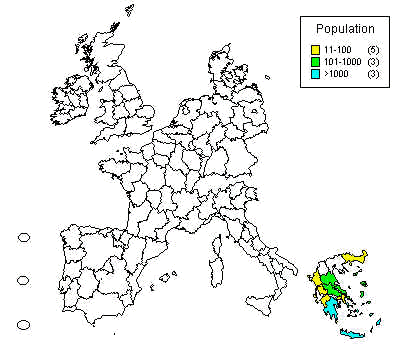 |
This warbler has a quite restricted
distribution, covering parts of Greece, western and southern Turkey, Lebanon and probably
western Syria. It inhabits Mediterranean thickets on hot, arid slopes or the undergrowth
of open Quercus coccifera or cypress (Cupressus) forest. The Greek
population is estimated at 3000-10000 breeding pairs (Handrinos & Akriotis, EBCC Atlas
of European Breeding Birds). |
o
NUTS |
MIN |
MAX |
R |
Anatoliki
Makedonia, Thraki |
|
100 |
C |
Attiki |
50 |
100 |
C |
Dytiki
Ellada |
10 |
100 |
C |
Ionia
nisia |
0 |
100 |
C |
Ipeiros |
0 |
100 |
C |
Kriti |
1000 |
|
C |
Notio
Aigaio |
2000 |
5000 |
C |
Peloponnisos |
1000 |
|
C |
Sterea
Ellada |
200 |
1000 |
C |
Thessalia |
200 |
|
C |
Voreio
Aigaio |
100 |
500 |
C |
|
----------------------------------------------------------------------------End-------------------------------------------------------------------------
Marmora's Warbler, Sylvia
sarda
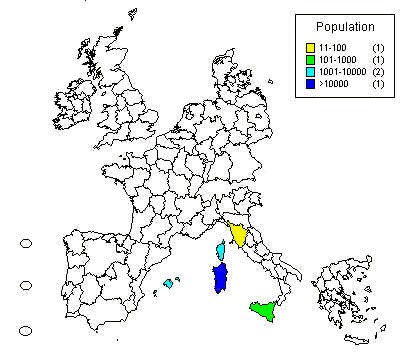 |
This small warbler is endemic to the islands
of the western Mediterranean excluding Menorca and Sicily. It inhabits all kinds of dense Mediterranean thickets,
but not the exotic plantations and agricultural areas. It is sedentary, but small numbers
appear along the Spanish and North African coasts.
The whole world population of this species is breeding in the European Union. It can be
estimated at 40.000 pairs, and seems quite stable (EBCC Atlas of European Breeding Birds). |
o
NUTS |
MIN |
MAX |
R |
Corse |
5000 |
10000 |
C |
Sardegna |
10000 |
20000 |
C |
Sicilia |
20 |
200 |
C |
Toscana |
10 |
100 |
C |
Baleares |
1000 |
2000 |
C |
|
----------------------------------------------------------------------------End-------------------------------------------------------------------------
Dartford Warbler, Sylvia undata
 |
This small warbler inhabits north-western
Africa and south-western Europe, from the Iberian Peninsula to Italy and southernmost
England. Parts of its populations are sedentary; parts make small-scale movements and a
few birds reach north-western Africa. The population of the European Union, which
represents nearly the entire world population, is estimated at 1.8-4.1
millions of breeding pairs. However, since the beginning of the 1970’s, this species
is declining in Spain. Elsewhere it fluctuates or remains stable. Intensification of
agriculture and habitat destruction – Mediterranean thickets in the south, dry heath
in the north – are the main threats to this species. Too frequent fires are also
detrimental (Tucker & Heath). |
o
NUTS |
MIN |
MAX |
R |
South
East (GB) |
288 |
|
C |
South
West (GB) |
135 |
|
C |
Aquitaine |
16650 |
33300 |
C |
Basse-Normandie |
100 |
|
C |
Bretagne |
2450 |
4900 |
C |
Centre |
6750 |
13500 |
C |
Corse |
1000 |
5000 |
|
Ile de France |
10 |
50 |
C |
Languedoc-Roussillon |
14000 |
28000 |
C |
Limousin |
450 |
900 |
C |
Midi-Pyrénées |
2250 |
4500 |
C |
Pays de la Loire |
1125 |
2250 |
C |
Poitou-Charente |
5850 |
11700 |
C |
Provence/Alpes-Côte d'Azur |
14000 |
28000 |
C |
Rhône-Alpes |
900 |
1800 |
C |
Basilicata |
100 |
1000 |
C |
Calabria |
100 |
1000 |
C |
Campania |
0 |
25 |
C |
Lazio |
100 |
1000 |
C |
Liguria |
100 |
1000 |
C |
Molise |
100 |
1000 |
C |
Piemonte |
10 |
100 |
|
Puglia |
100 |
1000 |
C |
Sardegna |
100 |
1000 |
C |
Sicilia |
20 |
200 |
C |
Toscana |
100 |
1000 |
C |
Umbria |
10 |
100 |
|
Andalucia |
125000 |
|
C |
Aragon |
30000 |
|
C |
Asturias |
4000 |
|
C |
Baleares |
40 |
|
C |
Cantabria |
1000 |
|
C |
Castilla la Mancha |
40000 |
|
C |
Castilla y Leon |
50000 |
|
C |
Cataluña |
20000 |
|
C |
Comunidad Valenciana |
15000 |
|
C |
Extremadura |
60000 |
|
C |
Galicia |
7000 |
|
C |
Madrid |
5000 |
|
C |
Murcia |
10000 |
|
C |
Navarra |
5000 |
|
C |
Pais Vasco |
4000 |
|
C |
Rioja |
4000 |
|
C |
Alentejo |
20000 |
|
C |
Algarve |
8500 |
|
C |
Centro |
20000 |
|
C |
Lisboa
e Vale do Tejo |
13000 |
|
C |
Norte |
37000 |
|
C |
|
----------------------------------------------------------------------------End-------------------------------------------------------------------------
Family MUSCICAPIDAE, flycatchers
Collared Flycatcher, Ficedula albicollis
 |
This flycatcher is breeding in central and
eastern Europe, from north-eastern France to south-western Russia and from southern Italy
to Gotland in the Baltic Sea. It inhabits different types of forest, but most frequently
deciduous forests, especially old oak (Quercus) forests. It is wintering in
southern East Africa, just south of the Equator. The population of the European Union (12 Member States) is
estimated at 20000-35000 breeding pairs, which represents 4-8% of the global population of
this species (EBCC Atlas of European Breeding Birds). This bird seems to be especially
sensitive to the type of forest exploitation, and modern forestry methods are definitely
detrimental. Therefore it is decreasing in France (Nouvel Atlas des Oiseaux nicheurs de
France). |
o
NUTS |
MIN |
MAX |
R |
Baden-Württemberg |
3000 |
6000 |
C |
Bayern |
3000 |
6000 |
|
Hessen |
1000 |
5000 |
C |
Niedersachsen |
1 |
|
C |
Rheinland-Pfaltz |
0 |
50 |
C |
Sachsen |
10 |
50 |
C |
Sachsen-Anhalt |
10 |
50 |
C |
Thüringen |
10 |
50 |
C |
Alsace |
|
10 |
C |
Champagne-Ardennes |
|
10 |
C |
Franche-Comté |
|
10 |
C |
Lorraine |
100 |
|
C |
Abruzzi |
60 |
185 |
C |
Basilicata |
60 |
185 |
C |
Calabria |
60 |
185 |
C |
Campania |
60 |
185 |
C |
Emilia
Romagna |
60 |
185 |
C |
Lazio |
0 |
5 |
C |
Liguria |
0 |
2 |
C |
Lombardia |
0 |
5 |
C |
Marche |
0 |
5 |
C |
Molise |
60 |
185 |
C |
Piemonte |
1 |
10 |
|
Puglia |
60 |
185 |
C |
Toscana |
60 |
185 |
C |
Umbria |
0 |
5 |
C |
|
----------------------------------------------------------------------------End-------------------------------------------------------------------------
Red-breasted Flycatcher, Ficedula
parva
 |
This flycatcher has a wide
distribution in the temperate and boreal regions of Eurasia, from central Europe to
eastern Siberia. It is wintering mainly in India and Pakistan. In Denmark and northern
Germany it is breeding in old beach (Fagus sylvaticus) forests. In southern Germany
it inhabits mixed forests with beach and fir (Abies) or maple (Acer). Its
populations seems stable, and since the 1980’s a slight westwards expansion has been
noticed (EBCC Atlas of European Breeding Birds). |
o
NUTS |
MIN |
MAX |
R |
Danmark |
0 |
1 |
C |
Bayern |
50 |
500 |
|
Berlin |
1 |
10 |
C |
Brandenburg |
50 |
100 |
C |
Mecklenburg-Vorpommern |
1000 |
15000 |
C |
Niedersachsen |
5 |
10 |
C |
Sachsen |
10 |
30 |
C |
Sachsen-Anhalt |
5 |
50 |
C |
Schleswig-Holstein |
1 |
10 |
|
Thüringen |
10 |
30 |
C |
Anatoliki
Makedonia, Thraki |
5 |
|
C |
Kentriki
Makedonia |
5 |
|
C |
|
----------------------------------------------------------------------------End-------------------------------------------------------------------------
Semi-collared Flycatcher, Ficedula
semitorquata
 |
This flycatcher is breeding in the Balkan
Peninsula, Turkey, the Caucasus and northern Iran. It is wintering in sub-Saharan Africa.
In the European Union it is known only from Greece , where its population is estimated at
1000-5000 breeding pairs. In some areas a decline has been reported, but the overall
trends of this species are not known (Tucker & Heath). |
o
NUTS |
MIN |
MAX |
R |
Anatoliki
Makedonia, Thraki |
500 |
1500 |
C |
Dytiki
Ellada |
0 |
100 |
C |
Dytiki
Makedonia |
0 |
500 |
C |
Ipeiros |
100 |
200 |
C |
Kentriki
Makedonia |
100 |
500 |
C |
Peloponnisos |
100 |
200 |
C |
Sterea
Ellada |
0 |
200 |
C |
Thessalia |
100 |
200 |
C |
|
-------------------------------------------------------------------------
END ------------------------------------------------------------------------
Last update : 06/10/06
|
