|
Home
Site map
Intro/Staff
Databases
Projets
Documents
| |
Family SITTIDAE, nuthatches
Krüper's Nuthatch, Sitta krueperi
This bird has a very restricted distribution, mainly in Turkey and the Caucasus. It
inhabits also the Greek island of Lesbos, where its population is apparently stable and
estimated at 50-100 breeding pairs.
NUTS |
MIN |
MAX |
R |
Voreio Aigaio |
50 |
100 |
C |
|
----------------------------------------------------------------------------End-------------------------------------------------------------------------
Corsican Nuthatch, Sitta
whiteheadi
This bird is endemic to Corsica, where it inhabits
almost exclusively old forests of indigenous conifers. Its population amounts 2.000-3.000
breeding pairs, and seems quite stable. The species remains vulnerable.
NUTS |
MIN |
MAX |
R |
Corse |
2000 |
3000 |
C |
|
----------------------------------------------------------------------------End-------------------------------------------------------------------------
Family LANIIDAE, shrikes
Red-backed Shrike, Lanius collurio
 |
This shrike inhabits the major part of Europe
and Western Asia, north to 64°N and east to 90°E, breeding in a wide variety of open
habitats with patches of dense, scrubby vegetation. It winters in sub-Saharan Africa. The
total population of the European Union amounts to 700000 breeding pairs currently, but
since 25 years it is strongly declining in the western parts of its range. The species
consequently disappeared from the British Isles, and is on the verge of extinction in
Northern Belgium and the Netherlands. Recently this trend has somewhat stabilised, and in several
regions a definite increase has been reported. The decline is perhaps partly due to
climatic changes (wetter summers), but the main reasons are pesticide use and
intensification of agriculture (EBCC Atlas of European Breeding Birds). |
o
NUTS |
MIN |
MAX |
R |
East
Anglia |
0 |
1 |
C |
Danmark |
1500 |
3000 |
C |
Nederland |
150 |
220 |
C |
Région Wallonne |
550 |
900 |
C |
Vlaams Gewest |
8 |
12 |
C |
Luxembourg |
150 |
350 |
C |
Baden-Württemberg |
10000 |
15000 |
C |
Bayern |
10000 |
50000 |
C |
Berlin |
5 |
25 |
|
Brandenburg |
500 |
1000 |
C |
Bremen |
1 |
10 |
|
Hamburg |
4 |
10 |
C |
Hessen |
2500 |
3000 |
C |
Mecklenburg-Vorpommern |
4000 |
8000 |
C |
Niedersachsen |
1000 |
5000 |
|
Nordrhein-Westfalen |
1000 |
2000 |
C |
Rheinland-Pfaltz |
5000 |
8000 |
C |
Saarland |
500 |
800 |
C |
Sachsen |
100 |
500 |
C |
Sachsen-Anhalt |
50 |
250 |
C |
Schleswig-Holstein |
100 |
1000 |
C |
Thüringen |
100 |
500 |
C |
Alsace |
4300 |
8600 |
C |
Aquitaine |
1000 |
10000 |
|
Auvergne |
3900 |
7800 |
C |
Basse-Normandie |
30 |
50 |
C |
Bourgogne |
3600 |
7200 |
C |
Bretagne |
100 |
1000 |
|
Centre |
2800 |
5600 |
C |
Champagne-Ardennes |
3300 |
6600 |
C |
Corse |
1000 |
10000 |
|
Franche-Comté |
2600 |
5200 |
C |
Haute-Normandie |
400 |
800 |
C |
Ile
de France |
300 |
600 |
C |
Languedoc-Roussillon |
2800 |
5600 |
C |
Limousin |
2100 |
4200 |
C |
Lorraine |
400 |
800 |
C |
Midi-Pyrénées |
4400 |
8800 |
C |
Nord-Pas-de-Calais |
100 |
200 |
C |
Pays
de la Loire |
1300 |
2600 |
C |
Picardie |
200 |
400 |
C |
Poitou-Charente |
3100 |
6200 |
C |
Provence/Alpes-Côte
d'Azur |
3500 |
7000 |
C |
Rhône-Alpes |
6200 |
12400 |
C |
Abruzzi |
1500 |
5000 |
C |
Basilicata |
1500 |
5000 |
C |
Calabria |
1500 |
5000 |
C |
Campania |
1500 |
5000 |
C |
Emilia Romagna |
1500 |
5000 |
C |
Friuli-Venezia Giulia |
1500 |
5000 |
C |
Lazio |
1500 |
5000 |
C |
Liguria |
1500 |
5000 |
C |
Lombardia |
1500 |
5000 |
C |
Marche |
1500 |
5000 |
C |
Molise |
1500 |
5000 |
C |
Piemonte |
1500 |
5000 |
C |
Puglia |
1500 |
5000 |
C |
Sardegna |
1500 |
5000 |
C |
Sicilia |
|
20 |
C |
Toscana |
1500 |
5000 |
C |
Trentino-Alto Adige |
1500 |
5000 |
C |
Umbria |
1500 |
5000 |
C |
Valle d'Aosta |
1500 |
5000 |
C |
Veneto |
1500 |
5000 |
C |
Aragon |
20000 |
50000 |
C |
Asturias |
20000 |
50000 |
C |
Cantabria |
20000 |
50000 |
C |
Castilla
y Leon |
20000 |
50000 |
C |
Cataluña |
75000 |
150000 |
C |
Galicia |
20000 |
50000 |
C |
Navarra |
50000 |
100000 |
C |
Pais
Vasco |
20000 |
50000 |
C |
Norte |
100 |
200 |
C |
Anatoliki
Makedonia, Thraki |
5000 |
|
C |
Attiki |
500 |
|
C |
Dytiki
Ellada |
100 |
500 |
C |
Dytiki
Makedonia |
5000 |
|
C |
Ionia
nisia |
200 |
|
C |
Ipeiros |
50 |
500 |
C |
Kentriki
Makedonia |
5000 |
|
C |
Peloponnisos |
100 |
1000 |
C |
Sterea
Ellada |
1000 |
3000 |
C |
Thessalia |
5000 |
|
C |
Voreio
Aigaio |
500 |
|
C |
|
----------------------------------------------------------------------------End-------------------------------------------------------------------------
Lesser Grey Shrike, Lanius minor
 |
This shrike inhabits Europe and Western Asia, from
north-eastern Spain to the Altai mountains. The northern limit of its distribution reach
55°N. It is a species of the steppe, adapted to cultivation with isolated trees, but it
depends largely also on warm dry summers. It winters totally in sub-Saharan Africa, mainly
in Botswana, Namibia, Zimbabwe and South Africa. As a passage migrant it is known in
Greece. Since the second half of last century it undergoes a dramatic decline throughout
Western Europe. It has become extinct in Luxembourg, Belgium, Germany and a large part of
France. The population of the European Union is totalling about 2100 breeding pairs, which
comprises 2.5% of the total European population, Russia not included. The decline has been
attributed to the fact that the climate is becoming more humid in Western Europe and drier
in its winter quarters, but the main reasons are intensification of agriculture and increasing use of
pesticides (EBCC Atlas of European Breeding Birds). |
o
NUTS |
MIN |
MAX |
R |
Bayern |
0 |
1 |
|
Languedoc-Roussillon |
15 |
30 |
C |
Provence/Alpes-Côte d'Azur |
10 |
20 |
C |
Abruzzi |
60 |
120 |
C |
Basilicata |
60 |
120 |
C |
Calabria |
1 |
10 |
|
Campania |
60 |
120 |
C |
Emilia Romagna |
60 |
120 |
C |
Friuli-Venezia Giulia |
30 |
60 |
C |
Lazio |
60 |
120 |
C |
Liguria |
1 |
2 |
C |
Lombardia |
30 |
|
C |
Marche |
60 |
120 |
C |
Molise |
60 |
120 |
C |
Piemonte |
1 |
5 |
C |
Puglia |
60 |
120 |
C |
Sicilia |
20 |
200 |
C |
Toscana |
60 |
120 |
C |
Umbria |
0 |
5 |
C |
Veneto |
30 |
60 |
C |
Aragon |
13 |
|
C |
Cataluña |
35 |
40 |
C |
Anatoliki Makedonia, Thraki |
500 |
1000 |
C |
Dytiki Ellada |
5 |
50 |
C |
Dytiki Makedonia |
200 |
500 |
C |
Ionia nisia |
10 |
50 |
C |
Ipeiros |
10 |
100 |
C |
Kentriki Makedonia |
500 |
1000 |
C |
Notio Aigaio |
10 |
20 |
C |
Peloponnisos |
10 |
50 |
C |
Sterea Ellada |
50 |
100 |
C |
Thessalia |
100 |
200 |
C |
Voreio Aigaio |
25 |
100 |
C |
|
----------------------------------------------------------------------------End-------------------------------------------------------------------------
Family CORVIDAE, crows
Chough, Pyrrhocorax pyrrhocorax
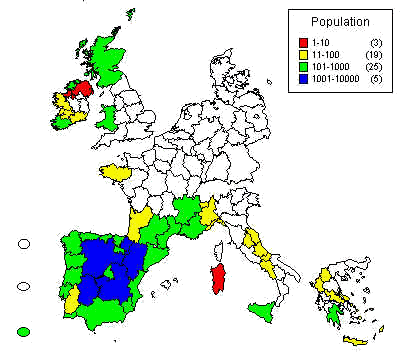 |
This bird has a discontinuous distribution in
southern Europe and Central Asia, from Turkey to China. Small populations also inhabit the
Canary islands, Morocco and Ethiopia. It is breeding in low-lying mountainous regions and
along rocky coasts. The population of the European Union amounts to 14000 breeding pairs,
but in most regions it is declining (EBCC Atlas of European Breeding Birds). |
o
NUTS |
MIN |
MAX |
R |
Donegal |
109 |
112 |
C |
Mid
West |
31 |
34 |
C |
North
West |
5 |
10 |
C |
South
East |
30 |
50 |
C |
South
West |
353 |
362 |
C |
West |
80 |
120 |
C |
Northern Ireland |
9 |
10 |
C |
Scotland |
105 |
|
C |
Wales |
139 |
142 |
C |
Aquitaine |
20 |
40 |
C |
Bretagne |
10 |
50 |
|
Languedoc-Roussillon |
150 |
300 |
C |
Midi-Pyrénées |
150 |
300 |
C |
Provence/Alpes-Côte
d'Azur |
100 |
200 |
|
Rhône-Alpes |
100 |
200 |
|
Abruzzi |
60 |
110 |
C |
Campania |
60 |
110 |
C |
Liguria |
10 |
100 |
C |
Marche |
60 |
110 |
C |
Molise |
60 |
110 |
C |
Piemonte |
10 |
100 |
C |
Sardegna |
1 |
10 |
|
Sicilia |
300 |
|
C |
Umbria |
60 |
110 |
C |
Valle d'Aosta |
10 |
100 |
C |
Andalucia |
1000 |
2000 |
C |
Aragon |
1000 |
2000 |
C |
Asturias |
250 |
500 |
C |
Canarias |
300 |
400 |
|
Cantabria |
250 |
500 |
C |
Castilla
la Mancha |
2000 |
3000 |
C |
Castilla
y Leon |
800 |
1500 |
C |
Cataluña |
500 |
1000 |
C |
Comunidad
Valenciana |
250 |
500 |
C |
Extremadura |
1000 |
2000 |
C |
Galicia |
100 |
300 |
|
Madrid |
250 |
500 |
C |
Murcia |
500 |
1000 |
C |
Navarra |
1000 |
2000 |
C |
Pais
Vasco |
250 |
500 |
C |
Rioja |
500 |
1000 |
C |
Alentejo |
10 |
100 |
C |
Algarve |
555 |
|
C |
Centro |
165 |
|
C |
Lisboa e Vale do Tejo |
20 |
200 |
C |
Norte |
330 |
|
C |
Dytiki
Makedonia |
10 |
|
C |
Ipeiros |
50 |
|
C |
Kriti |
20 |
100 |
C |
Notio
Aigaio |
50 |
|
C |
Peloponnisos |
100 |
200 |
C |
Sterea
Ellada |
25 |
|
C |
|
----------------------------------------------------------------------------End-------------------------------------------------------------------------
Family FRINGILLIDAE, finches
Chaffinch, Fringilla coelebs ombriosa
This finch inhabits a major part of Europe and northern Asia. It has several island
races in the archipelagos of the Balearic and Canary islands. The race ombriosa,
endemic to El Hierro in the Canaries, is the most threatened because its population is
very small and strictly dependent on native pine (Pinus canariensis) forests (EBCC
Atlas of European Breeding Birds).
NUTS |
MIN |
MAX |
R |
Canarias |
1000 |
5000 |
C |
|
----------------------------------------------------------------------------End-------------------------------------------------------------------------
Canary Island Chaffinch, Fringilla
teydea
This endemic finch of the Canary islands is strictly dependent on the native pine (Pinus
canariensis) forests of Tenerife and Gran Canaria. Its total population is estimated
at 1000-1500 breeding pairs, but the species is nearly extinct on Gran Canaria following
destruction of its habitat.
NUTS |
MIN |
MAX |
R |
Canarias |
1 000 |
1500 |
C |
|
----------------------------------------------------------------------------End-------------------------------------------------------------------------
Scottish Crossbill, Loxia scotica
This bird is endemic to Scotland where it
inhabits old Caledonian pine (Pinus sylvestris) forests. Its population is estimated at 300-1300
breeding pairs. It seems to be stable, but it is vulnerable because old forests are
gradually replaced by young plantations and native pin by fast growing exotic species
(EBCC Atlas of European Breeding Birds).
NUTS |
MIN |
MAX |
R |
Scotland |
300 |
400 |
C |
|
----------------------------------------------------------------------------End-------------------------------------------------------------------------
Azores Bullfinch, Pyrrhula murina
This bird is endemic to the island Sao Miguel in the Azores, where it habits native
forests. Its very small population amounts to about 120 breeding pairs, and seems quite stable (EBCC
Atlas of European Breeding Birds).
NUTS |
MIN |
MAX |
R |
Acores |
100 |
150 |
C |
|
----------------------------------------------------------------------------End-------------------------------------------------------------------------
Trumpeter Finch, Bucanetes
githagineus
This species inhabits northern Africa, the Near
East and the Middle East, from Morocco to India. Being erratic in its distribution it is
known from the Canary islands and the arid regions of south-eastern Spain. Its European
population is estimated at 4100-5300 breeding pairs. The one of the Canary islands seem
stable, but the recently discovered Spanish population is increasing.
NUTS |
MIN |
MAX |
R |
Andalucia |
200 |
300 |
C |
Canarias |
4000 |
5000 |
C |
|
----------------------------------------------------------------------------End-------------------------------------------------------------------------
Family EMBERIZIDAE, buntings
Cretzschmar's Bunting, Emberiza caesia
 |
This bunting has a very restricted distribution
from the southern Balkan Peninsula to Syria. It inhabits dry, stony hill slopes, covered
with short grasslands, open thickets and isolated trees. Its Greek population seems
stable, but could be threatened by hunting (EBCC Atlas of European Breeding Birds,
Handrinos & Akriotis). |
o
NUTS |
MIN |
MAX |
R |
Anatoliki Makedonia, Thraki |
50 |
200 |
C |
Attiki |
200 |
|
C |
Dytiki Ellada |
500 |
|
C |
Ionia nisia |
100 |
|
C |
Ipeiros |
100 |
|
C |
Kentriki Makedonia |
200 |
300 |
C |
Kriti |
0 |
100 |
C |
Notio Aigaio |
200 |
|
C |
Peloponnisos |
250 |
|
C |
Sterea Ellada |
3000 |
10000 |
C |
Thessalia |
250 |
|
C |
Voreio Aigaio |
500 |
|
C |
|
----------------------------------------------------------------------------End-------------------------------------------------------------------------
Cinereous Bunting, Emberiza
cineracea
This bunting is nearly entirely restricted to Greece and Turkey.
In Greece it only known from the islands Lesbos, Chios and Skyros where it inhabits dry,
stony slopes covered with low phrygana. Its European population is estimated at 100-250
breeding pairs, and could be threatened by tourism development (Tucker & Heath).
NUTS |
MIN |
MAX |
R |
Voreio Aigaio |
100 |
500 |
C |
|
----------------------------------------------------------------------------End-------------------------------------------------------------------------
Ortolan Bunting, Emberiza
hortulana
 |
This bunting inhabits major parts of Europe
and western Asia. It winters in sub-Saharan Africa, from Guinea to Ethiopia. The
population of the European Union (12 Member States) is estimated at 240000-300000 breeding pairs,
75-80% of which inhabit Spain. It is nevertheless undergoing a strong decline. It has
already disappeared from many regions, and its distribution is increasingly fragmented
(EBCC Atlas of European Breeding Birds). |
o
NUTS |
MIN |
MAX |
R |
Nederland |
25 |
35 |
S |
Région Wallonne |
0 |
2 |
|
Vlaams Gewest |
0 |
2 |
C |
Baden-Württemberg |
1 |
|
C |
Bayern |
840 |
890 |
S |
Brandenburg |
10 |
200 |
C |
Mecklenburg-Vorpommern |
100 |
500 |
C |
Niedersachsen |
|
200 |
C |
Nordrhein-Westfalen |
90 |
200 |
C |
Rheinland-Pfaltz |
0 |
3 |
C |
Sachsen |
10 |
30 |
C |
Sachsen-Anhalt |
10 |
20 |
C |
Schleswig-Holstein |
|
10 |
C |
Thüringen |
10 |
30 |
C |
Aquitaine |
100 |
300 |
C |
Auvergne |
500 |
1000 |
C |
Bourgogne |
10 |
50 |
C |
Centre |
10 |
|
C |
Franche-Comté |
1 |
5 |
C |
Languedoc-Roussillon |
5000 |
10000 |
C |
Midi-Pyrénées |
400 |
600 |
C |
Poitou-Charente |
100 |
200 |
C |
Provence/Alpes-Côte d'Azur |
2000 |
5000 |
C |
Rhône-Alpes |
2000 |
5000 |
C |
Abruzzi |
200 |
400 |
C |
Basilicata |
0 |
10 |
C |
Calabria |
200 |
400 |
C |
Campania |
200 |
400 |
C |
Emilia
Romagna |
200 |
400 |
C |
Friuli-Venezia
Giulia |
200 |
400 |
C |
Lazio |
200 |
400 |
C |
Liguria |
200 |
400 |
C |
Lombardia |
200 |
400 |
C |
Marche |
200 |
400 |
C |
Molise |
0 |
10 |
C |
Piemonte |
200 |
400 |
C |
Toscana |
200 |
400 |
C |
Trentino-Alto
Adige |
200 |
400 |
C |
Umbria |
200 |
400 |
C |
Valle
d'Aosta |
200 |
400 |
C |
Veneto |
200 |
400 |
C |
Andalucia |
100 |
1000 |
|
Aragon |
1000 |
2000 |
C |
Asturias |
200 |
500 |
C |
Cantabria |
100 |
200 |
C |
Castilla la Mancha |
700 |
1500 |
C |
Castilla y Leon |
2000 |
4000 |
C |
Cataluña |
800 |
1500 |
C |
Comunidad Valenciana |
500 |
1000 |
C |
Extremadura |
500 |
1000 |
|
Galicia |
500 |
1000 |
C |
Madrid |
300 |
500 |
C |
Navarra |
200 |
500 |
C |
Pais Vasco |
100 |
200 |
C |
Rioja |
100 |
200 |
C |
Centro |
400 |
4000 |
C |
Norte |
600 |
6000 |
C |
Anatoliki Makedonia, Thraki |
1000 |
|
C |
Attiki |
0 |
50 |
C |
Dytiki Ellada |
50 |
500 |
C |
Dytiki Makedonia |
1000 |
|
C |
Ionia nisia |
50 |
|
C |
Ipeiros |
1000 |
|
C |
Kentriki Makedonia |
1000 |
|
C |
Kriti |
10 |
200 |
C |
Notio Aigaio |
0 |
50 |
C |
Peloponnisos |
100 |
1000 |
C |
Sterea Ellada |
100 |
1000 |
C |
Thessalia |
1000 |
|
C |
Voreio Aigaio |
10 |
200 |
C |
|
---------------------------------------------------------------------------END-------------------------------------------------------------------------
Last update : 06/10/06
|
